
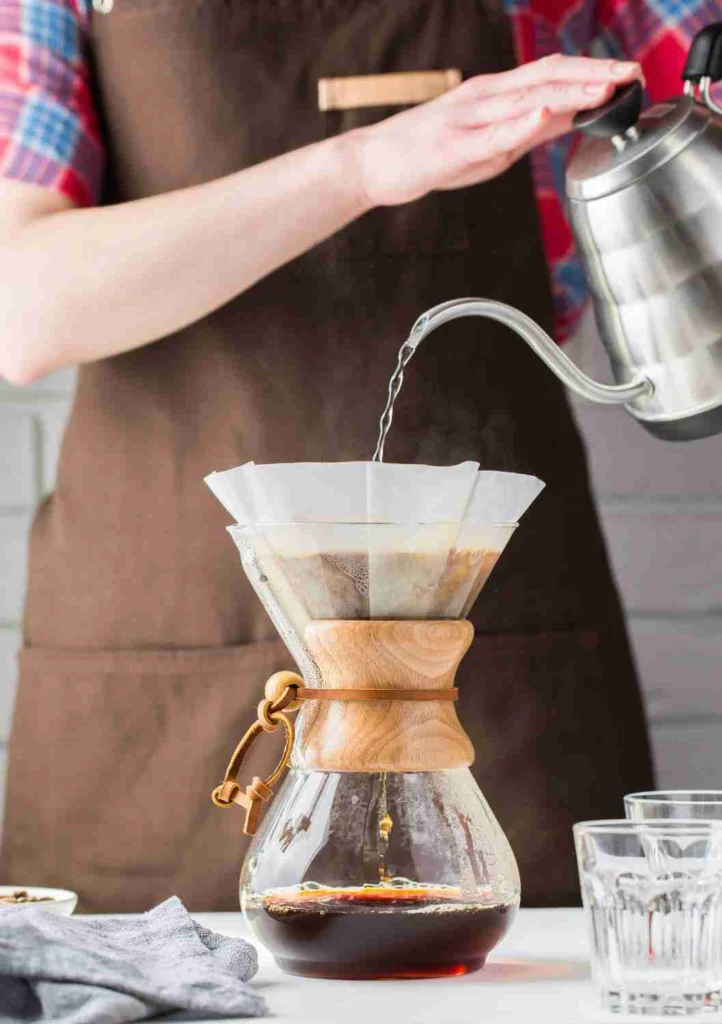
Quick answer: A good pour over coffee to water ratio is 1:16, or 1 gram of coffee for every 16 grams of water (about 19 g of coffee for a 300 g mug). Most recipes sit between 1:15 for a stronger cup and 1:17 for a lighter one. Weigh both with a scale, brew at about 92–96°C, and adjust grind before ratio.
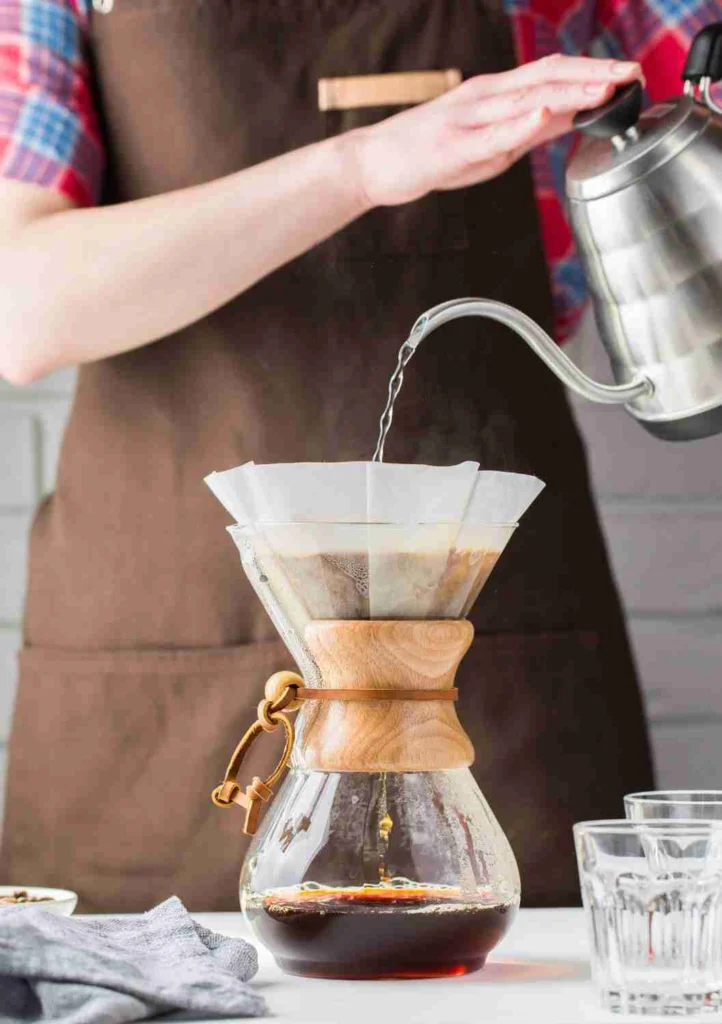
The ratio of coffee to water sets how strong your cup is. Grind size, water temperature and contact time decide how well it extracts. Get the ratio in a sensible range first, then fine-tune the rest one variable at a time.
In this guide 7 sections
Coffee to water ratio chart
| Brew method | Ratio (coffee : water) | Example | Grind |
|---|---|---|---|
| Pour over, stronger | 1:15 | 20 g coffee : 300 g water | Medium |
| Pour over, standard | 1:16 | 19 g : 300 g | Medium |
| Pour over, lighter | 1:17 | 18 g : 300 g | Medium |
| Drip coffee maker (SCA standard) | about 1:18 (55 g per litre) | 55 g : 1,000 g | Medium |
| French press, strong | 1:12 | 25 g : 300 g | Coarse |
| French press, standard | 1:15 | 20 g : 300 g | Coarse |
| Chemex batch | 1:17 | 50 g : 850 g | Medium-coarse |
These sit inside published guidance: the National Coffee Association suggests 1:13 to 1:16 for pour over and 1:10 to 1:16 for French press, and the Specialty Coffee Association’s home brewer standard uses 55 g of coffee per litre of water.
How much coffee per cup?
For pour over, start at around 1:16 to 1:17. That means 1 gram of coffee for every 16–17 grams of water: roughly 18–19 g of coffee for a 300 ml mug.
Weighing is far more accurate than scoops, because beans vary in size and density. We use a simple basic kitchen scale by Etekcity. Without a scale, about two tablespoons of ground coffee per six ounces of water gets you close.
How do you adjust the ratio?
Change one thing at a time, in this order: beans first, then grind, then ratio.
1. Start with fresh beans

No ratio rescues stale coffee. Check the roast date on the bag and buy beans roasted within the last few weeks; very fresh beans benefit from a few days’ rest (see why the freshest beans aren’t always best).
- Arabica or Robusta: Robusta is cheaper, has more caffeine and tastes more bitter. Arabica is generally considered higher quality and is what most specialty roasters sell as light and medium roasts.
- Roast level: darker roasts taste stronger and less acidic; lighter roasts are brighter and more acidic.
- Where to buy: a local roaster is the easiest way to get fresh beans. Devocion is one of our favourites. Or try our list of the best whole coffee beans, or roast your own at home.
2. Dial in your grind
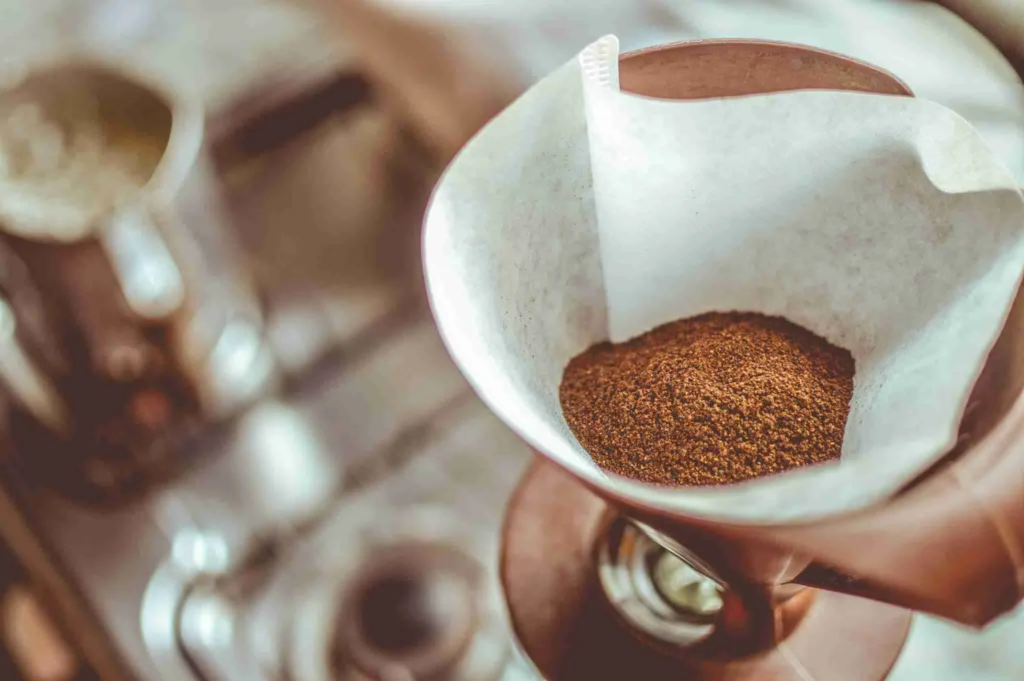
Grind right before brewing, because ground coffee goes stale quickly. Use a burr grinder: blade grinders shatter beans unevenly.
Finer particles have more surface area and extract faster. Too fine tastes bitter; too coarse tastes sour and thin. For pour over, start at about the size of kosher salt. If the cup is bitter, go coarser; if it’s sour, go finer.
3. Then change the ratio
Only once the grind tastes balanced, change strength with the ratio: more water for a lighter cup, less water for a stronger one. For example, 50 g of coffee in a Chemex with 850 g of water is 1:17; drop to 800 g for a stronger 1:16.
Pour over brewing technique
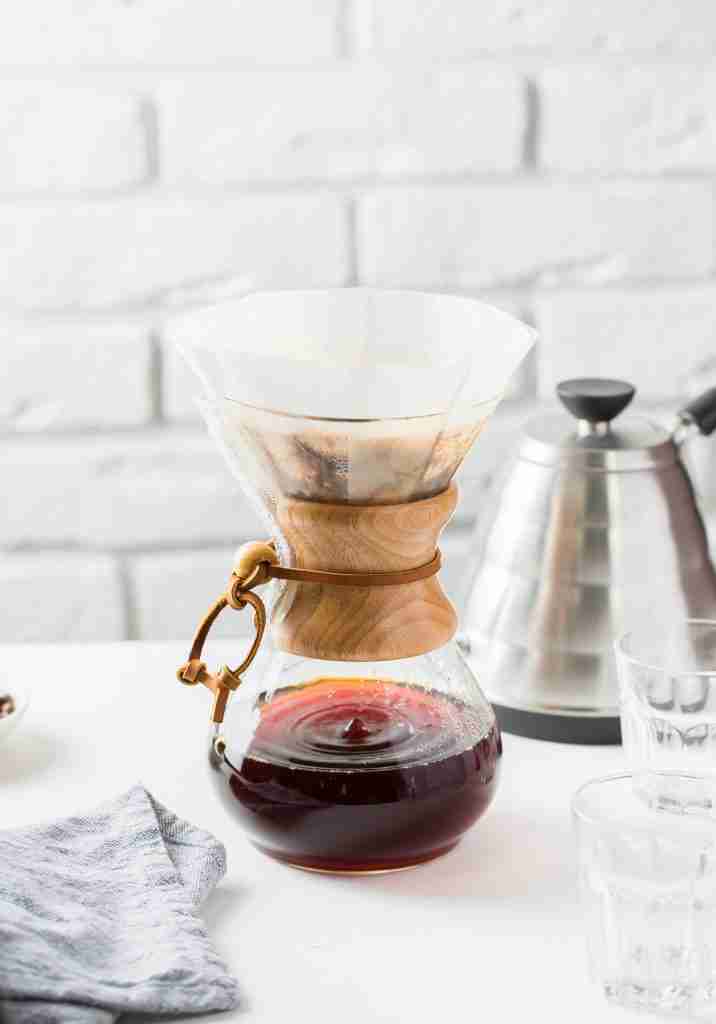
In pour over the water keeps draining, so not all the grounds are wet at once. Pour carelessly and water takes the path of least resistance: grounds in its path over-extract while dry pockets under-extract. A cup that is both bitter and sour usually points to this kind of uneven extraction, from pouring or from an uneven grind. Saturate all the grounds evenly with a slow, steady stream, and start with a bloom.
Bloom
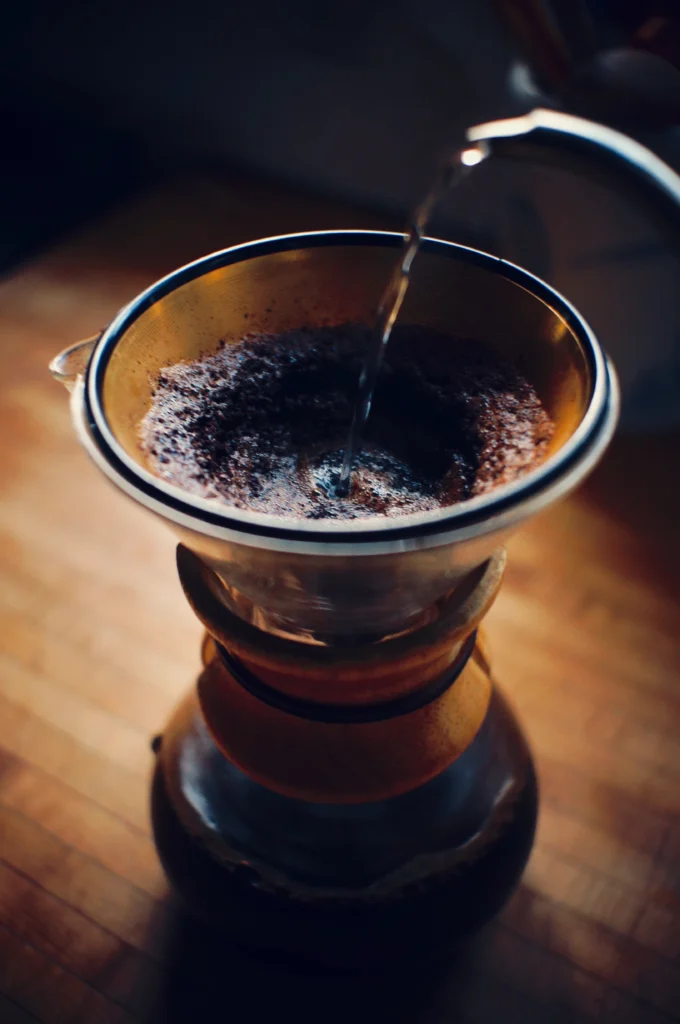
The bubbling you see when water first hits fresh grounds is carbon dioxide from roasting escaping. It repels water, so pour about twice the coffee’s weight in water to wet all the grounds and wait 30–45 seconds before the main pour. More detail in our guide to coffee bloom.
Our preferred method by Scott Rao
- Rinse your filter and discard the rinse water.
- Add your coffee and bloom it, stirring or spinning gently so all the grounds are wet.
- After about 45 seconds, start your main pour.
- Gently stir or swirl to knock grounds off the walls.
- Give the brewer a final swirl to flatten the bed, then let it drain.
For exact doses and timings for Rao’s recipe, James Hoffmann’s and Tetsu Kasuya’s 4:6 method, see our V60 brewing methods.
What is the coffee to water ratio for French press?
French press uses a coarse grind and full immersion. A good everyday ratio is about 1:15 (20 g of coffee to 300 g of water). For a bolder, heavier cup go to 1:12; for a lighter, tea-like cup try 1:16. Taste and adjust. Our French press guide has the full method.
What water temperature should you use?
Brew with water at about 92–96°C (roughly 198–205°F), the range used in the SCA’s home brewer standard. Water that is too cool under-extracts, leaving coffee sour and flat. Just off the boil is close enough if you don’t have a thermometer. See our guide to coffee temperature, strength and bitterness.
Serving temperature is a different matter. Coffee is often served at 160–185°F (71–85°C), hot enough to scald, and a 2008 study in the journal Burns calculated an optimal drinking temperature of about 136°F (58°C), balancing scald risk against how hot people like their coffee.
Frequently asked questions
What is the golden ratio for coffee?
The SCA’s “golden cup” standard uses 55 g of coffee per litre of water, about 1:18. Many home brewers prefer slightly stronger, around 1:15 to 1:17.
How many grams of coffee for 1 cup?
For a 300 ml mug at 1:16, use about 19 g of coffee. For a smaller 240 ml (8 oz) cup, use about 15 g.
My coffee is weak. Should I add more coffee?
If it tastes thin and watery but not sour, use a stronger ratio. If it’s weak and sour, grind finer first, because it’s probably under-extracted. See fixing weak pour-over coffee.
I really love and enjoyed reading this article. Personally, as I am a barista it is very useful to me and when you describe it scientifically, it was awesome. I hope you will continue posting such incredible things and baristas will enjoy and keep improving upon it. Thanks a lot!