
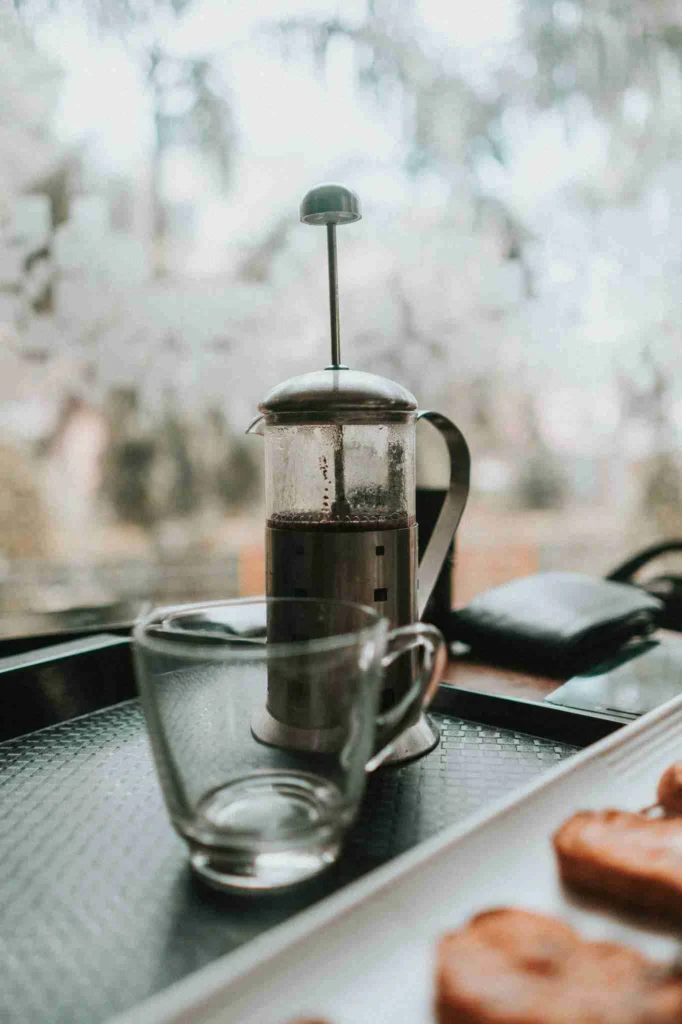
Quick answer: To make French press coffee, use about 1 g of coarsely ground coffee per 15 g of water (20 g to 300 g), just off the boil. Wet the grounds and let them bloom for 30 seconds, add the rest of the water, steep for about 4 minutes in total, press the plunger gently and pour all the coffee out straight away.
A French press is one of the simplest and cheapest ways to make full-bodied coffee: a pot, a plunger and a mesh filter. Get the ratio, grind and timing right and it is very forgiving. Here is our step-by-step method, plus the fixes for bitter or muddy cups.
In this guide 8 sections
French press recipe at a glance
| Ratio | 1:15 (1 g coffee to 15 g water); 1:12 for stronger, 1:16 for lighter |
| Example | 20 g coffee to 300 g (300 ml) water |
| Grind | Coarse, like kosher salt or breadcrumbs |
| Water temperature | About 93°C (200°F), just off the boil |
| Bloom | 30 seconds |
| Total steep | About 4 minutes |
What is French press coffee?
The French Press was invented in France in the 1800s. There have been many names for this very simple coffee maker. All it is is a pot and a plunger. It has been called a plunger pot, a melior, coffee machine piston, plunger coffee, and press pot.
It is about as easy as a drip coffee maker: pour, wait, press. You can do something else while it steeps, a large press serves several people at once, and if you use the same amounts each time the results are very consistent.
Why try French press coffee?
If you like full-bodied coffee, it is a great choice. There is no paper filter, so coffee oils and very fine particles end up in the cup, giving a richer, slightly oily texture. You only need to track four things: ratio, water temperature, grind size and brew time.
How do you make French press coffee?
Step 1: Heating Your Water
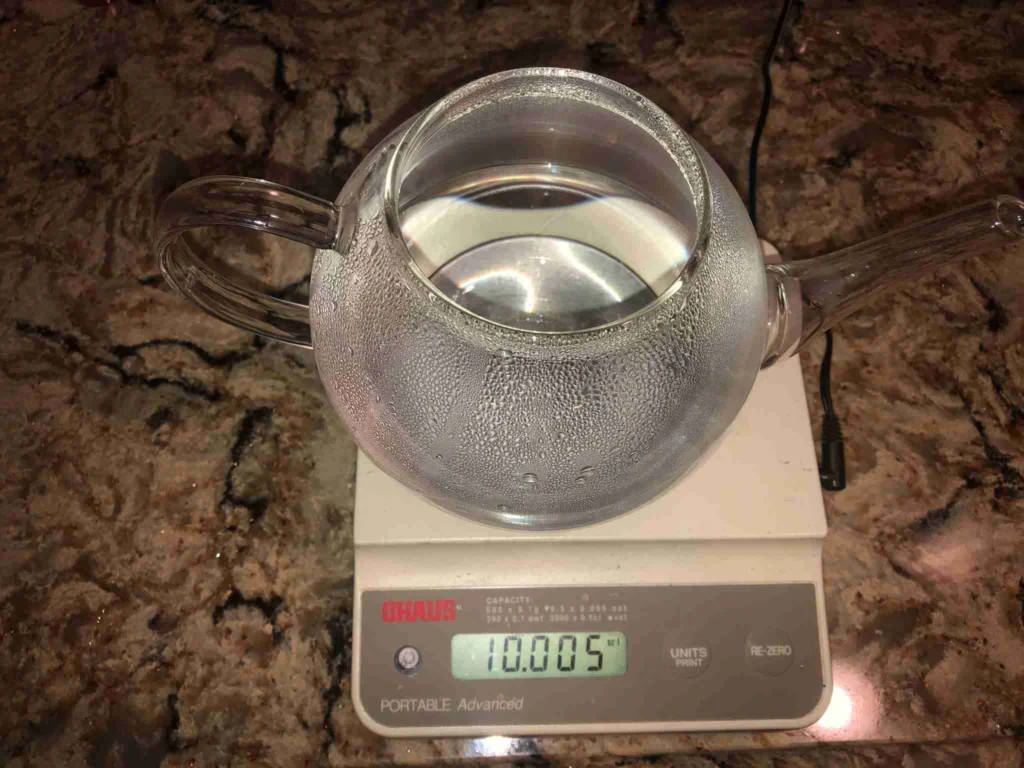
Heat your water to about 200°F (93°C). If you don’t have a thermometer, boil it and let it sit briefly until it stops bubbling.
Step 2: Heat Up Your Equipment
Rinse the pot and plunger with hot water so the cold glass doesn’t pull heat out of your brew.
Step 3: Prepare Your Coffee Beans
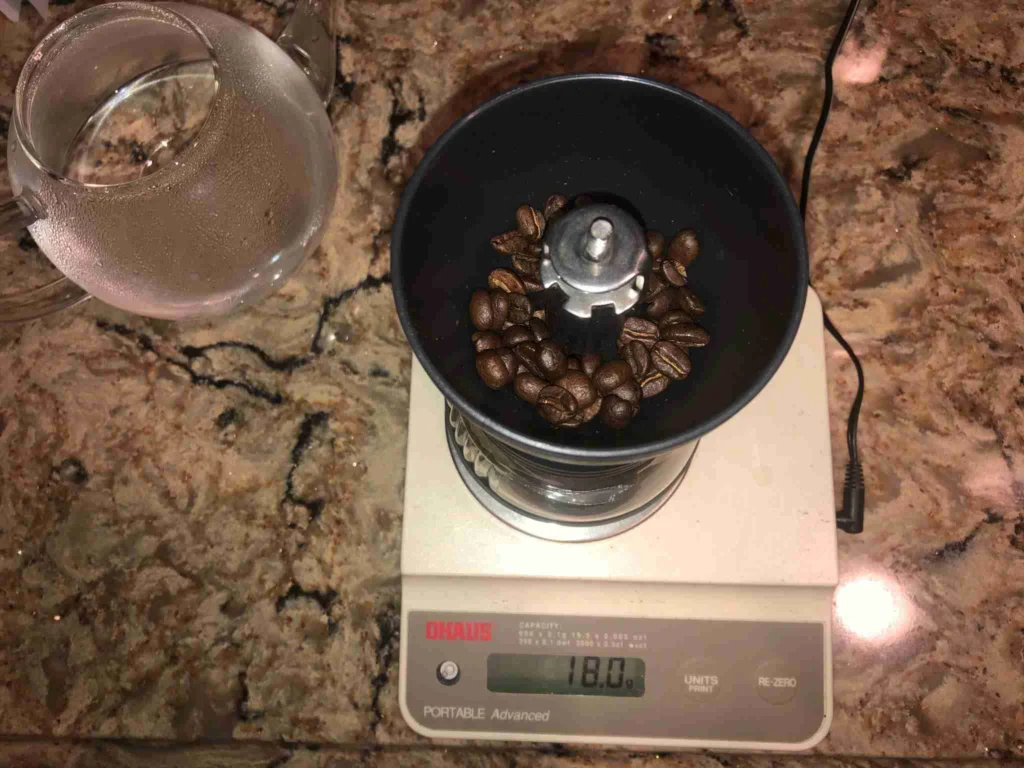
Weigh your beans with a scale for consistency. Common French press ratios (more in our coffee to water ratio chart):
| Brew Strength | 3 Cup of Coffee | 8 Cup of Coffee | |
| Mild | Coffee Beans | 18g – 3 Tbsp | 55g – 9 Tbsp |
| Mild | Water | 300mL – 10oz | 900mL – 30oz |
| Medium | Coffee Beans | 23g – 4 Tbsp | 68g – 11 Tbsp |
| Medium | Water | 300mL – 10oz | 900mL – 30oz |
| Strong | Coffee Beans | 30g – 5 Tbsp | 89g – 15 Tbsp |
| Strong | Water | 300mL – 10oz | 900mL – 30oz |
Step 4: Grind The Coffee Beans
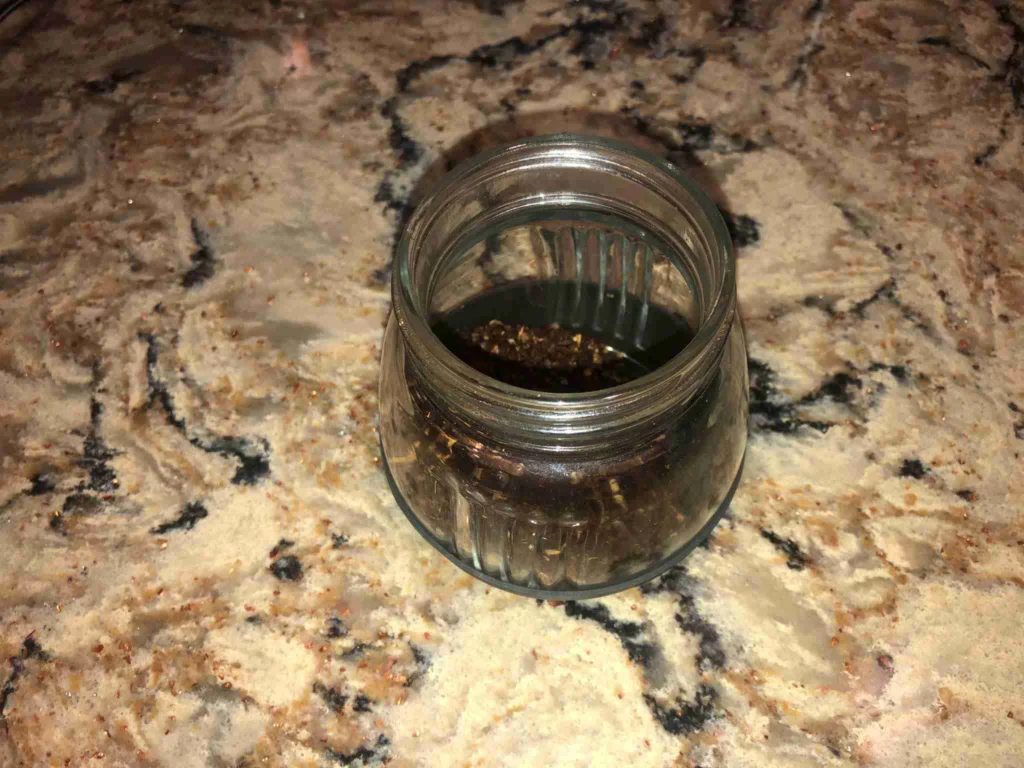
Use a burr grinder set coarse, about the size of breadcrumbs or kosher salt. Only a thin mesh separates the grounds from your cup, so a fine grind means gritty coffee. If that happens, see our guide to French press sediment.
Step 5: Bloom Your Coffee Grounds
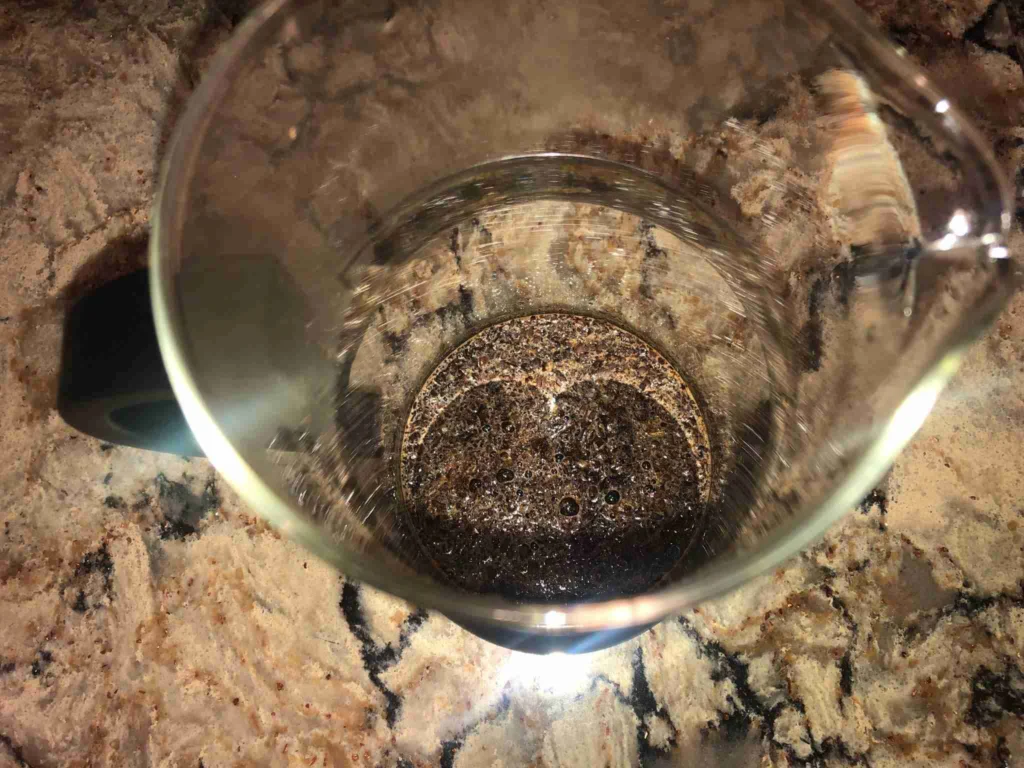
Start a 30-second timer and pour in just enough water to saturate all the grounds, then swirl lightly. This lets trapped CO2 escape so the grounds make full contact with the water. It doesn’t need to be precise. More on why in our guide to coffee bloom.
Step 6: Finish Pouring
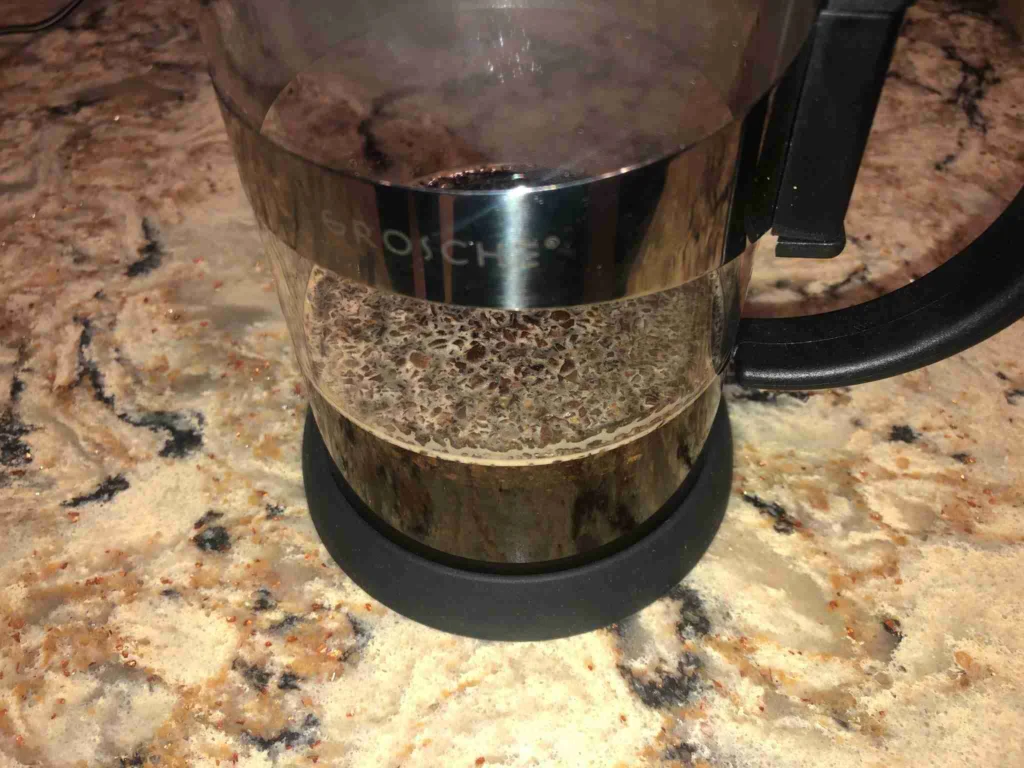
Set a timer for 3 minutes 30 seconds (about 4 minutes in total) and pour in the rest of the water. A crust of grounds forms on top; stir it lightly so the floating grounds sink and extract. Don’t over-stir, as more agitation also means more bitterness.
Step 7: Press the Plunger
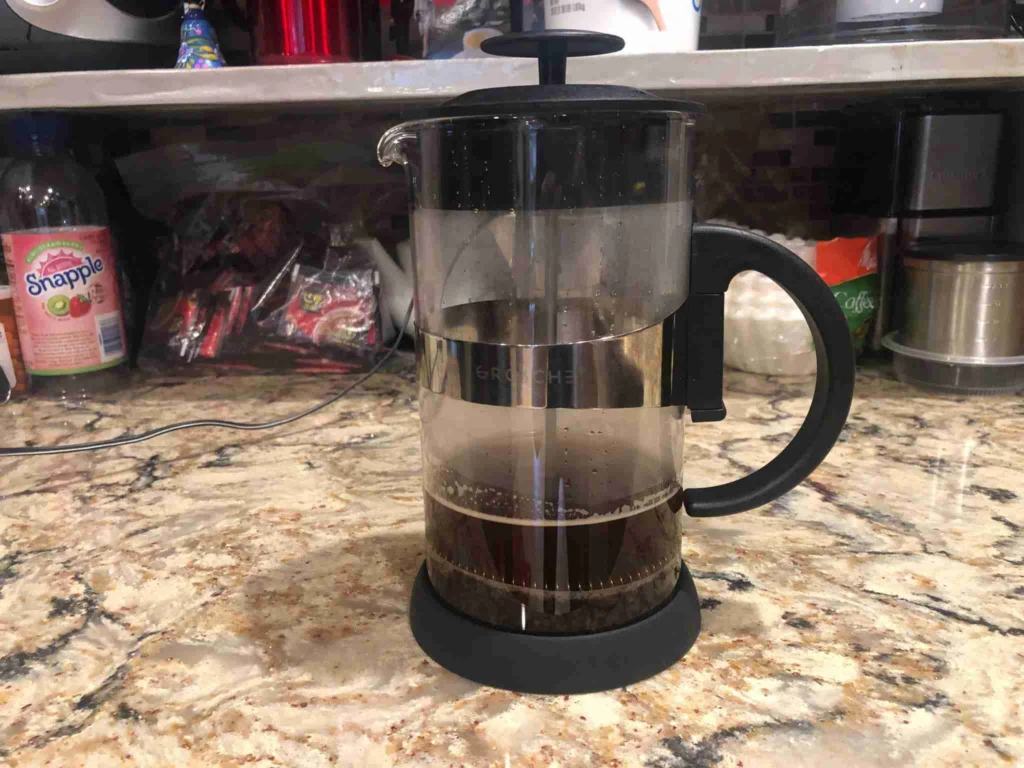
When the timer ends, press the plunger down slowly and gently. Don’t force it hard into the grounds at the bottom; that agitates them and can make the coffee bitter and gritty.
Step 8: Enjoy!
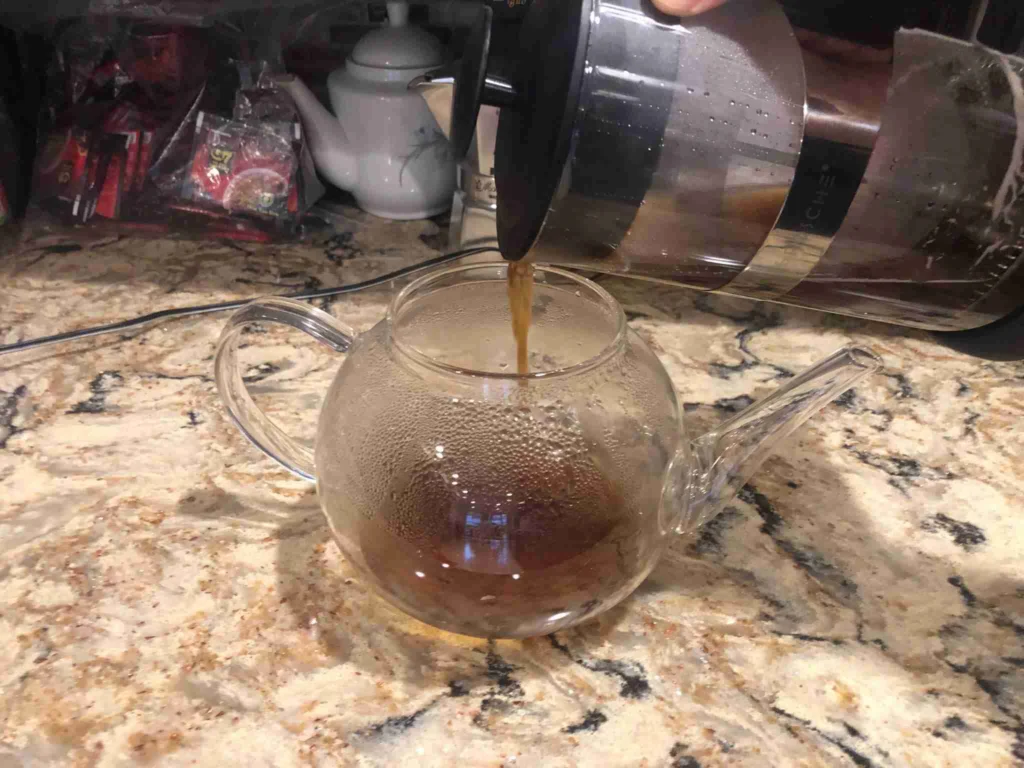
Pour all the coffee out right away, into cups or a separate carafe, so it stops extracting.
Tips for better French press coffee
Tip 1: Use a good burr grinder
A consistent grind means even extraction. A poor grinder makes some particles too small, which over-extract and slip through the mesh into your cup.
Tip 2: Coffee to Water Ratio
15 grams of water to each gram of coffee is a good ratio that we like using. Want beans that suit the method? See the best coffee for French press.
Tip 3: Use the Right Water
If your tap water tastes of chlorine or is very hard, filtered water will make better coffee (see tap vs filtered water for coffee). Keep the water around 195–205°F (90–96°C): much cooler and the coffee under-extracts and tastes sour.
Tip 4: Have a Second Pot
Coffee left in the press keeps sitting on the grounds and turns bitter. Once it’s brewed, slowly pour any coffee you won’t drink immediately into a separate pot or thermal carafe.
Tip 5: Clean your French Press
Clean the press after every use, including the mesh screen, where grounds and oils get lodged. Leftover residue gives your next cup a stale, bitter taste.
Tip 6: Be Consistent
Weigh your beans and water every time and note what you changed, so you can repeat the cups you like.
Tip 7: Adjust grind to taste
Too bitter? Grind coarser. Too sour? Grind finer. Once you find your setting, stick with it.
Tip 8: Sift Your Coffee Before Brewing
Shaking your grounds through a fine sieve removes the dusty fines that cause sludge and bitterness, making the grind more consistent.
Tip 9: Stir early, then let it settle
Stirring increases extraction. We like stirring at the beginning of the brew to help saturate and de-gas all the coffee grounds. For a cleaner cup, avoid stirring right before you plunge: letting the grounds settle first keeps more of them out of your cup.
Tip 10: Extra Filtering
If you like a finer grind but not the muddiness, pour the finished coffee through a paper filter.
What are the pros and cons of a French press?
Pros: easy and quick, cheap, no paper filters, full body, and easy to brew for several people.
Cons: the grounds stay in contact with the water, so it is easy to over-extract into bitterness, and some sediment and oiliness are unavoidable. If you want a cleaner cup with a similar immersion style, try an AeroPress.
Keep experimenting
Experiment with the different brewing parameters. Try adjusting one variable at a time and see what the results are.
Broom Wagon Coffee
If French Press isn’t for you and you like espresso drink, read our article about Americano Coffee.
Frequently asked questions
How long should French press coffee steep?
About 4 minutes in total, including the 30-second bloom. Longer steeping pulls out more bitterness, so pour the coffee off the grounds once you’ve pressed.
How much coffee do I put in a French press?
Use about 1 g of coffee for every 15 g of water: 20 g for 300 ml, or roughly 60 g for a large 900 ml press. Use more for a stronger cup.
Why is my French press coffee bitter?
Usually the grind is too fine, the steep is too long, or the coffee was left sitting on the grounds after pressing. Grind coarser, keep to about 4 minutes and decant straight away.
I want to make 24 oz of coffee. How much ground coffee do I use for 24 ounces? 3/8 cup?