

Quick answer: Coffee bloom is the burst of carbon dioxide that bubbles out of freshly roasted grounds when hot water first hits them. To bloom coffee, pour about twice the coffee’s weight in water (30 g for 15 g of coffee), make sure every ground is wet, wait 30–45 seconds for the bubbling to settle, then finish the brew.

If your pour-over tastes sour or flat even with good beans, a skipped or rushed bloom is a common culprit. This guide explains what the bloom is, why it matters, how to do it for each brewer, and what it means when your coffee barely blooms at all.
In this guide 6 sections
What is coffee bloom?
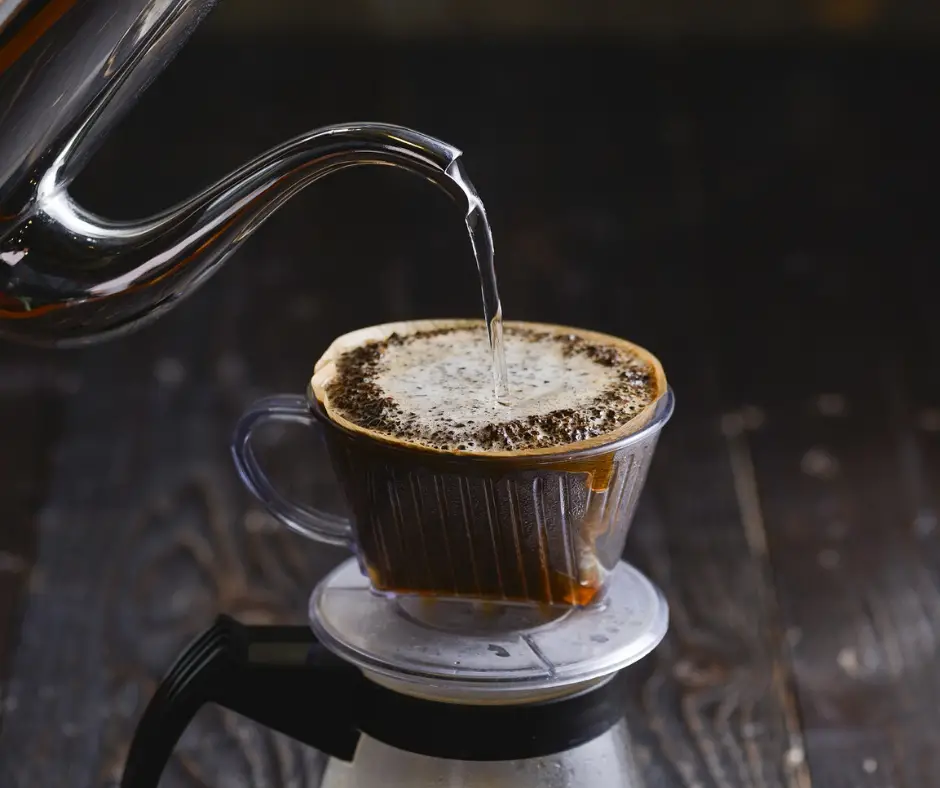
Roasting turns sugars and other compounds in the bean into new flavour molecules, water vapour and carbon dioxide. The gas builds up so much that it cracks the beans audibly in the roaster, which is how many roasters judge “doneness”. A lot of that CO2 stays trapped inside the roasted bean.
From the moment roasting ends, the beans slowly release that gas (degassing). Grinding speeds it up, and hot water speeds it up even more: the grounds puff up, bubble and rise in a dome. That dome is the bloom. A lively bloom is a good sign your coffee was roasted recently. If you roast at home (see our guide to roasting coffee beans at home), you will see the same gas behind first crack.
It is an indicator for freshness, plays an important role in shelf life and in packaging, impacts the extraction process, is involved in crema formation, and may affect the sensory profile in the cup
2018 report in the Journal of Agricultural and Food Chemistry
Why should you bloom coffee?
Carbon dioxide pushes water away. When gas is still escaping, bubbles form between the grounds and the water, so parts of the coffee bed stay dry while water rushes through other parts. That uneven contact means uneven extraction: some grounds give up too little flavour, and the cup can taste sour, thin or muddled.
A short bloom lets most of that gas escape before the main pour, so the rest of the water can wet the bed evenly. It matters most in fast-flowing methods like pour-over, where water only spends a few minutes with the grounds.
Very fresh coffee can have more gas than a bloom can clear. That is why roasters often rest beans for a few days before selling them, and why home roasters usually wait several days (the darker the roast, the faster it degasses) before brewing. We explain the trade-off in why fresher beans don’t always make better coffee.
How do you bloom coffee?
The method is the same for every brewer: wet all the grounds with a small amount of hot water, wait, then continue. The National Coffee Association’s pour-over guide recommends a bloom of double the coffee’s weight in water (30 g of water for 15 g of coffee) and a wait of 30–45 seconds, until the grounds stop bubbling. Use water at normal brewing temperature (see our guide to coffee water temperature).
How to bloom pour-over coffee
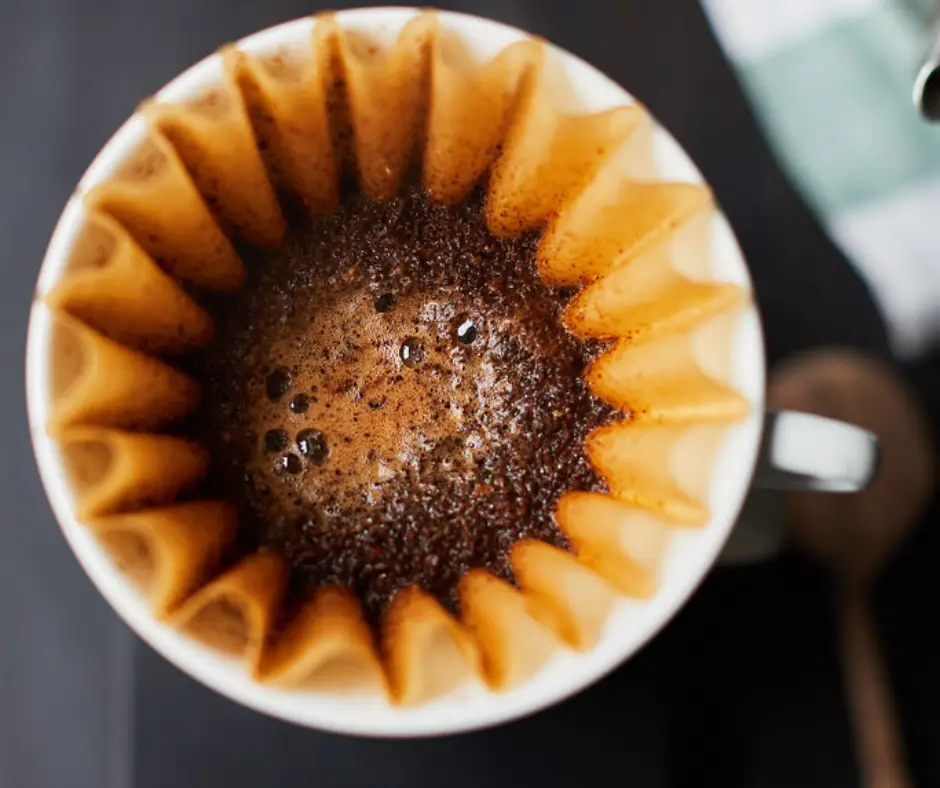
Pour-over is where the bloom matters most, because water passes through the bed quickly.
- Put your ground coffee in a rinsed filter and level the bed.
- Pour about twice the coffee’s weight in water in a slow spiral so every ground gets wet.
- If you see dry clumps, give the slurry a gentle swirl or stir (see should you stir the bloom?).
- Wait 30–45 seconds, then continue with your main pours.
For full recipes, see our V60 brewing methods, where we compare three well-known V60 recipes, and our pour-over coffee to water ratio guide.
How to bloom French press coffee
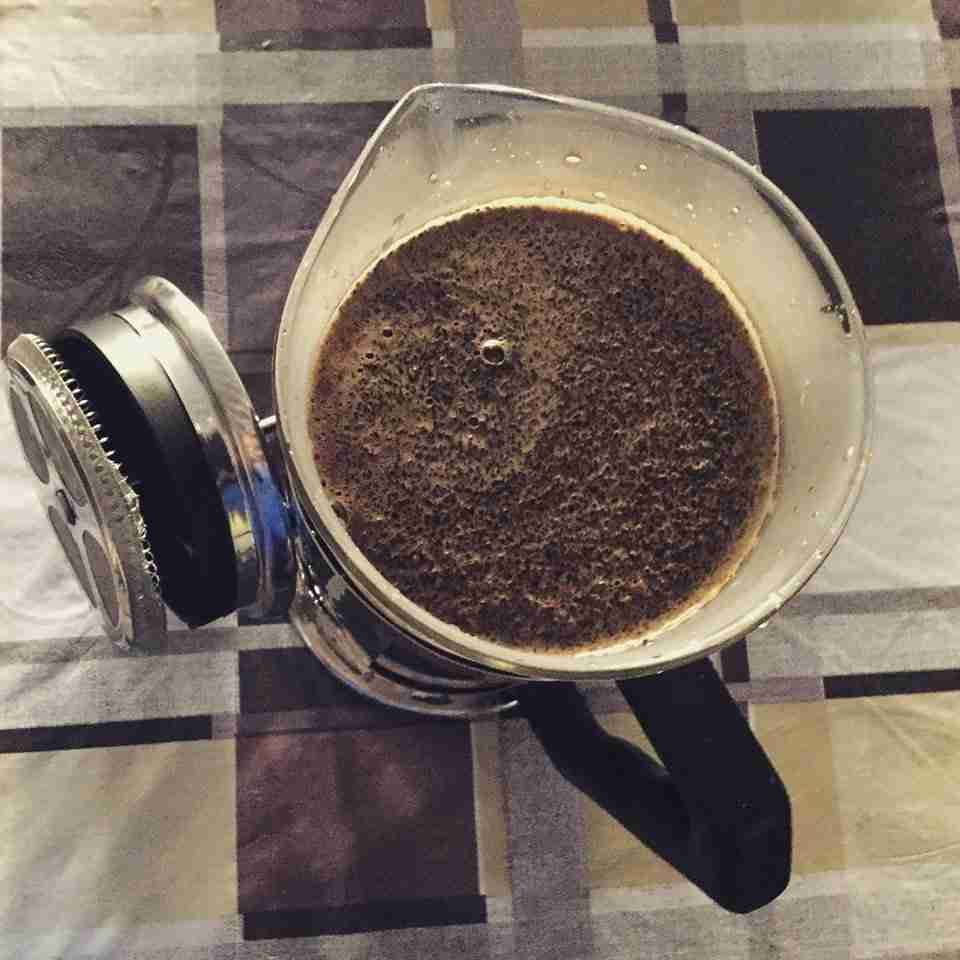
Because a French press steeps for several minutes, the bloom makes less difference here, but it still helps the grounds wet evenly.
- Add just enough water to wet all the grounds.
- Wait about 30 seconds; you will see a layer of bubbles form.
- Stir so everything is saturated, add the rest of the water and steep as usual.
Our French press guide has the full recipe.
How to bloom with a manual espresso maker
On a lever or manual espresso maker such as the Flair, the bloom is called pre-infusion.
- Fill and tamp the portafilter and preheat the equipment.
- Add the water for the shot and apply light pressure (around 2 bar) for 10–15 seconds.
- Then ramp up to full pressure and pull the shot.
Read more in our Flair espresso maker review and our guide to pulling a perfect Flair shot.
How to bloom in an automatic drip coffee maker
- Put the filter and grounds in the basket.
- Pour just enough hot water over the grounds in a circle to wet them all.
- Wait about a minute, then start the machine as normal, using slightly less water in the reservoir to make up for what you added.
Why is there no bloom (or a huge one)?
How much your coffee blooms depends on more than freshness:
- Roast date: beans roasted within the last few weeks bloom the most. Old or pre-ground coffee has already lost most of its gas, so it barely rises.
- Roast level: darker roasts degas faster, so they lose their bloom sooner. Their surface oils can also make a foamy, oily froth that looks like a bloom even when the coffee isn’t especially fresh.
- Storage: beans kept airtight, or frozen soon after roasting, hold their gas longer than beans in an open bag. See freezing coffee beans.
- Brewer: the bloom is easiest to see in pour-over. In a French press or drip machine it is there, just less visible.
A weak bloom doesn’t automatically mean bad coffee, but a flat bed from beans that should be fresh is a hint they have been stored poorly.
How storage affects coffee bloom
Keep beans in an airtight container in a cool, dry, dark place. Heat speeds up degassing and staling, so avoid shelves near the oven. Humidity is the bigger risk: damp coffee can grow mould, so keep beans dry. For shelf-life details, see can coffee go bad? and how long coffee stays fresh.
Frequently asked questions
How long should you bloom coffee?
30–45 seconds is the usual range for pour-over, or until the grounds stop bubbling. Very fresh coffee can take a little longer; older coffee needs less.
How much water do you use for the bloom?
About twice the weight of the coffee: 30 g of water for 15 g of coffee, or 40 g for 20 g. The goal is simply to wet every ground without water dripping through quickly.
Does no bloom mean my coffee is stale?
Not necessarily. Pre-ground coffee, dark roasts and beans rested for several weeks all bloom less. If whole beans roasted in the last week or two don’t bloom at all, though, they have probably been stored badly.
Do you need to bloom French press coffee?
It is optional. The long steep gives the gas time to escape anyway, but a 30-second bloom and a stir help the grounds wet evenly, so it does no harm.