
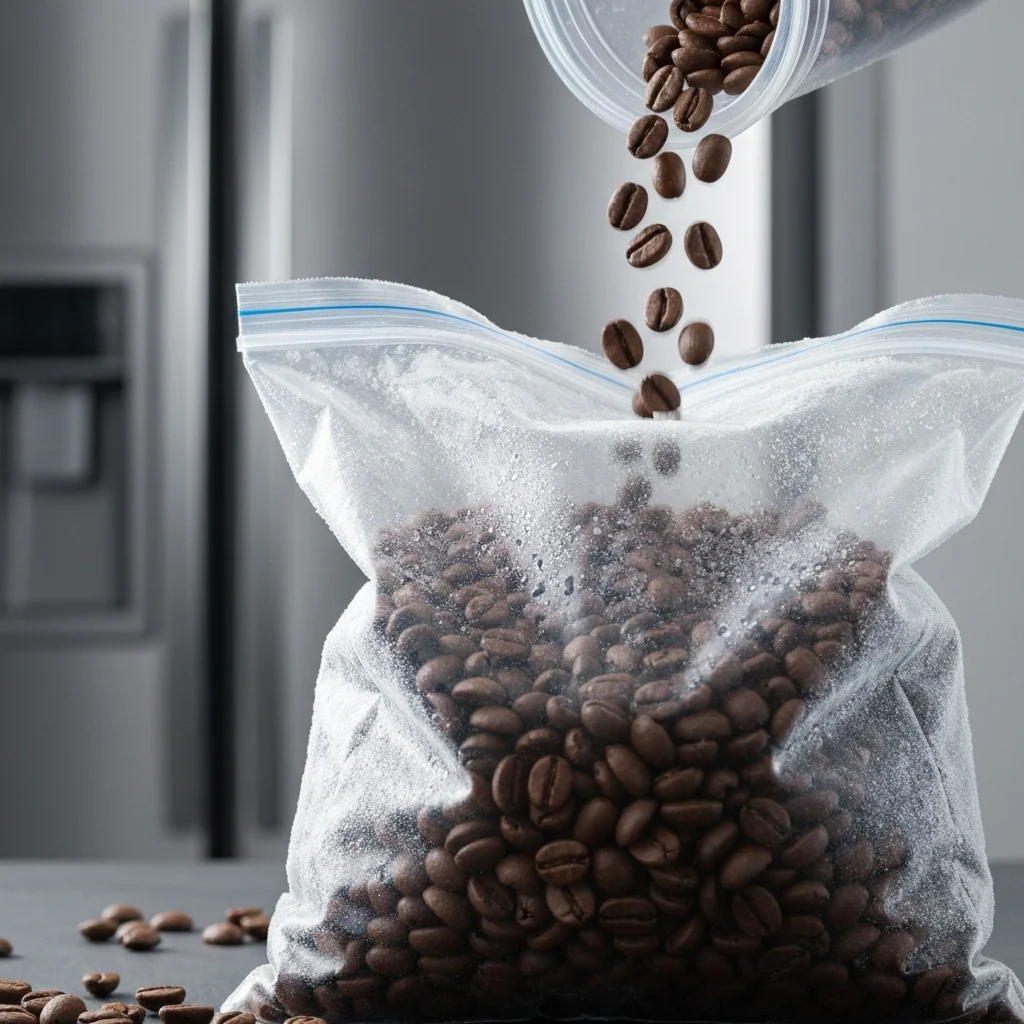
Quick answer: Yes, you can freeze coffee beans, and done right it barely affects flavour. Freeze fresh whole beans in small, airtight, single-use portions, take out only what you need, and don’t refreeze. Frozen this way, beans keep their quality for about 3–4 months. Keep each portion sealed until it reaches room temperature, or grind straight from frozen.
Freezing is the easiest way to stock up on a favourite roast, or take advantage of a bulk or free-shipping deal, without the beans going stale. The key is keeping out air and moisture.
In this guide 5 sections
Can you freeze coffee beans?
Yes. Cold slows the staling reactions that flatten coffee’s aroma, and the National Coffee Association puts the life of frozen roasted beans at 3–4 months, compared with 1–3 weeks at room temperature. The risks are moisture (condensation when you take beans out), freezer odours and repeated thawing, all of which careful packing avoids. For how fast beans fade at room temperature, see how long coffee stays fresh.
How do you freeze coffee beans?
- Start fresh. Freezing preserves the coffee as it is; it doesn’t revive stale beans. Check the roast date, not just the best-by date.
- Rest first if needed. Very fresh beans release a lot of CO2. Many brewers let them rest before freezing: a few days for darker roasts and around a week for light roasts, especially for espresso. See why fresher beans aren’t always better.
- Portion it. Split the beans into single-dose or one-to-two-day portions so you never thaw more than you need.
- Pack airtight. Vacuum-sealed bags are best. Otherwise use freezer-safe airtight containers or freezer bags with the air pressed out. If you freeze the roaster’s bag, tape over the one-way valve.
- Label and freeze straight away with the coffee name and roast date.
How do you use frozen coffee beans?
- Keep it sealed while it warms: if you open a cold container, moisture condenses on the beans. Let the sealed portion reach room temperature first.
- Or grind from frozen: with single-dose portions you can grind straight from the freezer. A 2016 study in Scientific Reports found that colder beans grind into a finer, more uniform particle size, so you may need to grind slightly coarser. Check your grinder’s manual first.
- Use it promptly: thawed beans fade quickly, so plan on using a portion within a day or two.
- Don’t refreeze: each thaw exposes the beans to moisture and air.
Does freezing coffee ruin the flavour?
Not if you do it properly. Many enthusiasts, including coffee writer James Hoffmann, freeze beans routinely. Most flavour loss comes from moisture getting in or from thawing and refreezing, not from the cold itself.
What about freezer burn?
Freezer burn happens when food dries out and frost forms on the surface after exposure to air in the freezer. It dulls aroma. Airtight or vacuum-sealed packaging prevents it.
I thawed a whole bag. Should I refreeze it?
No. Keep it in an airtight container in a cool, dark cupboard and use it over the next week or two, as you would a freshly opened bag.
Should you freeze ground coffee?
You can, but whole beans keep better because grinding exposes much more surface to air and moisture. If you only have pre-ground coffee, the same rules apply: small airtight portions, no refreezing.
Frequently asked questions
How long can you freeze coffee beans?
About 3–4 months in airtight packaging, according to the National Coffee Association. They are still safe after that but gradually lose flavour. For more on safety, see can coffee go bad?
Is it better to freeze or refrigerate coffee?
Freeze it. The fridge is humid and full of odours that coffee absorbs, and it doesn’t keep beans fresh much longer. For daily use, an airtight container in a cupboard is best.
Will frozen coffee still bloom?
Yes. Freezing slows degassing, so well-frozen fresh beans still bloom when you brew. Read more about coffee bloom.
Share this guide
See more Coffee Informer on Google. Add us as a preferred source and our guides show up more in your Top Stories and AI results.