
Gooseneck Kettle Pours Unevenly? Fix It & Master Your Coffee

Master Your Pour: Why Your Gooseneck Kettle Pours Unevenly & How to Fix It

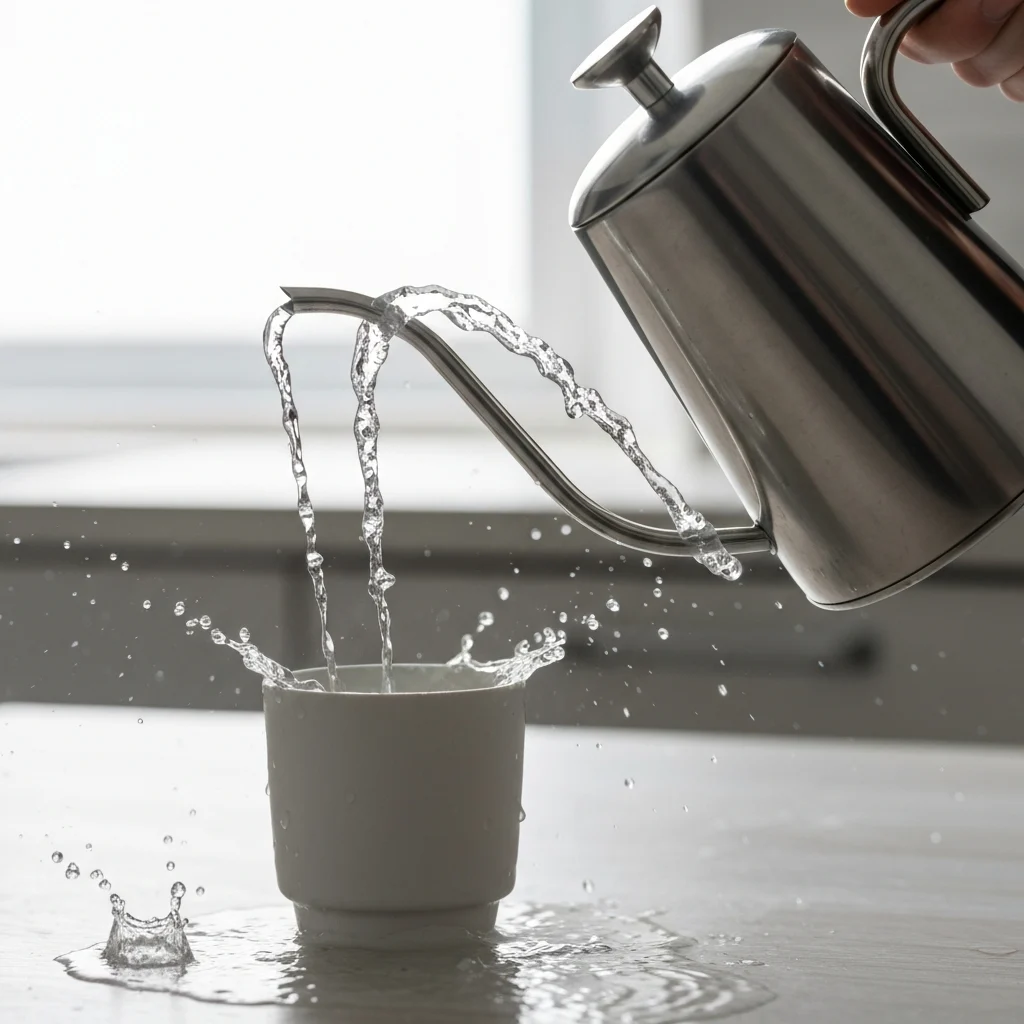
You have the perfect beans, a high quality burr grinder, and your favorite pour over dripper. You are ready to brew a world class cup of coffee. You begin to pour, aiming for that slow, methodical, perfectly controlled stream you see in barista videos. Instead, water gushes out, flooding the center of your coffee bed and ruining your careful preparations. If your gooseneck kettle pours unevenly or too fast, you are not alone. It is a common frustration that stands between many home brewers and the perfect cup. But don’t worry, the solution is often surprisingly simple.

At Coffee Informer, we know that control is everything in manual brewing. An unruly kettle can lead to an uneven extraction, resulting in a cup that tastes both sour and bitter. This guide will walk you through why your kettle might be misbehaving and provide you with actionable, easy to implement solutions. We will cover simple technique adjustments, low cost gear upgrades, and the single biggest mistake most people make when filling their kettle. Get ready to transform your pour and unlock the true potential of your coffee.

Why a Controlled Pour Is Crucial for Delicious Coffee

Before we dive into the fixes, let’s quickly touch on why pouring speed and evenness are so important. Manual coffee brewing, especially the pour over method, is all about extraction. The goal is to extract the perfect amount of soluble compounds from the coffee grounds to create a balanced, sweet, and flavorful drink.

A fast or erratic pour disrupts this process in several ways:

  • Channeling: When water is poured too aggressively, it can carve channels through the coffee bed. Water will always follow the path of least resistance, meaning it will flow through these channels repeatedly while ignoring other parts of the coffee grounds. This leads to some grounds being over extracted (causing bitterness) and others being under extracted (causing sourness).
  • Uneven Saturation: The first pour, known as the coffee bloom, is arguably the most critical step. Its purpose is to evenly saturate all the coffee grounds, allowing trapped carbon dioxide to escape. If your kettle gushes water into the center, the grounds on the outer edge may not get properly wet, leading to an uneven bloom and a poor start to your extraction.
  • Agitation: While some agitation is necessary, too much can be a bad thing. A forceful stream of water can churn up the fine coffee particles, causing them to clog the filter paper. This can dramatically slow down your brew time, a phenomenon known as “stalling,” which often results in a bitter, over extracted cup.

Mastering your pour gives you control over these variables. A slow, steady, and even stream of water ensures every coffee particle gets the attention it deserves, leading to a consistently delicious brew every single time.

7 Actionable Tips for a Slower, More Controlled Pour

If you are struggling with a gooseneck kettle that pours too fast, it is time to troubleshoot. The problem might not be the kettle itself, but how you are using it. Here are seven effective methods to tame your pour, starting with the simplest and most impactful fix.

1. The Surprising “Less is More” Technique

This is the number one reason people struggle with flow control. Do not overfill your kettle! A full kettle has a large volume of water creating significant downward pressure. This hydrostatic pressure forces water out of the spout at a high velocity, even with a minimal tilt. It is simple physics: more water weight equals a faster flow.

The fix is wonderfully simple: only heat slightly more water than you need for your brew. For example, if you are making a single 300ml cup of coffee, you might need about 50ml to rinse your filter and preheat your dripper and server. In this case, filling your kettle to just 400ml or 500ml is perfect.

With less water in the kettle, there is less pressure pushing it out. This means you will need to tilt the kettle more to start the pour, giving you a much wider range of motion and finer control over the flow rate. You will be able to achieve a thread like stream with ease. As a bonus, you will save electricity by not heating water you do not plan to use.

2. Mind the Tradeoffs: Managing Water Temperature

A valid concern with the “less is more” technique is heat loss. With a smaller volume of water, the kettle has less thermal mass and can cool down faster between pours. A significant temperature drop during brewing can negatively affect extraction. However, this is often less of an issue than you might think.

Here’s how to manage it:

  • Use an Electric Kettle: If you have a variable temperature electric kettle, this is a non issue. Simply place the kettle back on its base between pours. Most models will automatically kick back on to maintain your target temperature. Even if the temperature drops a few degrees (from 212F to 205F, for instance), this range is still excellent for brewing and the impact on your final cup will be minimal.
  • Reheat a Stovetop Kettle: If you use a stovetop model, you can briefly place it back on the burner between your main pouring stages to bring the temperature back up.
  • Test It Yourself: The best way to know if this is a problem is to test it. After your final pour, use a thermometer to check the temperature of the remaining water. You might be surprised at how well your kettle retains heat, even with a lower water level.

3. Find the Sweet Spot: Avoid Underfilling

While overfilling is the main culprit, underfilling can create its own set of problems. If you only put the exact amount of water you need in the kettle, you will find yourself tilting it to an extreme, almost vertical angle to get the last drops out. This awkward position makes fine motor control nearly impossible, and you are likely to cause a surge of water that disrupts your coffee bed.

The goal is to find the sweet spot. A good rule of thumb is to fill your kettle with about 100ml to 200ml more water than your total recipe calls for. This provides enough water to complete your brew with a comfortable tilt angle, without creating the excessive pressure of a full kettle.

4. The Barista’s Secret Weapon: The Flow Restrictor

If you want a guaranteed slow flow without changing your filling habits, a flow restrictor is a game changing and inexpensive accessory. This tiny device, usually made of food grade silicone, inserts into the spout of your gooseneck kettle. It works by narrowing the opening, physically restricting the amount of water that can exit at one time.

The result is a consistently gentle, easy to manage stream that is perfect for delicate tasks like the bloom. Many baristas swear by them for achieving perfect saturation without agitating the coffee grounds. A quick online search for “gooseneck kettle flow restrictor” will show you several options that fit popular kettle models like those from Bonavita or Hario. It is a small investment that can make a huge difference in your brewing consistency.

5. Low Tech Hacks: The Spoon Method

Want to improve your pour without buying anything new? Try this old fashioned trick. Instead of pouring directly onto the coffee bed, pour the water over the back of a spoon (a soup spoon works well) held a few inches above the dripper. The water will hit the spoon and cascade gently and widely over the coffee grounds, much like a showerhead.

This method is excellent for diffusing the force of the water stream. It is particularly helpful during the bloom phase to ensure all the grounds get wet without creating a crater in the middle. It might feel a bit clumsy at first, but with a little practice, it is a surprisingly effective way to achieve a gentle, even saturation with a fast flowing kettle.

6. Adjust Your Bloom Technique (and Mindset)

Many beginners get fixated on hitting precise numbers from brewing recipes, like the famous James Hoffmann V60 method, which might call for a bloom using only twice the weight of water to coffee (e.g., 36g of water for 18g of coffee). With a fast kettle, hitting that exact number while wetting all the grounds can feel impossible.

Here’s a secret: it is okay to go a little over. The primary goal of the bloom is to saturate all the grounds. If you need to use 50g or even 60g of water to get the job done, that is perfectly fine. It is far better to have a slightly larger but evenly saturated bloom than to stick to a precise number and leave dry patches. As your pouring technique improves, you will find it easier to use less water, but do not let perfect be the enemy of good.

A fast or uneven pour can cause a brew to taste terrible, often leading to a flavor that is simultaneously sour and bitter. This is the classic sign of uneven extraction. Fixing your pour is the first step to fixing a sour coffee brew.

7. Consider Alternative Pouring Vessels

While a gooseneck kettle is the standard, it is not the only tool for the job. If you are really struggling, you can try pouring from a different vessel with a finer spout. Some people have found success pouring from a high quality thermos with a push top spout, which can deliver a very fine, consistent stream.

This is also a fantastic trick if you enjoy making pour over coffee while outdoors. Since most goosenecks are electric, they are not ideal for camping. You can boil water in a camping pot and transfer it to a preheated thermos for a controlled pour. It is a great way to enjoy cafe quality coffee anywhere, and a good tip to have in your back pocket. For more tips on brewing in the wild, check out our guide to the best coffee makers for camping.

Conclusion: Take Back Control of Your Brew

A gooseneck kettle that pours unevenly can be a major source of brewing frustration, but it is a solvable problem. You do not need to rush out and buy expensive new gear. For most people, the key is to simply stop overfilling the kettle. By using only a little more water than you need, you reduce water pressure and gain an incredible amount of control over your flow rate.

Start there. If you are still struggling, consider simple fixes like the spoon method or a low cost flow restrictor. Remember to focus on the goal of evenly saturating your coffee grounds rather than hitting exact numbers in a recipe. By implementing these tips, you will tame your unruly kettle, improve your extraction, and start brewing more consistently delicious coffee.

What are your favorite tips for controlling your pour? Do you have a go to technique that we missed? Share your insights in the comments below!

Share

Leave a Comment