
Quick answer: The best camping coffee maker depends on how you camp. For backpacking, the AeroPress Go or a plastic Hario V60 is light and makes excellent coffee. For two to four people, the GSI JavaPress is an easy French press. For a group at a car campsite, the propane Coleman QuikPot brews up to 10 cups.
Good coffee is one of the best parts of a morning at camp. Below are the brewers we recommend for backpacking, car camping and groups, with notes on which older picks are no longer sold.
In this guide 6 sections
Best camping coffee makers at a glance
| Brewer | Style | Best for |
|---|---|---|
| GSI Outdoors JavaPress | French press | Sharing (about 4 cups) |
| AeroPress | Immersion + pressure | Best flavor |
| AeroPress Go | Immersion + pressure | Backpacking |
| Hario V60 Plastic Dripper | Pour-over | Cheapest, lightest |
| Snow Peak Folding Coffee Drip | Pour-over stand | Packs flat |
| Wacaco Minipresso | Hand-pump espresso | Espresso |
| Espro Travel Press | Insulated press mug | Brew and drink in one |
| Stanley Classic Stay Hot French Press | Insulated French press | Car camping |
| Coleman QuikPot | Propane drip | Groups (10 cups) |
| Stanley Cook + Brew Set | Pot + press | Discontinued |
| Jetboil Flash Java Kit | Stove + press | Discontinued |
| nCamp Portable Coffee Maker | Moka-style | Hard to find |
How we chose
We picked these from manufacturer specs, brand reputation and current availability; we did not test them ourselves. We weighed five things:
- Weight: critical for backpackers, much less so for car campers.
- Capacity: solo brewers save space; the designated coffee maker for a group needs more cups per brew.
- Portability: whether it nests, folds or comes with a bag.
- Ease of use and cleaning: few parts, quick rinse.
- Taste: a mix of styles (press, pour-over, espresso) to suit different preferences.
Each pick was checked against the maker’s own website in October 2026.
Our camping coffee maker picks
GSI Outdoors JavaPress (best for sharing)
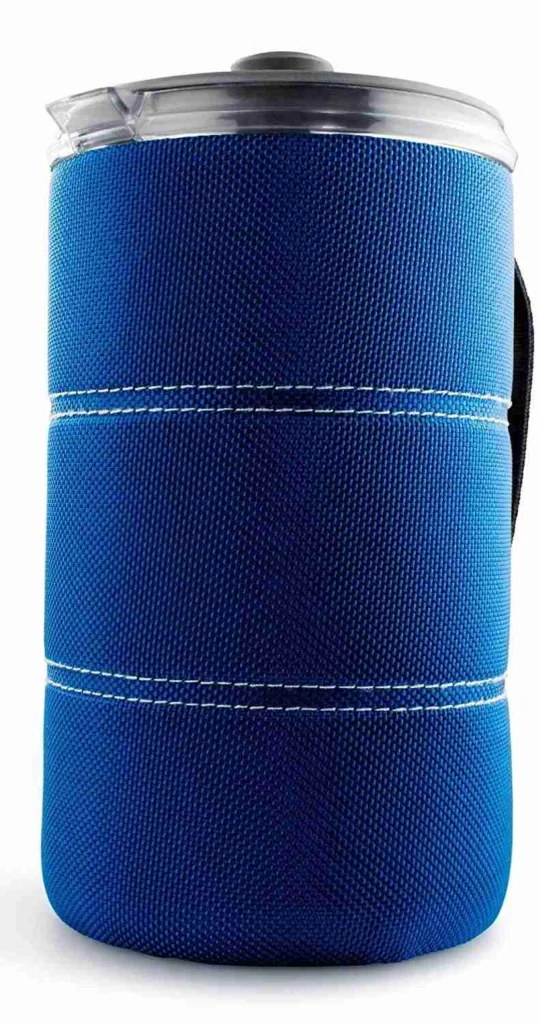
A shatter-resistant, BPA-free plastic French press in an insulated sleeve that keeps coffee warm and protects your hands. GSI still sells the 30 fl oz JavaPress (about four small cups) and a 50 fl oz JavaPress+ with an insulated lid. It works like a normal French press and is easy to rinse out. You need a separate pot to boil water.
Click here to check pricing and to read more reviews
Pros
Insulating Sleeve and Lid
BPA Free Plastic
Brews Multiple Cups
Cons
Cannot Be Used To Boil Water
AeroPress (best flavor)
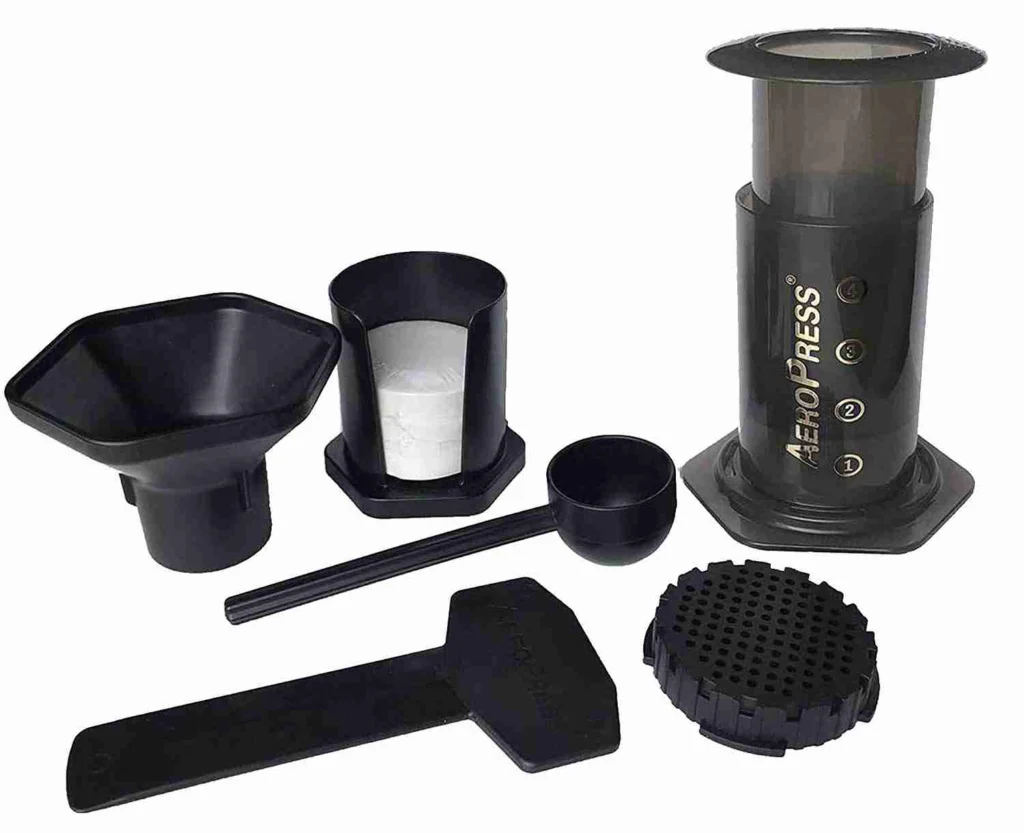
For campers who put flavor first. The AeroPress makes a smooth, concentrated cup and is very easy to clean: you push out a dry puck of grounds. The brand now belongs to AeroPress Inc. The Original brews up to 10 oz and weighs about 7.75 oz with accessories, according to the maker. More brewing tips are in our AeroPress guide.
It has more parts than most camping brewers, needs a sturdy mug to press into, and uses its own round paper filters, so pack enough for the trip.
Click here to check pricing and to read more reviews
Pros
Gourmet Flavor
Easy Cleaning
Espresso Like Taste
Cons
Complicated Use
Clunky With Many Pieces
Needs Its Own Round Filters
AeroPress Go (best for backpacking)
The travel version of the AeroPress packs inside its own mug with a lid. AeroPress lists it at 8 oz (one cup) and 11.4 oz packed. It brews the same style of coffee as the Original in a tidier kit. AeroPress Go on aeropress.com.
Hario V60 Plastic Dripper (cheapest and lightest)
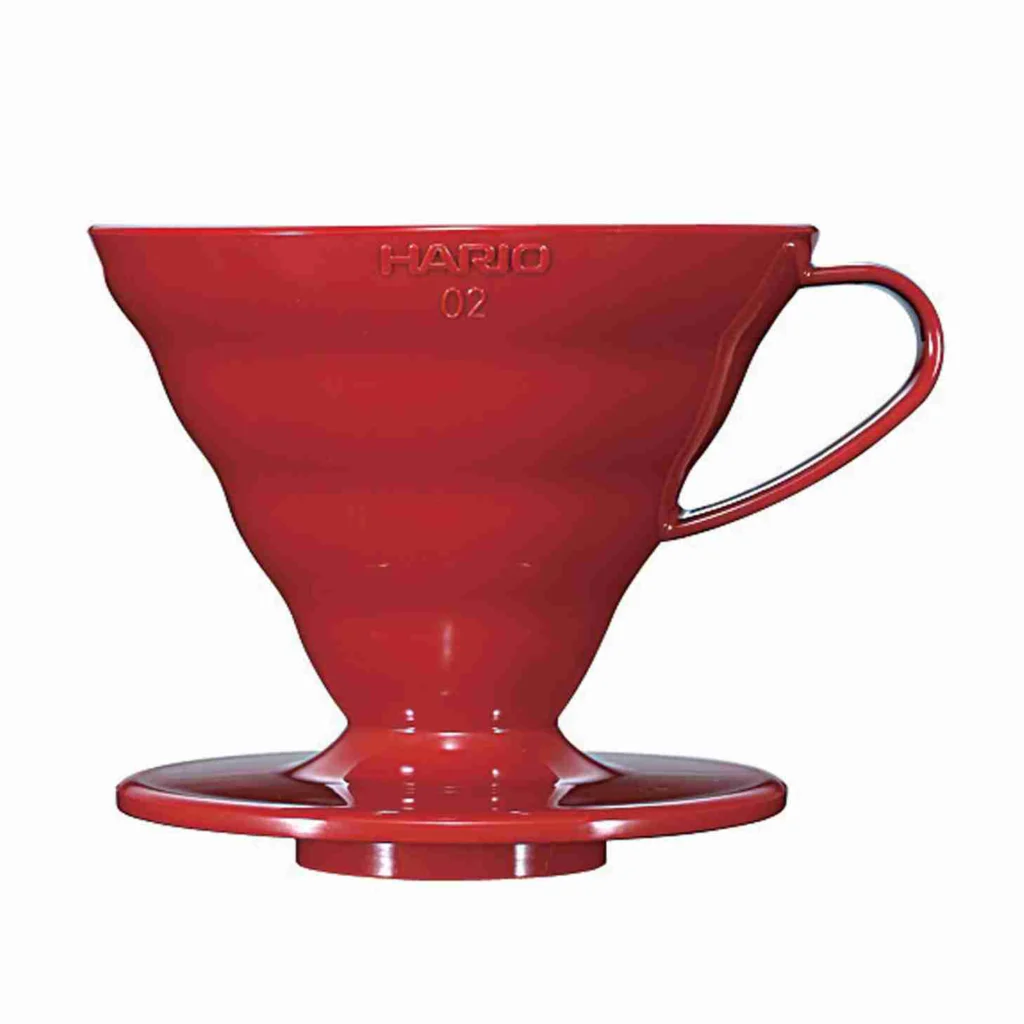
For pour-over fans. The plastic V60 is a classic home brewer that travels well: it weighs only a few ounces and gives a clean cup that gets better as your technique improves. Hario still sells the size 02, which brews 1–4 cups. See our V60 brewing method before you go.
Click here to check pricing and to read more reviews
Pros
Impressive Flavor
Lightweight
Can Brew For Groups
Cons
Awkward Shape
Requires Specific Coffee Filter
Snow Peak Folding Coffee Drip (most packable)
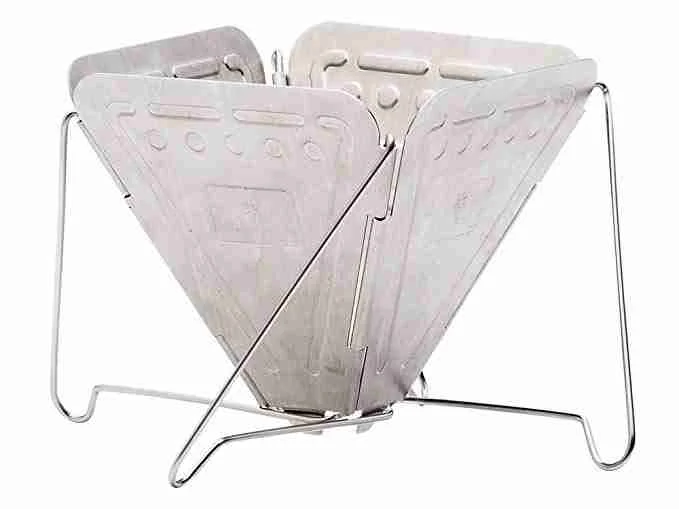
A stainless steel drip stand that breaks down flat, so it packs easily and cleans with a rinse. Snow Peak’s current version, the Field Barista Coffee Drip, weighs 150 g (5.3 oz), sits over a mug and takes cone filters such as V60 and Chemex papers, according to Snow Peak. Stock comes and goes.
Click here to check pricing and to read more reviews
Pros
Folds Flat For Easy Storage
Sits Over Most Mugs
Easy Cleanup
Easy Setup
Extremely Lightweight
Cons
Requires a Coffee Filter
Wacaco Minipresso (best for espresso)
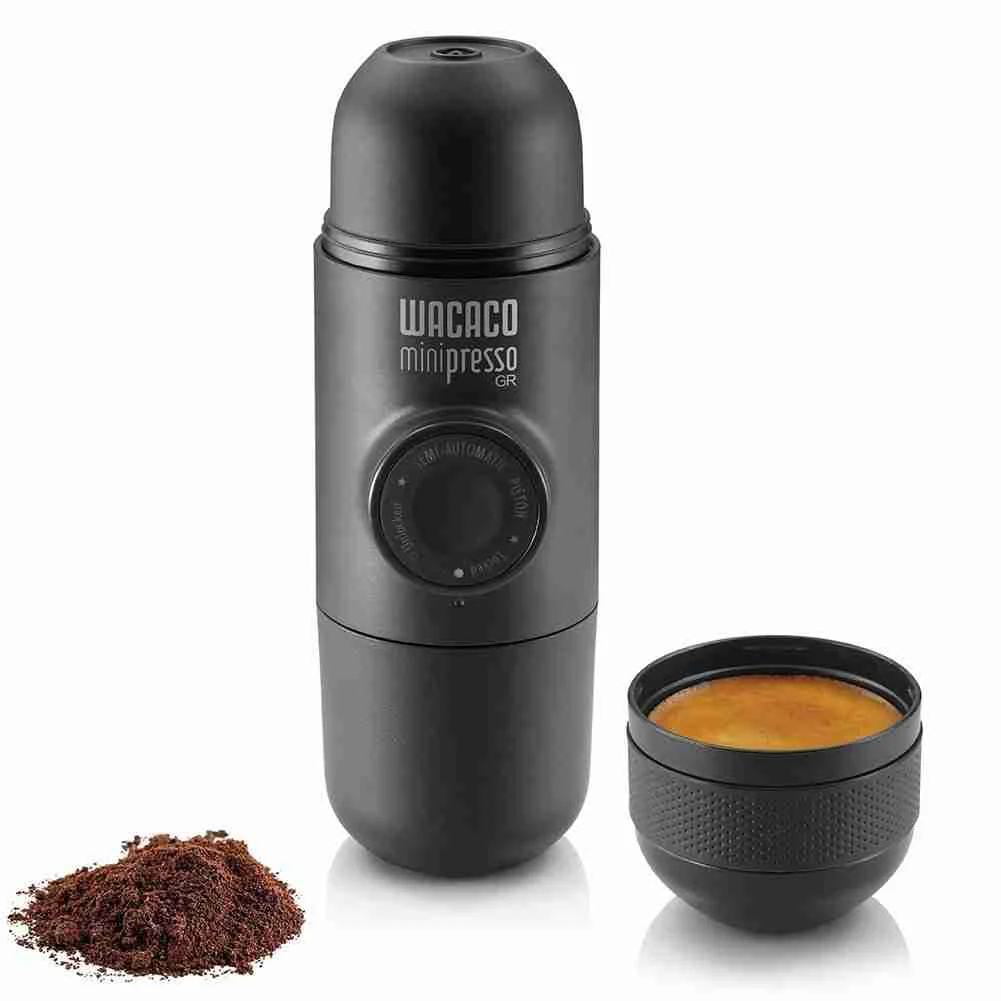
A hand-pumped espresso maker that uses ground coffee, no batteries. Wacaco now sells the Minipresso GR2, which it calls the next evolution of the original GR: 18 bar, 285 g, 8–12 g of coffee per shot. There is also a Nespresso-capsule version (NS2). You still need hot water from a stove.
Click here to check pricing and to read more reviews
Pros
Espresso With No Need For Batteries
Uses Regular Ground Coffee
Small and Lightweight
Detachable Cup
Insulated Design
Cons
Comparatively Large
Hand Powered
Espro Travel Press, now the P0 (best insulated)
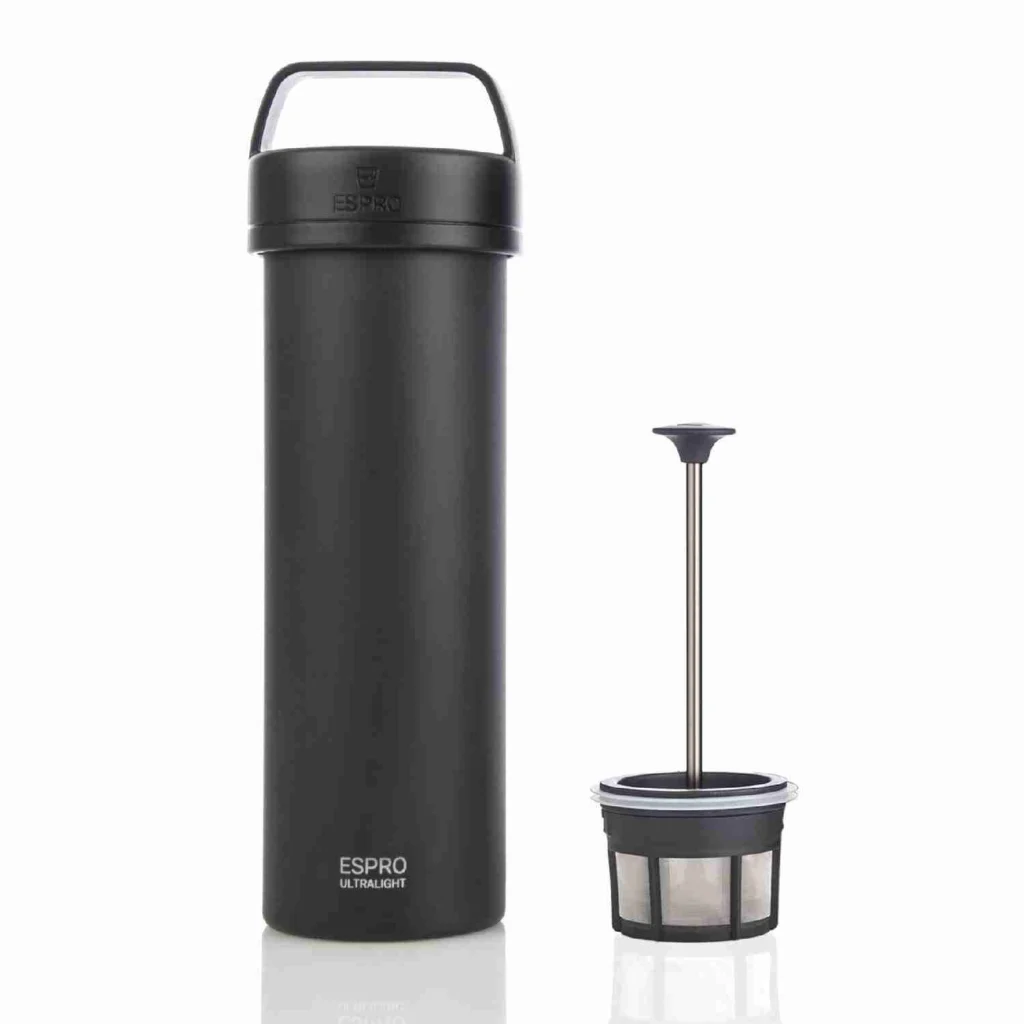
A double-walled stainless travel mug with a press built in. Its double micro-filter keeps nearly all the grit out of your cup. Espro’s current version is the P0 Ultralight Travel Press: 9.6 oz, and it brews about 12 oz of coffee, per Espro. It is also on our list of coffee makers for college students.
Click here to check pricing and to read more reviews
Pros
Double Filter
Insulated Stainless Body
Easy To Clean
Cons
Single Serving Only
Many Different Pieces
Stanley Classic Stay Hot French Press 48 oz (best Stanley option)
Stanley’s current camp coffee pick is a vacuum-insulated stainless French press. Stanley lists it at 48 oz, 2.5 lb, keeping coffee hot for 4 hours. Unlike the old Cook + Brew Set it is not a cook pot, so you need a stove and kettle. Stanley Classic Stay Hot French Press.
Coleman QuikPot Propane Coffeemaker (best for groups)
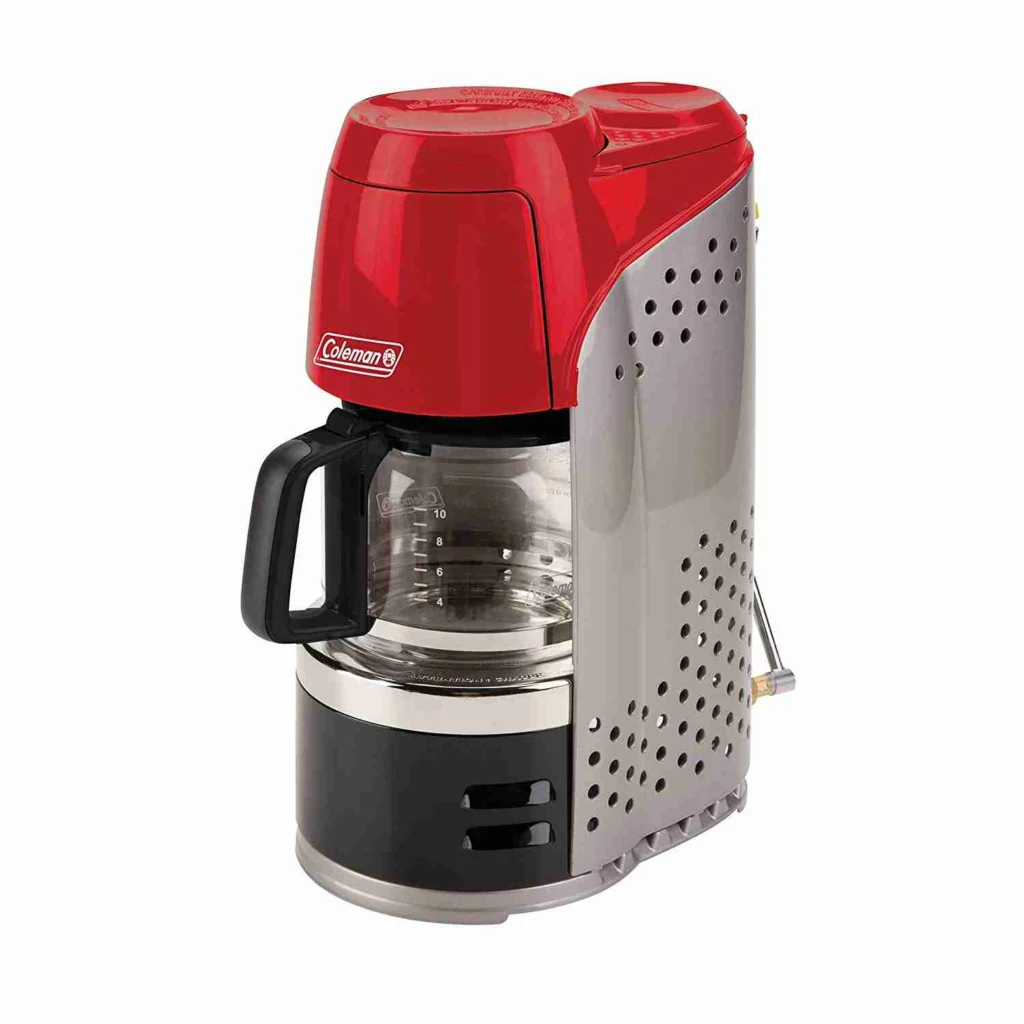
A drip coffee maker that runs on propane instead of a socket. It brews up to 10 cups and keeps the pot warm, so it suits car camping with a group. Coleman lists it at about 10 lb, running on a 16.4 oz propane cylinder (sold separately). The QuikPot is still on Coleman’s site, but it is sometimes marked unavailable.
Click here to check pricing and to read more reviews
Pros
10 Cup Capacity
1 Press Coffee
Keeps Coffee Warm
Cons
Slow Brew Time
Heavy, Needs Propane
Discontinued and hard-to-find picks
These were on earlier versions of this list. We have kept them for reference, but the picks above are easier to buy new.
Stanley Cook + Brew Set (discontinued)
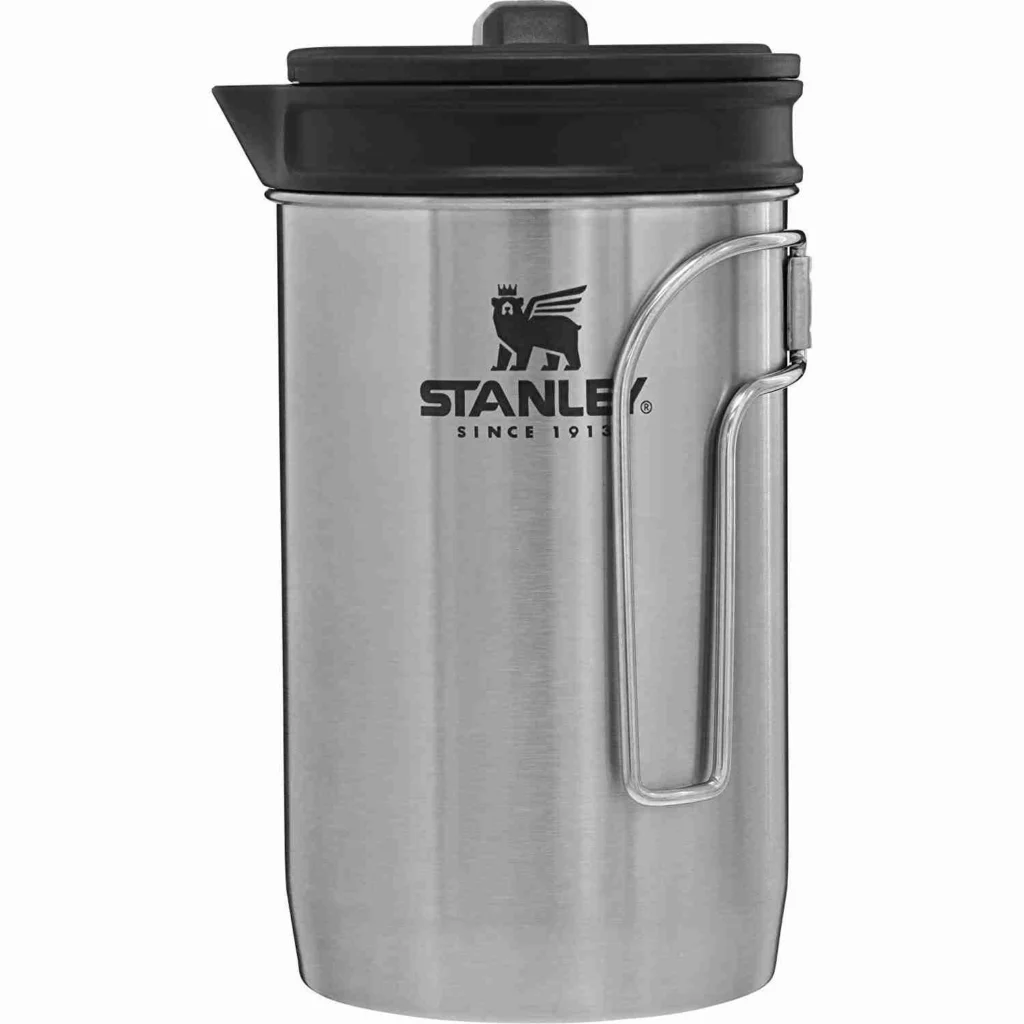
No longer listed by Stanley. This was our former top pick: a stainless cook pot that doubles as a mug, plus a press plunger, with a fold-down handle. Its last version, the Adventure All-In-One Boil + Brew French Press, has gone from Stanley’s catalog. The listing may still have stock.
Click here to check pricing and to read more reviews
Pros
Lifetime Warranty
BPA Free
Very Compact to Save Space
Versatile Cup / Pot
Cons
Handle Gets Hot
Can Only Brew One Cup
Jetboil Flash Java Kit (discontinued)
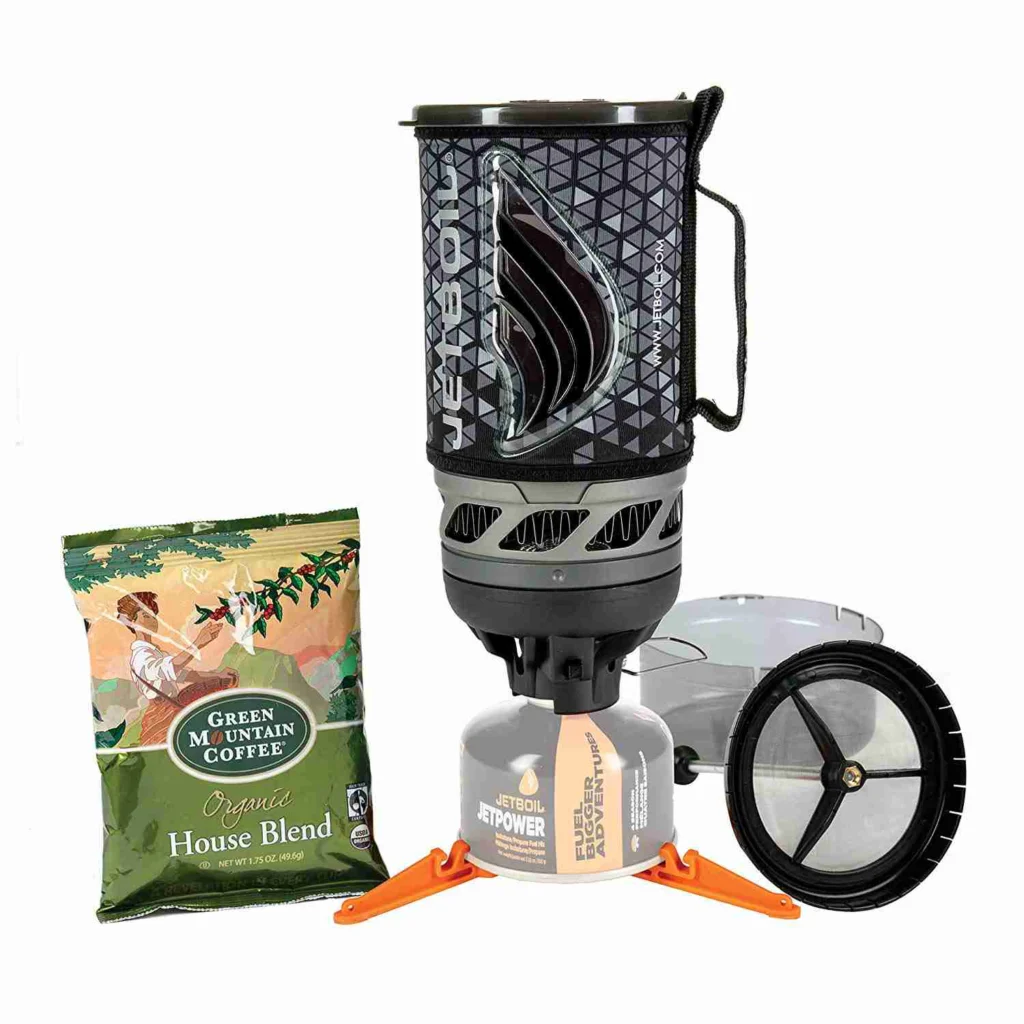
Discontinued, according to major retailers. This kit paired Jetboil’s fast Flash stove with a press insert, so you could boil and brew in one cup that packs down to water-bottle size. Jetboil still mentions a separate silicone coffee press that fits its Flash, Zip and MiniMo cups, so owners of those stoves can get a similar setup.
Click here to check pricing and to read more reviews
Pros
Versatile Stove And Pot
All In One Coffee Set
Packs Down To Size Of A Water Bottle
Cons
Expensive
Requires Propane
nCamp Portable Coffee Maker (hard to find)
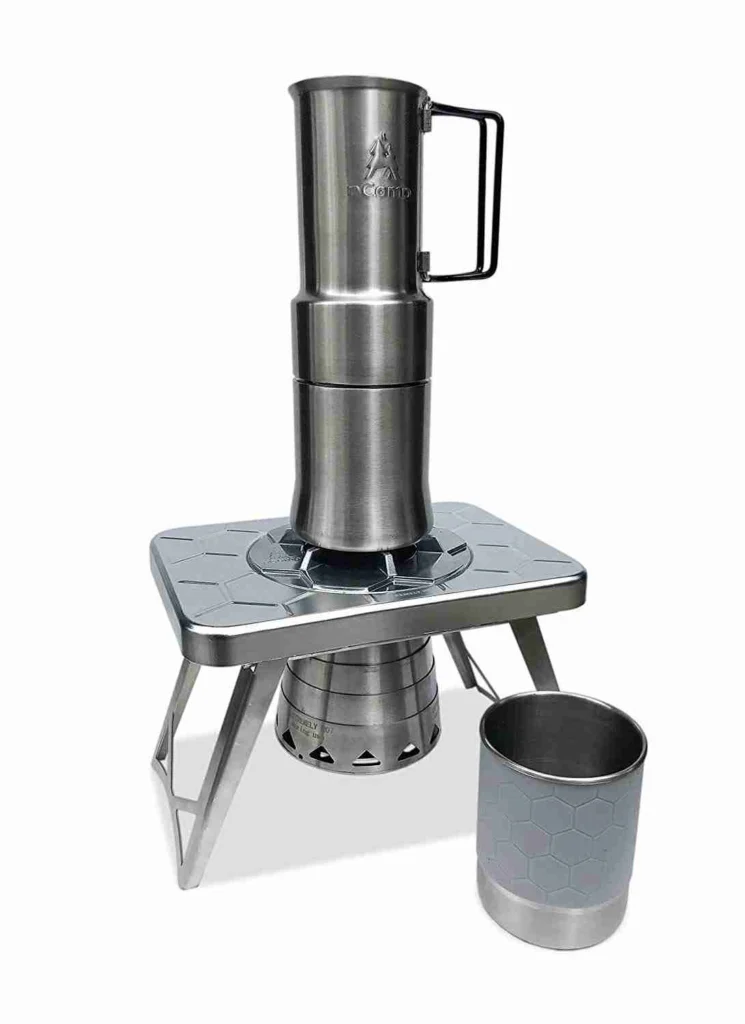
We could not confirm that this is still sold new. It is a moka-style brewer with a nested cup, best for car camping because it is too heavy for backpacking. It mostly turns up on clearance sites now. If you want stovetop espresso, a regular moka pot does the same job; see our stovetop espresso guide.
Click here to check pricing and to read more reviews
Pros
All In One System
Large Brewing Capacity
Durable And Sturdy
Cons
Heavy and Bulky
How do you make good coffee while camping?
- Don’t pour at a rolling boil. Water around 200°F extracts flavor well. Once your water boils, take it off the heat and let it stop bubbling for a short while before you pour, or the coffee can taste harsh and bitter.
- Bloom the grounds. Pour a little hot water over the coffee before the main pour. The foam you see is trapped carbon dioxide escaping; letting it out helps the rest of the water reach the grounds evenly. More in our coffee bloom guide.
- No grinder at camp? Grind at home just before you leave, or try one of these ways to grind without a grinder.
- Measure once at home. Pre-portion your coffee into bags so you don’t need a scale in camp. Our coffee-to-water ratio guide gives a starting dose.
Frequently asked questions
What is the easiest way to make coffee while camping?
A French press such as the GSI JavaPress is the easiest: add coarse grounds and hot water, wait, then press. There are no paper filters to pack and cleanup is a quick rinse.
What is the lightest camping coffee maker?
Of the picks here, the plastic Hario V60 and the Snow Peak Field Barista (150 g) are the lightest. The AeroPress Go is heavier at 11.4 oz packed, but that includes its own mug.
Can you make espresso while camping?
Yes. A hand-pumped brewer like the Wacaco Minipresso GR2 reaches 18 bar using ground coffee and hot water, with no batteries. A moka pot on a camp stove makes a strong, espresso-style coffee too.
Should you use boiling water for camp coffee?
Not straight off a rolling boil. Let it rest briefly so it settles around 200°F, which extracts flavor without making the coffee harsh.