

Quick answer: Buy the Breville Barista Express if you want the cheaper machine with an analog pressure gauge and don’t mind waiting for it to heat up. Choose the Barista Pro if you value speed and precision: its ThermoJet system is ready in 3 seconds, its grinder has 30 settings instead of 16, and an LCD shows a shot timer. Both have a built-in grinder and a manual steam wand.
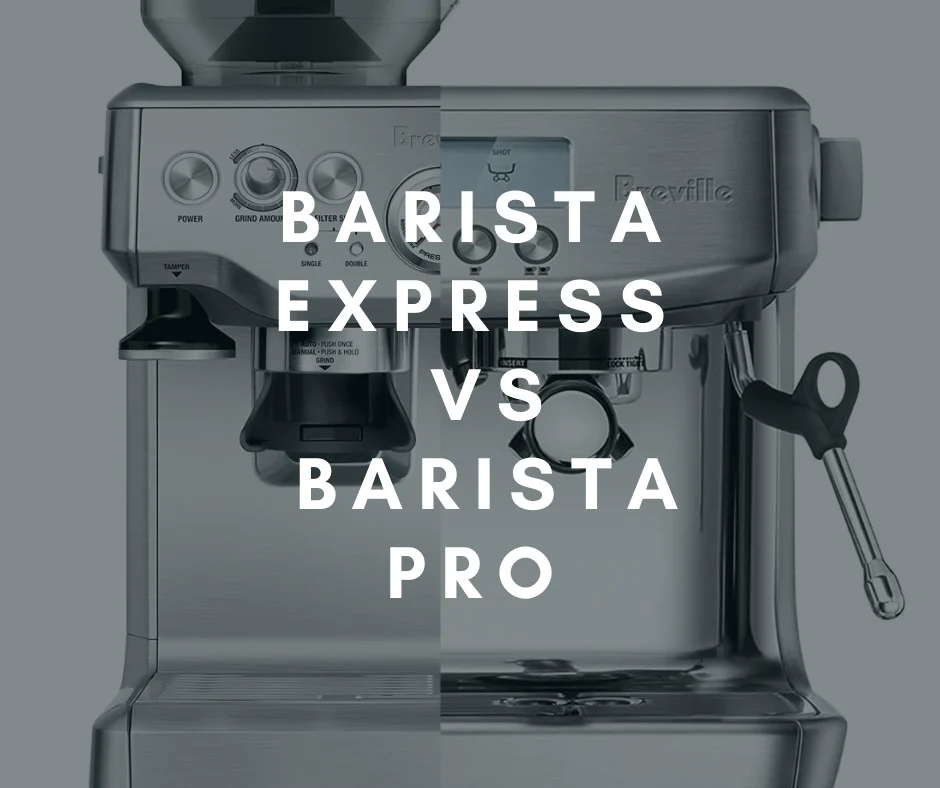
The Breville Barista Express (BES870) and the Breville Barista Pro (BES878) are two of the most popular all-in-one espresso machines, with an integrated grinder, a 15-bar pump and a steam wand in one footprint. They look similar but differ in heating, grinder range and controls. Breville’s machines are sold under the Sage brand in the UK and Europe, so this comparison applies equally to the Sage versions.
In this guide 10 sections
- Barista Express vs Barista Pro: Specs Side by Side
- How Do They Differ in Design and Controls?
- Which Heats Up and Brews Faster?
- Is the Barista Pro’s Grinder Better?
- Steaming Milk
- Is the Barista Pro Worth the Extra Money?
- What Comes in the Box?
- What About the Barista Express Impress and Barista Touch Impress?
- Which Barista Espresso Machine Should You Buy?
- Frequently Asked Questions
Barista Express vs Barista Pro: Specs Side by Side
| Barista Express (BES870) | Barista Pro (BES878) | |
|---|---|---|
| Heating system | Thermocoil with PID | ThermoJet with PID, ready in 3 seconds |
| Grind settings | 16 | 30 |
| Controls | Buttons and dial with an extraction pressure gauge | LCD screen and buttons (no pressure gauge) |
| Pump | 15 bar, low-pressure pre-infusion | 15 bar, low-pressure pre-infusion |
| Steam wand | Manual | Manual |
| Water tank | 67 oz | 67 oz |
| Bean hopper | 1/2 lb | 1/2 lb |
| Size (W × D × H) | 15.9 × 13.1 × 12.4 in | 16.1 × 13.8 × 13.1 in |
| US warranty | 1 year limited | 2 years limited |
How Do They Differ in Design and Controls?
Both machines are built from brushed stainless steel and share the same basic layout, with the grinder and bean hopper built in beside the group head. The biggest visible difference is the interface.
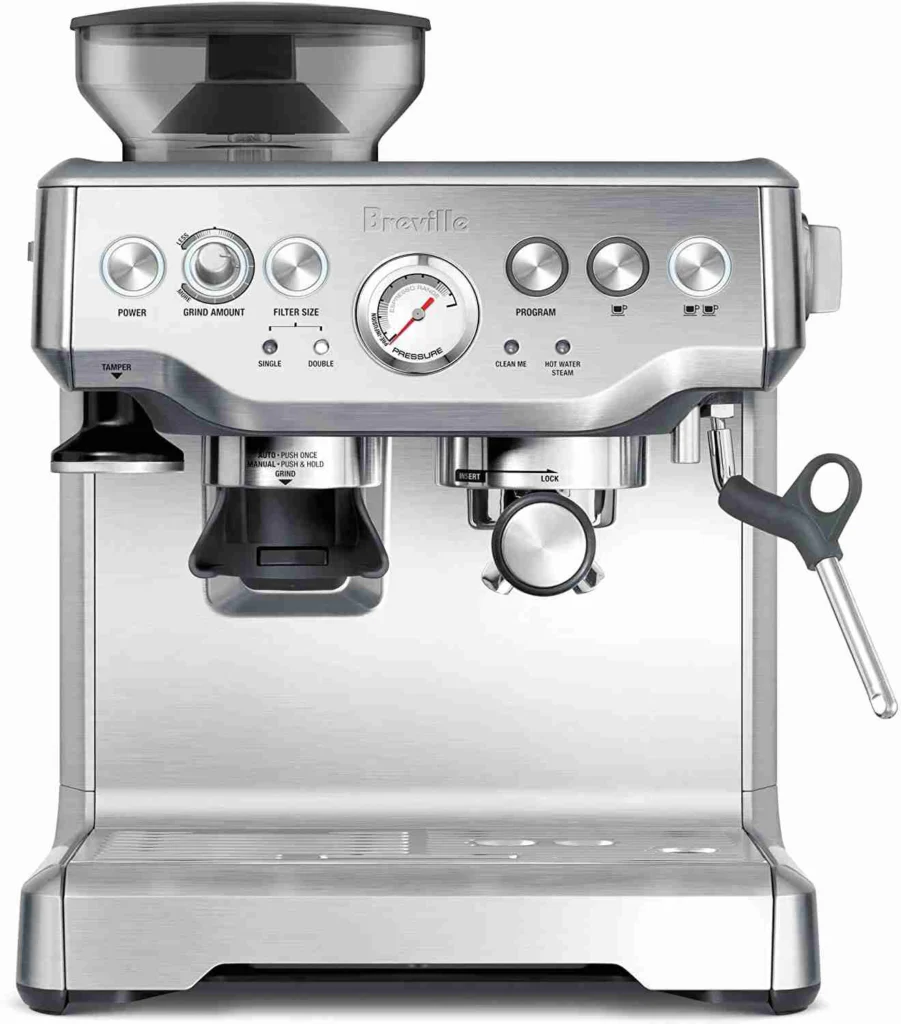
The Barista Express has a large round pressure gauge on the front. It shows whether water is passing through the coffee within the ideal pressure range, which is a simple, visual way to tell if your grind and dose are right. Alongside it are buttons for power, programming and filter size, plus a grind-amount dial.
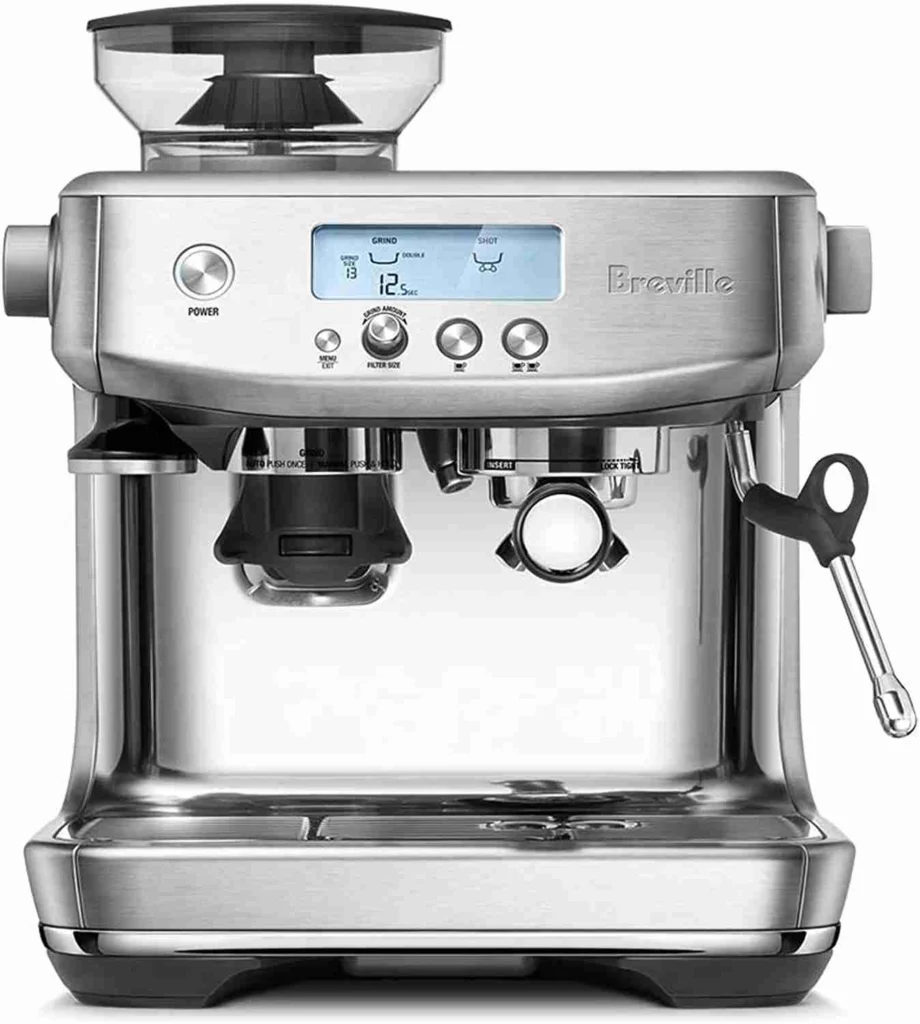
The Barista Pro replaces the gauge with an LCD screen. You use it to set grind size and grind time, and it shows a timer while the shot runs, so you can track extraction time precisely. If you like an analog, at-a-glance readout, the Express is more intuitive; if you like numbers, the Pro is.
Which Heats Up and Brews Faster?
This is the Pro’s biggest advantage. Its ThermoJet heating system is ready to brew in about 3 seconds and switches quickly from brewing to steaming. The Express uses a traditional thermocoil, which takes longer to warm up and to move between espresso and steam temperatures.
Both machines use PID temperature control and low-pressure pre-infusion, and both have a single heating system, so neither can brew and steam at the same time. With either one, run a blank shot through the group head before your first espresso to warm the portafilter and cup.
Is the Barista Pro’s Grinder Better?
Both use an integrated conical burr grinder, but the Pro offers 30 grind settings against the Express’s 16. More steps mean finer adjustments when you are dialing in your espresso grind, which matters most with light roasts or when switching between beans. If your shots run too fast or too slow at one setting and overshoot at the next, the Pro’s extra range helps.
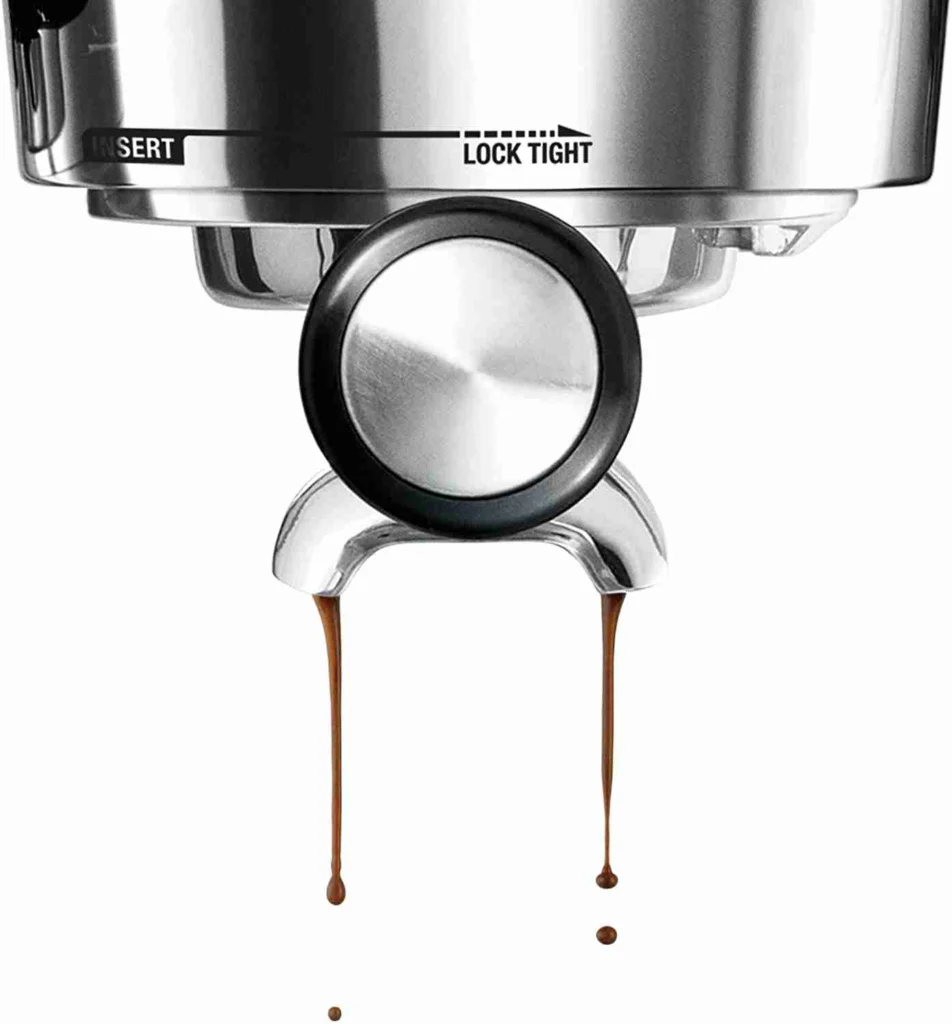
Steaming Milk
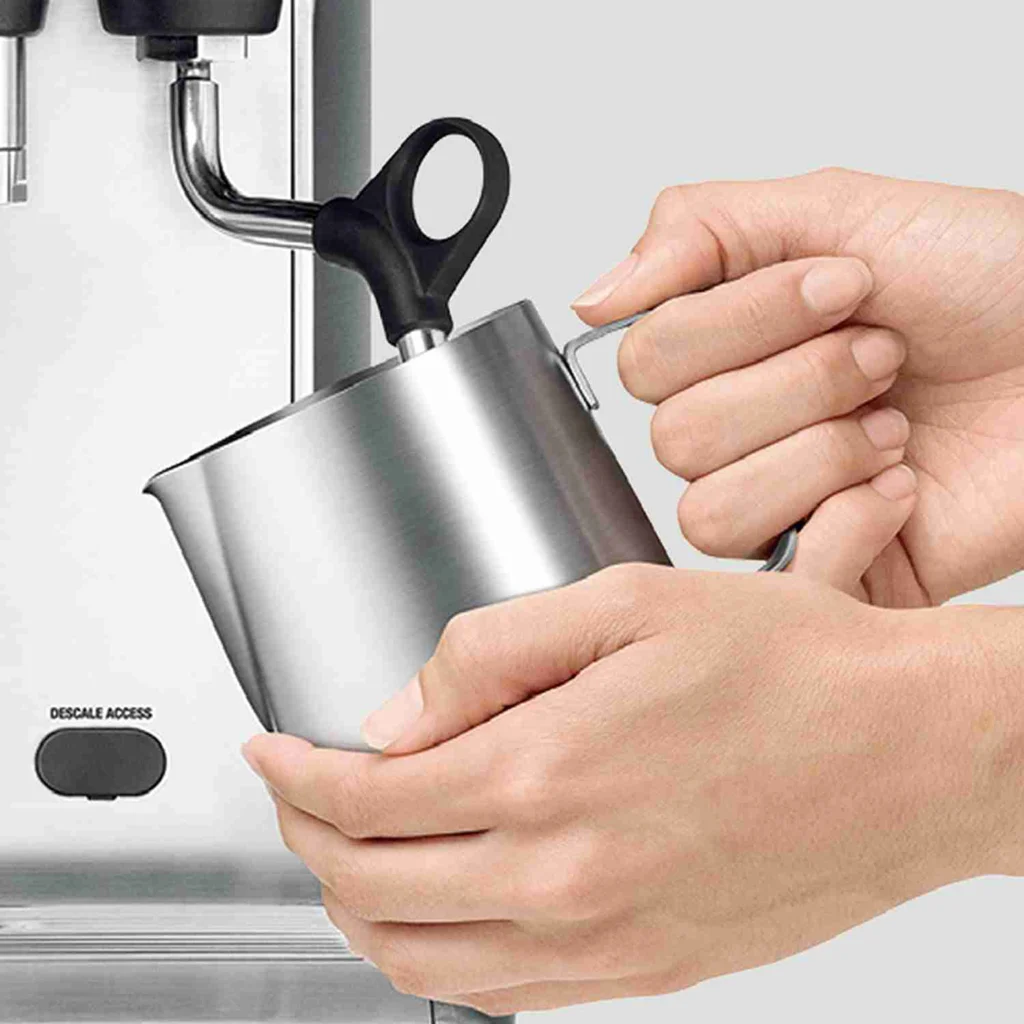
Both have a manual steam wand, so you texture milk yourself; neither has automatic frothing. The Pro’s faster heating means less waiting between pulling a shot and steaming milk, which adds up if you make several lattes in a row. For technique, see our guides on frothing milk at home and latte art.
Is the Barista Pro Worth the Extra Money?
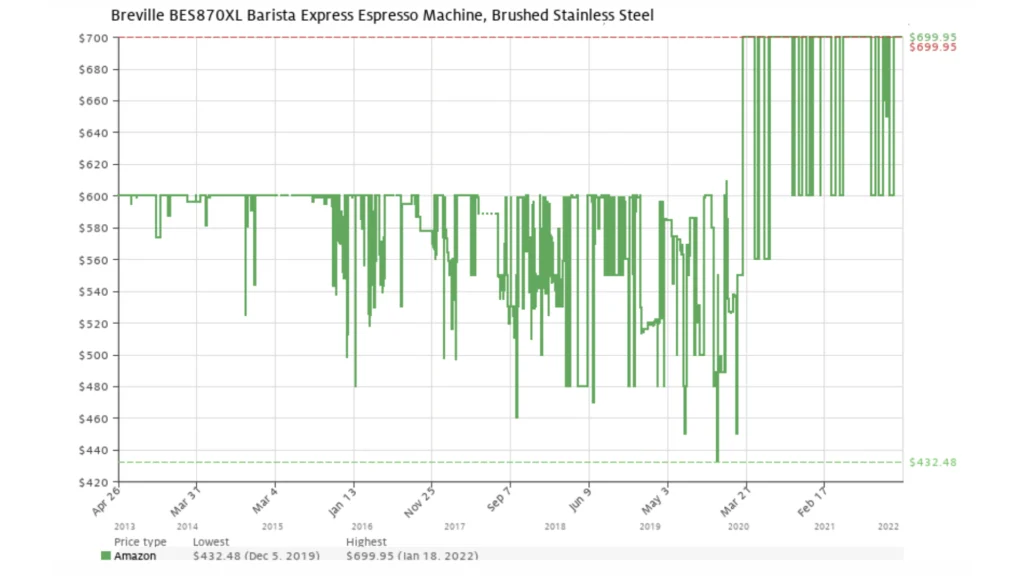
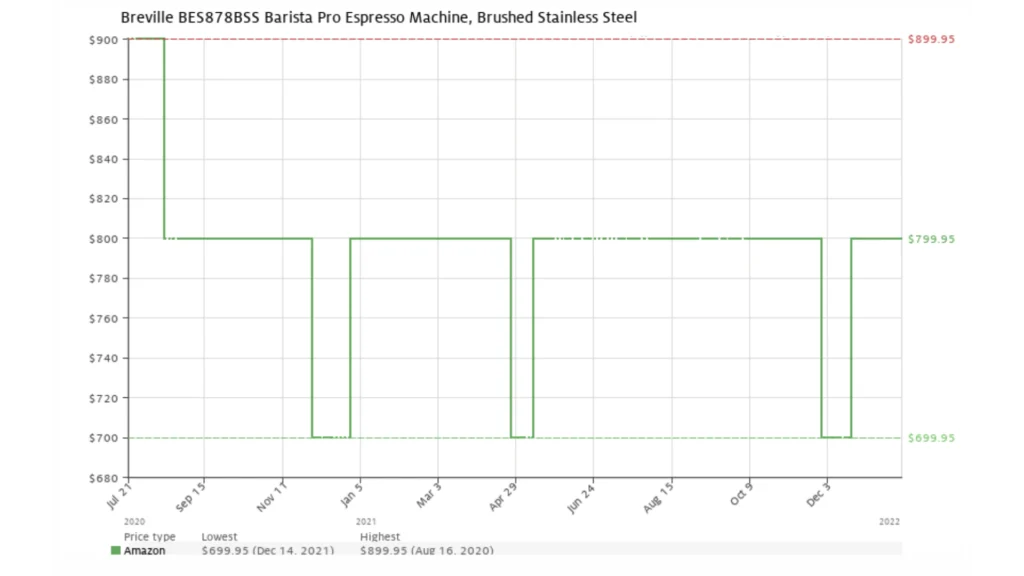
The Barista Pro costs more than the Barista Express, and the gap changes with sales, so compare current prices before you buy. The extra money gets you faster heat-up, a wider grinder range, the LCD and shot timer, and a longer US warranty (2 years versus 1). If you mainly drink straight espresso and don’t mind waiting a minute for the machine, the Express delivers the same core capability for less.
The price-history charts below date from January 2022, when this comparison was first published, and are kept for reference only.
What Comes in the Box?
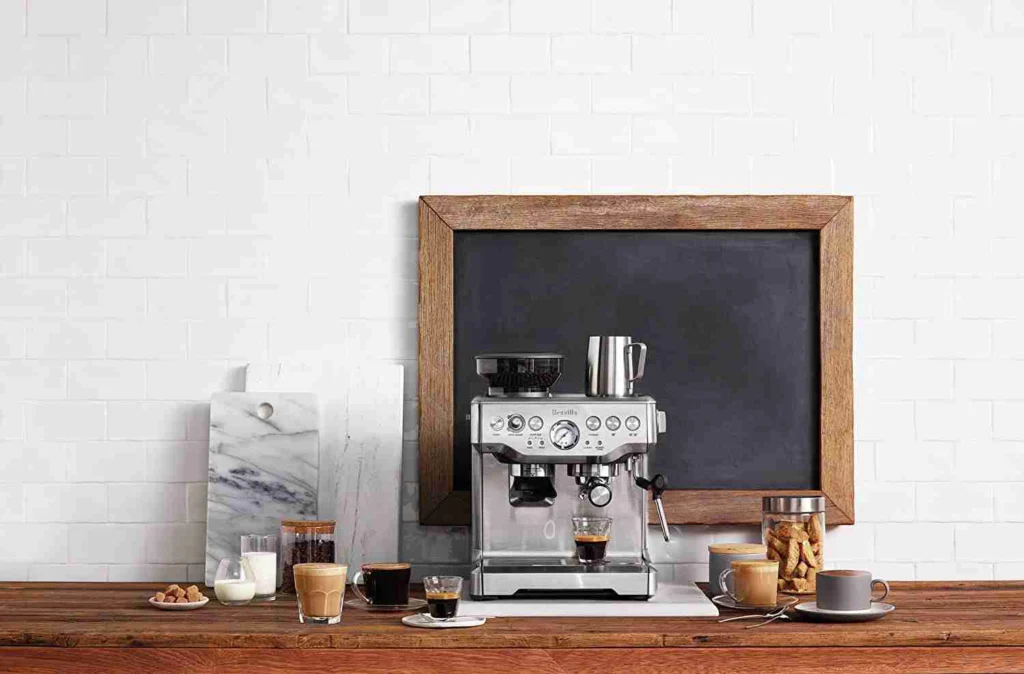
Both machines come with a 54 mm stainless steel portafilter, an integrated tamper, single- and dual-wall filter baskets, the Razor dose-trimming tool, a stainless steel milk jug, a cleaning kit and a water filter. Breville lists a dosing funnel with the Pro as well.
What About the Barista Express Impress and Barista Touch Impress?
Breville still sells both the Express and the Pro, but it has added two newer models to the range:
- Barista Express Impress (BES876): the Express with a thermocoil and pressure gauge, plus intelligent dosing, an assisted tamping lever and 25 grind settings. A good pick if tamping is your weak spot.
- Barista Touch Impress (BES881): ThermoJet heating, a touchscreen, 30 grind settings and automatic hands-free milk texturing. The most expensive of the four.
Which Barista Espresso Machine Should You Buy?
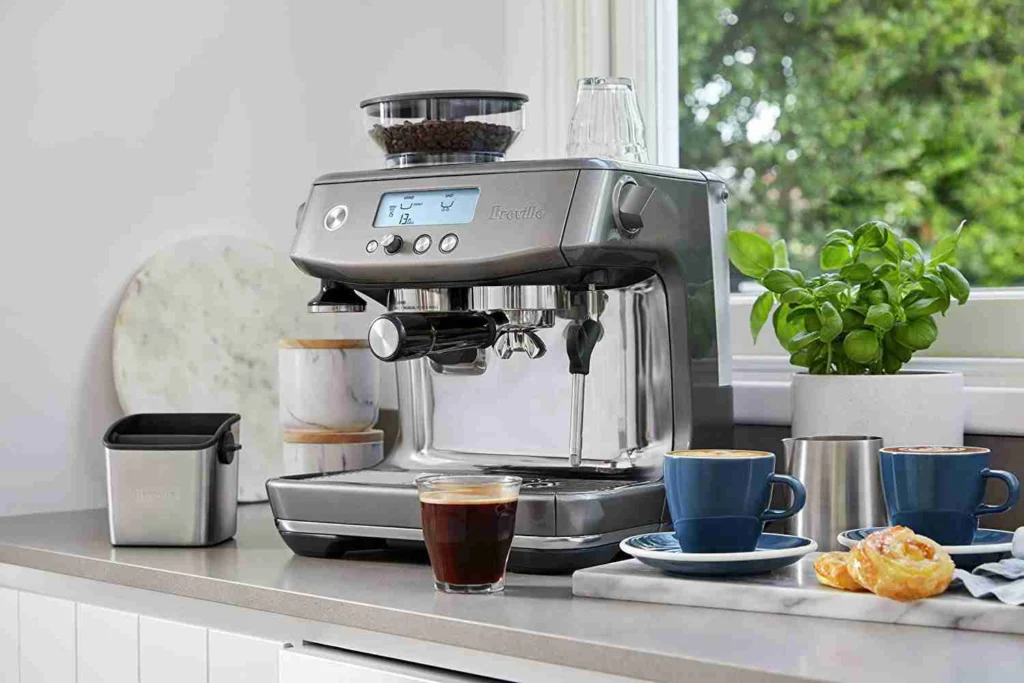
Choose the Barista Pro if you want your morning shot faster, finer grind control and a digital shot timer, and you are comfortable paying more. It is also the better fit if you make several milk drinks back to back.
Choose the Barista Express if you want the more affordable machine and like the simple pressure gauge. Its thermocoil is slower than the Pro’s ThermoJet, but it still makes a great shot of espresso. For a deeper look at the Pro on its own, read our Sage Barista Pro review, and for other options see our best espresso machines roundup.
Frequently Asked Questions
What is the main difference between the Barista Express and the Barista Pro?
Heating and controls. The Pro uses a ThermoJet system that is ready in about 3 seconds and has an LCD with a shot timer and 30 grind settings. The Express uses a slower thermocoil, an analog pressure gauge and 16 grind settings.
Does the Barista Pro have a pressure gauge?
No. Breville lists an extraction pressure gauge on the Express and the Express Impress, but not on the Pro. The Pro shows a shot timer on its LCD instead.
Is the Sage Barista Pro the same as the Breville Barista Pro?
Yes. Breville sells its machines as Sage in the UK and Europe. The models are the same apart from the badge, the plug and the model code (SES instead of BES).
Can either machine brew and steam at the same time?
No. Both have a single heating system, so you pull the shot first and then steam the milk. The Pro switches between the two much faster.
If you found this comparison helpful, buying through our links supports the site: I get a small commission from Amazon at no extra cost to you. Breville Barista Express on Amazon · Breville Barista Pro on Amazon