
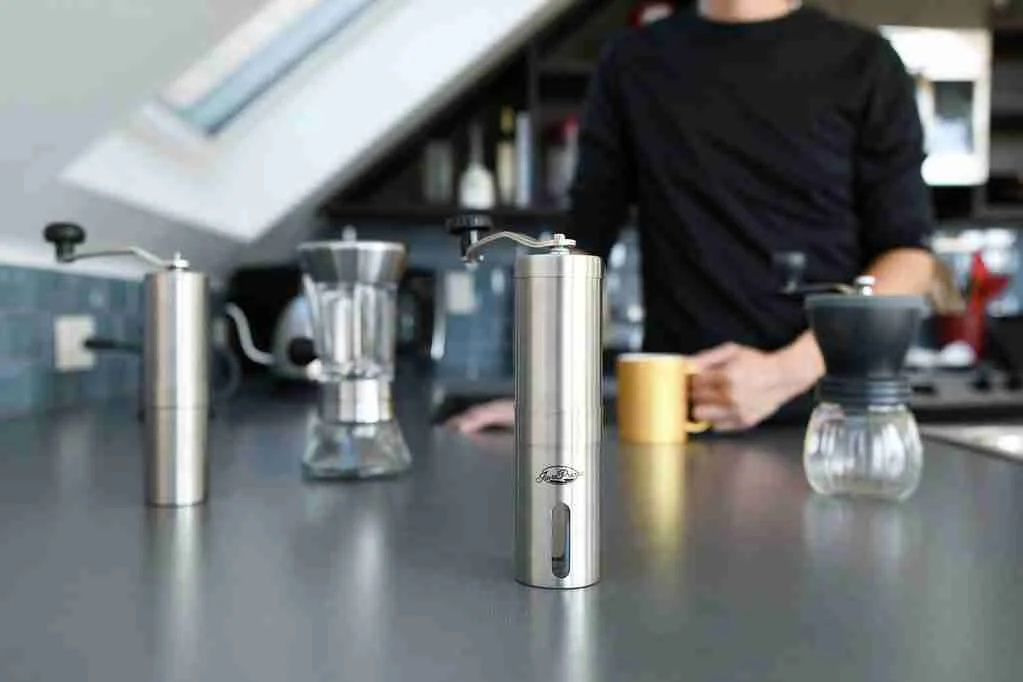
Quick answer: A burr grinder crushes coffee beans between two abrasive surfaces (burrs) set a fixed distance apart, so the grounds come out far more even than from a blade grinder, which chops beans at random. Even grounds extract evenly, giving a cleaner, more balanced cup and letting you set the exact grind size each brewing method needs.
If you want the freshest coffee, you need to grind your own beans, and the grinder you choose shapes every cup you brew. Growing up, I woke most mornings to the sound of my dad’s cheap blade grinder. Once I understood the difference a burr grinder makes, I never went back. This guide explains how burr grinders work, the main types, and how to choose one.
In this guide 5 sections
What Is the Difference Between a Burr Grinder and a Blade Grinder?
A blade grinder uses a spinning blade, like a small blender, to chop the beans. The longer it runs, the finer the result, but you get a mix of large chunks (“boulders”) and powder (“fines”) every time.
A burr grinder feeds the beans between two burrs and grinds them to a size set by the gap between them. You still get some fines and boulders, but far fewer than with a blade grinder (Perfect Daily Grind). Because the gap is adjustable, you can grind fine for espresso or coarse for French press and repeat the same setting tomorrow. You can’t do that with a blade grinder.
Why Does Grind Consistency Matter?
Small particles extract quickly and large ones slowly. When a batch mixes both, the fines over-extract and turn bitter while the boulders under-extract and taste sour, all in the same cup. An even grind extracts at an even rate, so the flavor is cleaner and easier to adjust.
Some brewing methods are much less forgiving than others:
- Espresso: dialing in a shot takes small, repeatable grind changes, which is close to impossible with a blade grinder. See when grinding finer helps your espresso.
- Moka pot: blade-ground coffee contains lots of fine powder that can slip through the filter and leave sludge at the bottom of your cup. A burr grinder greatly reduces it.
- French press: fines pass through the mesh filter, making the coffee muddy and bitter. More on that in our guide to French press sediment.
How to Choose a Good Burr Grinder
Look for a grinder that grinds consistently, adjusts easily and covers the methods you brew. Burr grinders cost more than blade grinders, but even an entry-level burr grinder is a bigger upgrade to your coffee than most other gear. If an electric model is outside your budget, a good manual grinder can match or beat electric grinders at the same price.
Conical burr vs flat burr: which is better?
Conical burrs have a cone-shaped burr turning inside a ring-shaped one. Flat burrs are two parallel rings facing each other. Both produce consistent grounds.
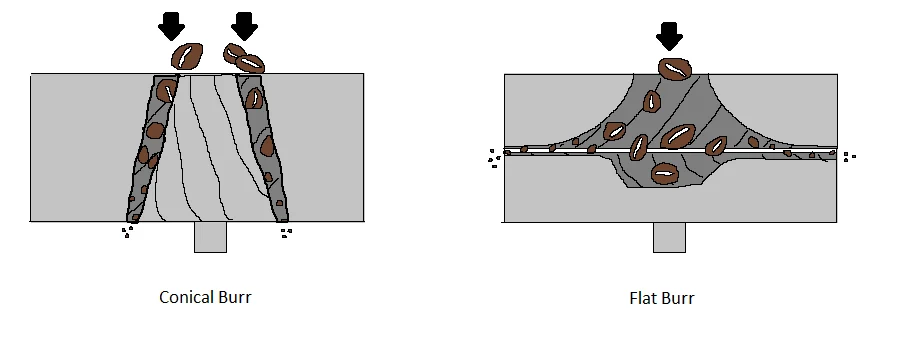
Flat burrs tend to produce a very even particle size. Conical burrs produce a slightly wider spread of sizes. The difference is small and won’t make or break your coffee. In practice, flat-burr grinders often hold back more grounds inside the grinder (retention), which can mix stale coffee into your next dose, while many conical designs drop the grounds more directly. Retention varies a lot from model to model, so check reviews of the specific grinder.
Steel burrs vs ceramic burrs
Most electric grinders use steel burrs; ceramic burrs turn up mainly in hand grinders and traditional-style mills. Both can grind well. The quality, sharpness and alignment of the burrs matter more than the material, so judge a grinder on its consistency rather than on what the burrs are made of.
Motor power and noise
Cheaper electric grinders use small motors and grind slowly, and they can struggle at the very fine settings espresso needs. Larger, more powerful grinders handle espresso more easily but cost more and are often louder, which is worth remembering if you grind early while others are asleep.
Manual or electric burr grinder?
Manual grinders give you burr quality for less money, and many are small enough to pack for travel. The trade-off is effort: grinding a dose by hand takes time, especially at espresso fineness. If you find hand grinding hard work, see our hand grinder tips. Electric grinders are the better choice if you brew several cups a day or just want to press a button.
Popular Burr Grinders to Consider
These widely available grinders were all listed by their makers in October 2026. Specs are from the official product pages.
- Baratza Encore ESP: an entry-level electric grinder with 40 mm conical steel burrs, designed to grind for both espresso and filter. Check price on Amazon
- Breville Smart Grinder Pro: an electric grinder with stainless steel conical burrs, 60 grind settings and an 18 oz bean hopper. Check price on Amazon
- Fellow Opus 2: an electric grinder with 48 mm conical burrs and a single-dose load bin. Check price on Amazon
- 1Zpresso J-Ultra: a manual grinder with 48 mm burrs and fine external adjustment (8 microns per click), aimed at espresso. Check price on Amazon
Our earlier picks are below. Both are still useful if you find one second-hand, but neither is in its maker’s current range.
Rancilio Rocky (electric)
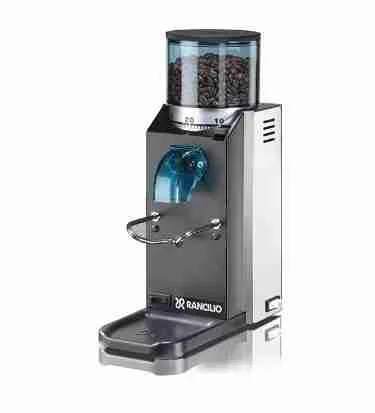
The Rocky was our top electric pick: a heavy, well-built grinder with 50 mm flat steel burrs, adjusted in steps by turning the bean hopper so you can lock in an espresso setting. Its main drawbacks were price, grounds getting stuck inside and fiddly cleaning. The Rocky is no longer listed on Rancilio’s website; the company’s current home grinder is the Rancilio Stile.
Check Rancilio Rocky availability and reviews
1Zpresso Mini Q (manual)
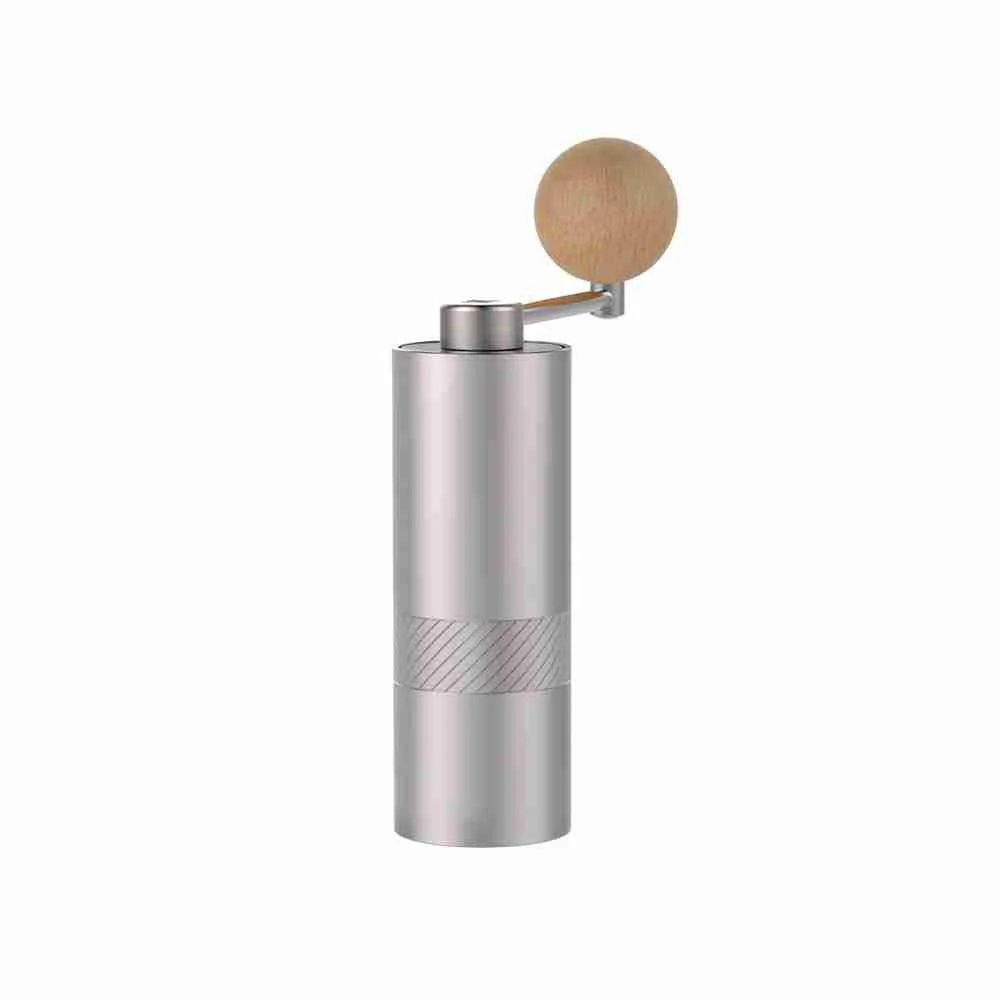
The Mini Q was our favorite hand grinder for travel: small, smooth to turn, with stainless steel burrs. A travel hack: it fits inside an AeroPress coffee maker to save space (see our AeroPress guide). Grinding 20 grams took around 45 seconds. Its limits were a small capacity and less consistency than larger hand grinders. 1Zpresso now sells the 1Zpresso Q in this compact size, with a 15–20 g capacity and a foldable handle.
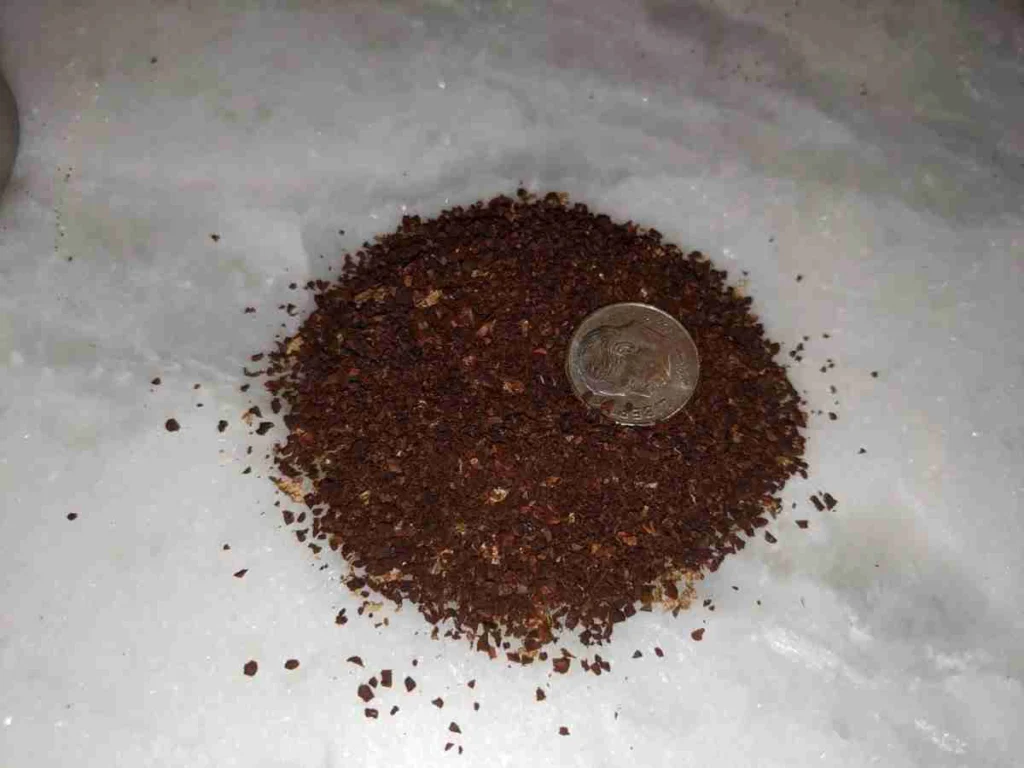
Check 1Zpresso Mini Q availability and reviews
Frequently Asked Questions
Is a burr grinder really better than a blade grinder?
Yes. A burr grinder produces a much more even grind with fewer fines and boulders, and it lets you choose and repeat a grind size. That gives you more balanced extraction and more control over taste.
Do I need a burr grinder for espresso?
Practically, yes. Espresso needs a very fine, consistent grind and small adjustments to dial in, which a blade grinder can’t provide. Many home espresso machines include a built-in burr grinder for this reason.
Are conical or flat burrs better?
Neither is better outright. Flat burrs tend to give a very even grind, while conical burrs are common in affordable and hand grinders and often retain less coffee. A well-made grinder of either type beats a poorly made one of the other.
What if I don’t have a grinder at all?
Buy beans ground fresh by your roaster for your brewing method, or try one of these ways to grind coffee without a grinder until you get one.
Thanks for sharing such great buying guides of the coffee grinder. I am glad that I came across such an article. These are superb guides to choose the best coffee grinder. Thanks for giving us such a great article.