
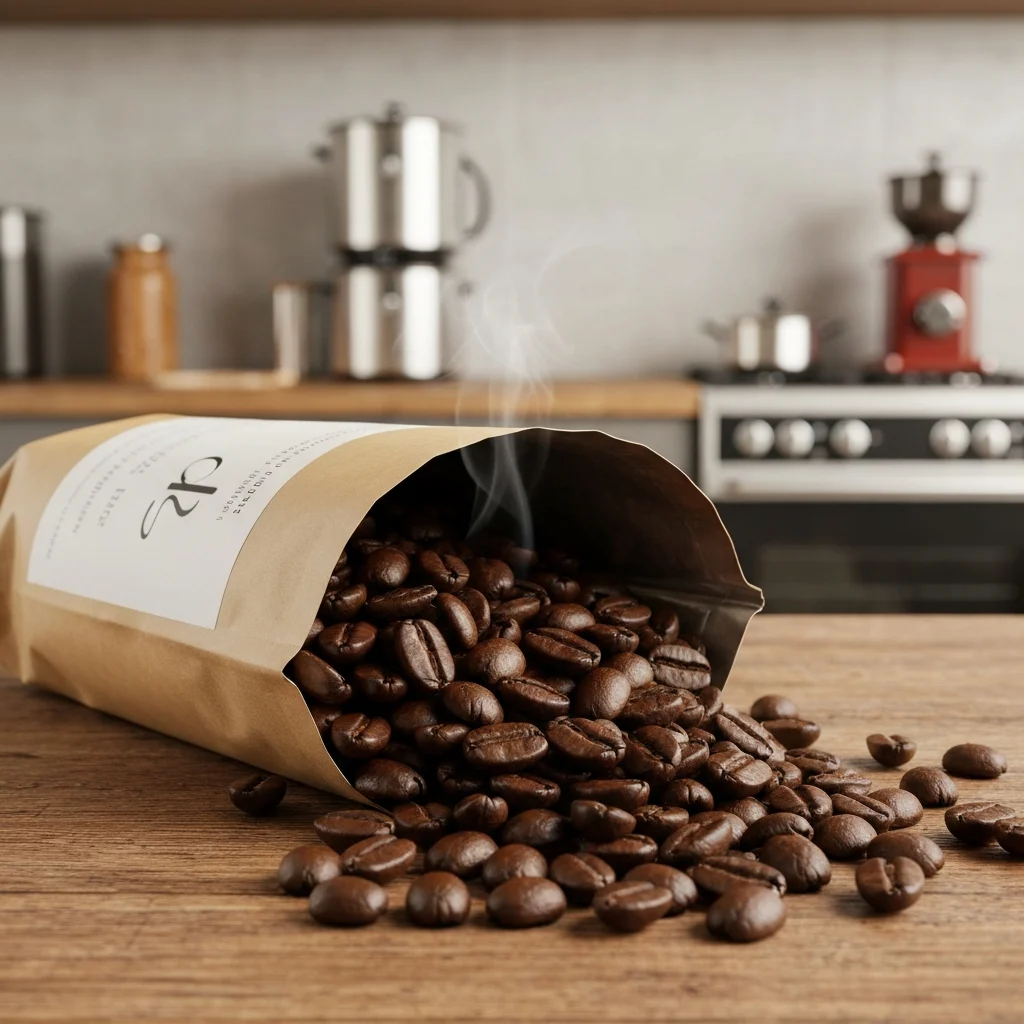
Quick answer: Opened whole coffee beans taste best for about 1–3 weeks when kept airtight at room temperature, according to the National Coffee Association. Ground coffee fades faster, in about 1–2 weeks. Frozen in an airtight container, beans keep their flavour for 3–4 months. Stale coffee is still safe to drink; it just tastes flat.
“How long does coffee stay fresh?” has two answers: how long it’s safe (a long time; see can coffee go bad?) and how long it tastes its best (much shorter). This guide is about flavour: the timeline, what speeds up staling and how to store beans so they last.
In this guide 7 sections
How long does coffee last?
| Coffee | Peak flavour (roughly) |
|---|---|
| Whole beans, room temperature | 1–3 weeks |
| Ground coffee, room temperature | 1–2 weeks |
| Whole beans, frozen airtight | 3–4 months |
| Coffee pods and instant coffee | Until the best-by date |
Source: National Coffee Association, storage and shelf life.
Why does coffee go stale?
Roasted coffee’s aroma comes from volatile compounds and oils that react with oxygen. Air, light, moisture and heat all speed that up, so the coffee gradually loses aroma and turns flat. Coffee also absorbs moisture and odours from around it.
Roast date vs best-by date
Many supermarket coffees only show a best-by date. Specialty roasters print the roast date, which tells you exactly where the clock started. Aim to buy beans roasted within the last few weeks, in amounts you’ll use within a couple of weeks of opening. Our guide to the best whole bean coffee brands lists roasters worth starting with.
Why freshly roasted isn’t always best
Right after roasting, beans release a lot of carbon dioxide (degassing). That’s why bags have one-way valves. Too much gas interferes with brewing and can make coffee taste uneven, especially espresso, so many baristas rest beans for several days to a week first. We cover this in why fresher beans don’t always make better coffee.
What does the freshness timeline look like after opening?
- Week one: usually the peak. The beans have degassed enough and aromas are still vivid.
- Weeks two and three: a gradual decline. Still enjoyable, but subtler notes fade and the cup becomes more muted.
- Beyond three weeks: generally stale: flat and dull, sometimes bitter. Still safe, but no longer what the roaster intended.
These are guidelines. Roast, storage and packaging all shift the timeline, and some coffees hold up for a month or more.
What affects how long coffee stays fresh?
Storage
- Airtight container: limits oxygen, the main cause of staling.
- Opaque container: clear canisters let in light, which degrades coffee.
- Cool, dark, dry place: a cupboard away from the oven, dishwasher or sunny counter.
- Not the fridge: it’s humid and full of odours that porous beans soak up.
- The freezer for longer storage: divide beans into small airtight portions and only take out what you need. See our guide to freezing coffee beans.
Roast level
Darker roasts are more porous and often oilier, so they tend to stale faster than lighter roasts. Very oily beans can also turn rancid sooner; see why some coffee beans are oily.
Whole bean vs pre-ground
Grinding exposes far more surface area to air, so pre-ground coffee fades much faster. Buy whole beans and grind just before brewing. If you need a grinder, see our burr grinder guide.
Packaging
Choose bags with a one-way valve and a resealable closure. Some roasters also flush bags with nitrogen to push out oxygen, which helps unopened bags last longer. If the bag can’t be resealed, move the beans to an airtight container as soon as you open it.
How can you tell if coffee is stale?
- Weak aroma: fresh coffee smells strong when you open the bag and when you grind it.
- Flat taste: stale coffee tastes dull, papery or hollow, sometimes bitter or sour.
- Little or no bloom: fresh grounds bubble up when hot water hits them. Learn more about coffee bloom.
What can you do with stale coffee?
- Cold brew: the slow, cold extraction is gentler and can hide some staleness.
- Cooking and baking: use it in cakes, brownies or rubs. See cooking with coffee.
- Scrubs and compost: used grounds make a body scrub or compost material; see uses for coffee grounds.
Frequently asked questions
How long do coffee beans last after opening?
For the best flavour, use whole beans within about 1–3 weeks of opening, stored airtight in a cool, dark place. They stay safe to drink much longer, but taste flatter.
Does unopened coffee go stale?
More slowly. Sealed bags with a valve, especially nitrogen-flushed ones, protect the beans, but they still age. Check the roast date and use them within the roaster’s recommended window.
Should you store coffee in the fridge?
No. The fridge is humid and smelly, and coffee absorbs both. Use an airtight container in a cupboard, or the freezer for longer storage.
How long does coffee last in the freezer?
Whole beans frozen in a truly airtight container keep their flavour for about 3–4 months. The National Coffee Association suggests taking out no more than a week’s worth at a time and returning the rest before condensation forms on the beans.
Share this guide
See more Coffee Informer on Google. Add us as a preferred source and our guides show up more in your Top Stories and AI results.