
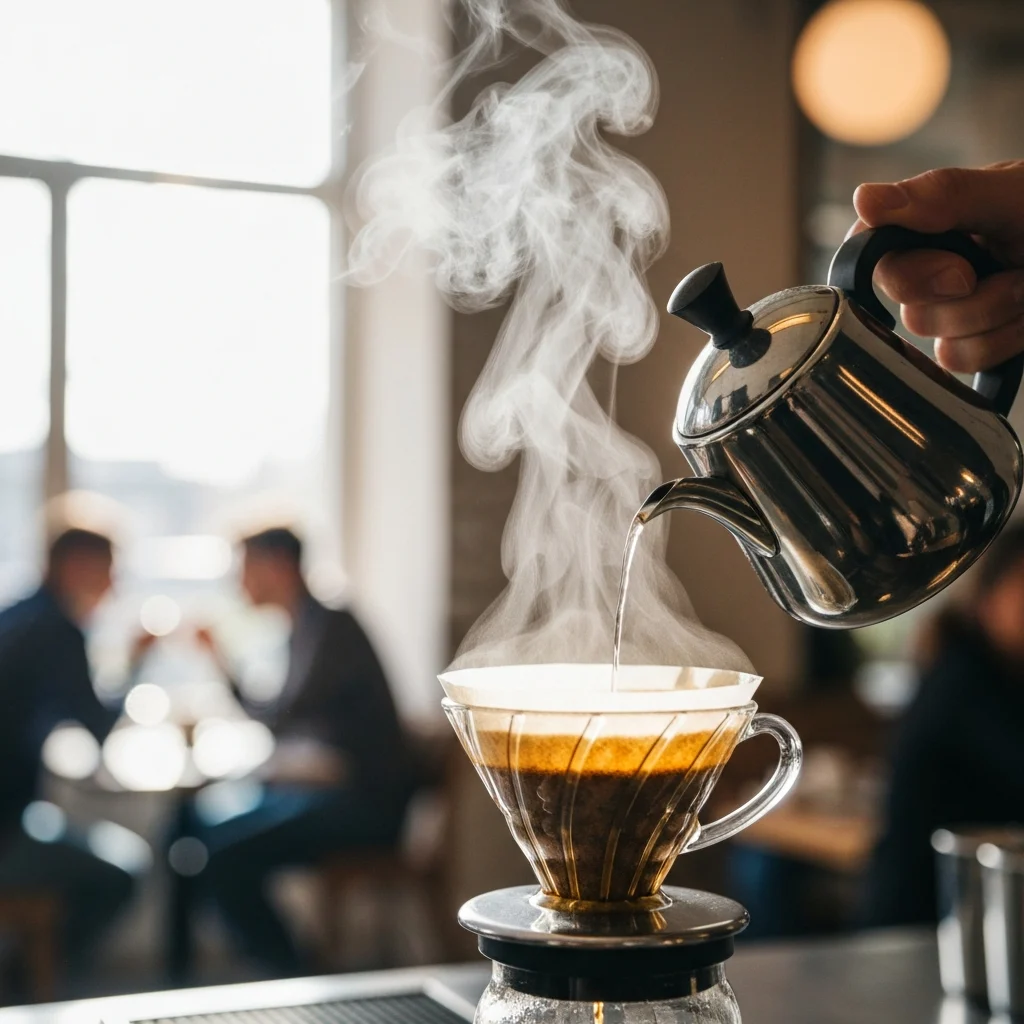
Quick answer: Coffee usually tastes sour because it is under-extracted: the water dissolved the fast-extracting acids but not enough of the sugars that balance them. Grind a little finer, brew a little longer and use water at 195–205°F (90–96°C). If the cup is still sour, suspect stale or under-roasted beans, or a bright light roast that simply isn’t to your taste.
A sour cup is one of the most common home-brewing complaints, and it is almost always fixable. This guide shows you how to tell sourness from pleasant acidity, the four usual causes, and the adjustments that fix each one.
In this guide 5 sections
Is My Coffee Sour or Just Acidic?
“Sour” and “acidic” are often used interchangeably, but they are not the same thing. Acidity is a prized quality in good coffee: it gives the cup brightness and liveliness, the way carbonation keeps a soda from tasting flat. Sourness is acidity out of balance – a sharp, puckering, sometimes vinegary taste with nothing sweet to round it off.
Coffee contains several natural acids that shape its flavor:
- Citric acid: lemon, orange and grapefruit notes.
- Malic acid: green apple, pear or stone fruit.
- Acetic acid: a wine-like sharpness in small amounts; in large amounts it tastes like vinegar and signals a problem.
How much acidity you get depends heavily on origin and roast. A light-roasted single origin coffee from Ethiopia or Kenya can be bright and fruity, while beans from Brazil or Sumatra are typically smoother and nuttier. Neither is wrong. The problem starts when the acids aren’t balanced by sweetness – and that is usually down to brewing.
Why Does My Coffee Taste Sour? 4 Common Causes
1. Under-extraction (the most common cause)
Brewing is extraction: water dissolving flavor compounds out of the grounds. Those compounds don’t all dissolve at the same rate. Acids come out first, then sugars that add sweetness and balance, and finally the heavier compounds that add body and bitterness. If the brew is cut short – grind too coarse, brew time too short, water too cool – you get the acids without the sweetness to balance them, and the cup tastes sour. Go too far the other way and you over-extract, which tastes bitter and dry; our guide to burnt vs. over-extracted coffee covers that side of the scale.
2. Under-roasted or “baked” beans
During roasting, the Maillard reaction and caramelization turn raw, grassy-tasting green coffee into something sweet and aromatic. Beans that are pulled too early, or that spend too long at too low a temperature (“baked”), never fully develop those flavors. They taste sour, sometimes with a vegetal or hay-like edge, however carefully you brew them. You can’t fix this at home, so buy from roasters with good quality control – see our picks of the best whole coffee beans.
3. Stale beans
From the moment coffee is roasted it starts to oxidize. Aromatic oils fade and sugars degrade, so the acids become more dominant. Coffee is generally at its best between about 3 days and 4 weeks after the roast date; after that quality declines, and older beans can turn harsh and lemony-sour. Check the roast date on the bag and read our guide on how long coffee stays fresh.
4. A light roast that doesn’t suit your palate
Sometimes the brew is fine and the coffee is simply bright. Light roasts keep more of their origin acidity, and they are denser, so they are also harder to extract fully. If you keep finding light roasts sour even after dialing in, try a medium or dark roast, or a lower-acidity origin such as Brazil, Sumatra or Peru. Our guide to low acid coffee has more options.
How Do You Fix Sour Coffee?
Because under-extraction is the usual culprit, most fixes increase extraction. Change one variable at a time and taste after each change, so you know what made the difference.
1. Grind finer
Grind size has the biggest effect on extraction. Finer particles expose more surface area and slow the water down, so it picks up more of the sweet compounds. Move a burr grinder one or two settings finer and brew again. Small steps matter: go too fine and the cup turns bitter instead. For a Hario V60, a medium-fine grind is a typical starting point.
2. Brew longer
If you can’t grind finer (for example, with pre-ground coffee), extend the contact time instead:
- Pour over (V60, Chemex): pour more slowly in steady circles; a gooseneck kettle makes this much easier.
- French press: steep 30–60 seconds longer before plunging.
- AeroPress: let it steep longer before pressing. See our AeroPress guide, or why AeroPress coffee turns sour for method-specific fixes.
- Drip machine: you have less control, so focus on grind size, fresh beans and the ratio below.
3. Use hotter water
Hotter water extracts more efficiently. The usual target for brewing is 195–205°F (90–96°C). Water that is too cool leaves the sugars behind and produces a sour cup. Use a thermometer or a variable-temperature kettle, and preheat your brewer – a French press loses heat quickly, especially with small brews, which can leave the coffee under-extracted.
4. Check your coffee-to-water ratio
A common starting range is 1:15 to 1:18 (1 gram of coffee to 15–18 grams of water). Packing in a lot of coffee for the amount of water can leave the brew concentrated but under-extracted, with acids dominating. If your coffee is sour and you’re at the strong end of the range, try a little more water for the same dose. Weigh both with a scale for repeatable results, and see our guide to the ideal coffee to water ratio.
5. Stir for even extraction
Dry clumps and channels mean some grounds are barely extracted. A gentle stir after the first pour (or when you add water to a French press) wets all the grounds evenly.
6. Check your water and clean your gear
Coffee is mostly water, so off-tasting or chlorinated water shows up in the cup. Use clean, good-tasting filtered water – our article on tap vs. filtered water for coffee explains how mineral content changes flavor. Also clean your grinder, brewer and carafe regularly; old coffee oils turn rancid and taint every new brew.
Is Cold Brew Less Sour?
Many people who find hot coffee too sharp prefer cold brew, made by steeping coarse grounds in cold water for around 12–24 hours. A 2018 study in Scientific Reports found cold brew and hot brew had a similar pH, but hot brew contained more total titratable acids – one reason cold brew often tastes smoother and less acidic. As always, brew it the way that tastes best to you.
Frequently Asked Questions
Is sour coffee under-extracted or over-extracted?
Sour coffee is almost always under-extracted: the acids dissolved, but not enough of the sugars that balance them. Over-extracted coffee tastes bitter, harsh and drying instead. If a cup is both sour and bitter, uneven extraction (clumps, channeling or an inconsistent grind) is the likely cause.
Why does my coffee taste sour only when it cools?
Heat masks some flavors, so sourness that was there all along becomes more noticeable as the cup cools. It is usually another sign of under-extraction. Our guide to why coffee tastes sour when cold explains it in detail.
Can old coffee beans make coffee sour?
Yes. As beans go stale, the aromatic oils and sugars that balance coffee’s acids break down, so the cup can turn harsh and sour. Use beans within a few weeks of their roast date for the best flavor.
Will a darker roast stop my coffee tasting sour?
Often, yes. Medium and dark roasts have less pronounced acidity and are easier to extract than light roasts. If you still get sourness with a darker roast, look at your grind, brew time and water temperature first.