
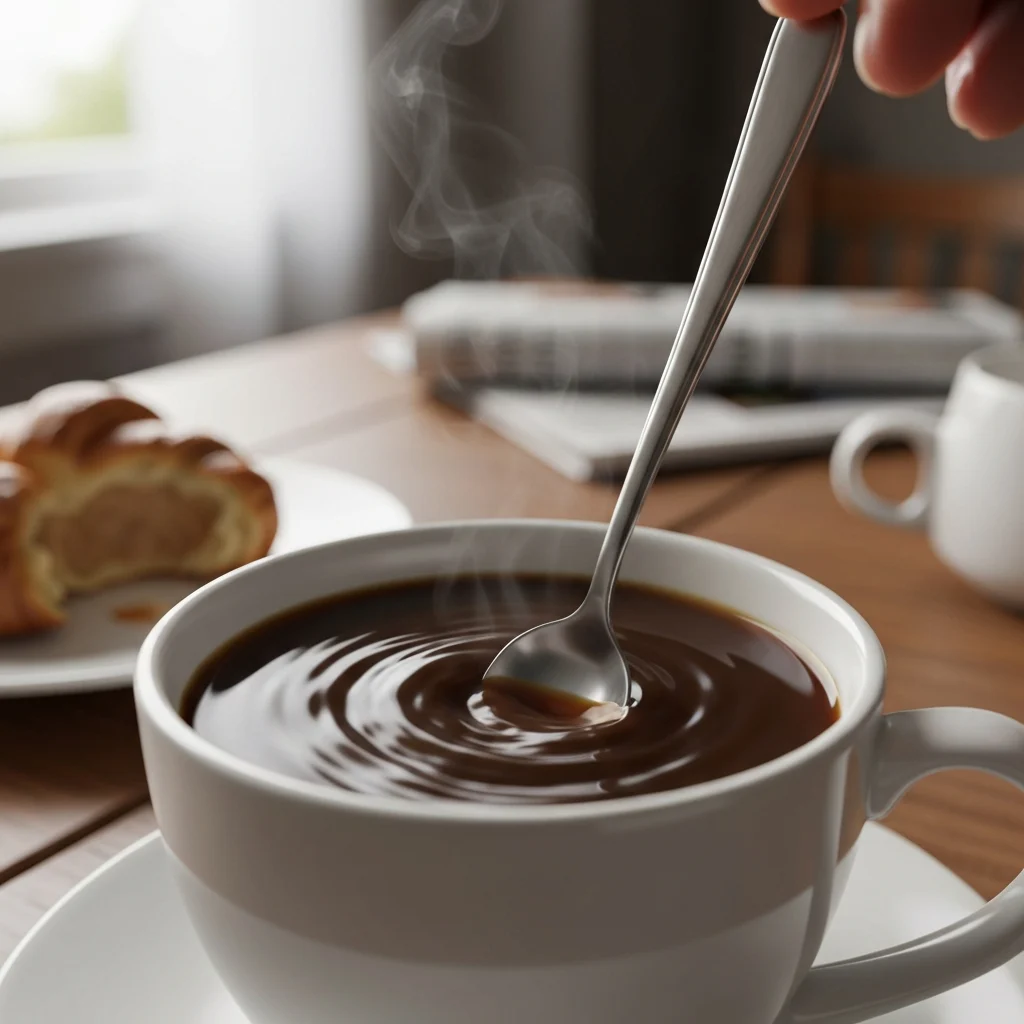
Quick answer: Stir the coffee bloom only if some grounds stay dry or clumped after your bloom pour. A brief, gentle stir or swirl wets every particle and evens out extraction. Stirring hard, or stirring with a too-fine grind, can push fines into the filter, slow the drawdown and make the cup bitter. With a good, even bloom pour, stirring is optional.
Stirring the bloom is one of the most debated steps in pour-over. Some brewers swear it fixes a bitter or flat cup; others skip it entirely. Here is what stirring actually does, when it helps, and how to test it with your own setup.
In this guide 7 sections
What happens during the bloom?
The bloom is the first small pour that wets the grounds and lets freshly roasted coffee release its trapped carbon dioxide. The bubbling dome is a sign of freshness, and the pause gives the gas time to escape so the rest of the water can reach the coffee evenly. Our guide to what coffee bloom is and how to bloom coffee covers the basics, including how much water to use.
Should you stir the bloom?
The main reason to stir is saturation. Gas escaping from fresh grounds can hold up dry pockets, especially near the bottom of a cone. Those dry grounds extract too little while the wet ones keep extracting, so the cup can taste sour and bitter at the same time, without much sweetness in between.
A short stir brings every particle into contact with water. It works much like stirring sugar into a glass: the sugar at the bottom dissolves slowly unless you move it around. If your bloom pour already wets the whole bed with no dry clumps, a stir adds little.
Vigorous stir vs gentle excavation
There are two common schools of thought:
- Vigorous stir or swirl: popularised by coffee consultant Scott Rao. The aim is complete saturation and breaking up every clump, then letting the bed settle flat.
- Gentle excavation: a spoon or stick is used to dig lightly through the grounds so dry pockets get wet, without churning the whole bed.
Neither is “correct”. Grind size, the coffee and your pouring style decide which suits you better, so try both.
Can stirring the bloom make coffee bitter?
Yes, if you overdo it. Heavy agitation increases extraction, and with a fine grind or very hot water that can tip the cup into bitterness. Stirring also kicks fines down into the filter paper, where they can clog it and slow the drawdown, which extracts even more. If your brews start stalling, see why a V60 stalls. To tell over-extraction apart from a burnt roast, read burnt vs over-extracted coffee.
When does stirring help most?
- Grind size: finer grinds clump more and benefit from a stir; coarse grinds usually wet evenly on their own. If your grinder produces a lot of fines, see fixing uneven grinds for pour-over.
- Freshness: very fresh coffee releases more gas, which can lift clumps of dry grounds above the water. A quick stir knocks them back in.
- Pouring technique: a slow, controlled spiral wets the bed evenly and reduces the need to stir. Some recipes, such as the popular 4:6 method, don’t stir the bloom at all.
- Brewer shape: deep cones like the V60 are more prone to dry pockets at the bottom than flat-bottom brewers.
How to test it yourself
- Brew two cups with the same coffee, grind, dose and recipe.
- Stir the bloom of one for 2–3 seconds; leave the other alone.
- Taste them side by side once they have cooled a little. Note which is sweeter and more balanced, and which is more bitter or sour.
Keep everything else fixed so you’re only testing the stir. If you need a reliable base recipe, start with our V60 brewing methods and pour-over coffee to water ratio.
You don’t need a special tool: a teaspoon, a chopstick, a wooden stirrer or the handle of your scoop all work. Use something clean that won’t add flavours.
Frequently asked questions
Is it better to stir or swirl the bloom?
Both aim to wet every ground. A swirl of the whole brewer is gentler and less likely to push fines into the filter; a stir is better at breaking up stubborn dry clumps. Try both and keep the one that tastes better with your coffee.
How long should you stir the bloom?
A few seconds is enough. You only need to wet the dry pockets; longer stirring adds agitation, which raises extraction and the risk of bitterness.
Why did my coffee get bitter when I stopped stirring?
Without a stir, dry pockets can make water channel through the rest of the bed. Part of the coffee over-extracts while part barely extracts, which can taste harsh. A better bloom pour, or bringing back a short stir, usually fixes it.
Share this guide
See more Coffee Informer on Google. Add us as a preferred source and our guides show up more in your Top Stories and AI results.
Add as a preferred source on Google