
Quick answer: An uneven coffee grind makes pour-over taste sour and bitter at once, because fines over-extract while boulders under-extract. The real fix is a burr grinder. Until then, pulse a blade grinder in short bursts, shake it between pulses, sift out the dust, and use a slightly stronger ratio or an immersion brewer that forgives inconsistency.
Blade grinders are the most common cause of uneven grounds, and pour-over is the method that exposes them most. Here is why it happens, what you can do with the grinder you have, and when it’s worth upgrading.
In this guide 6 sections
Why does an uneven grind ruin pour-over?
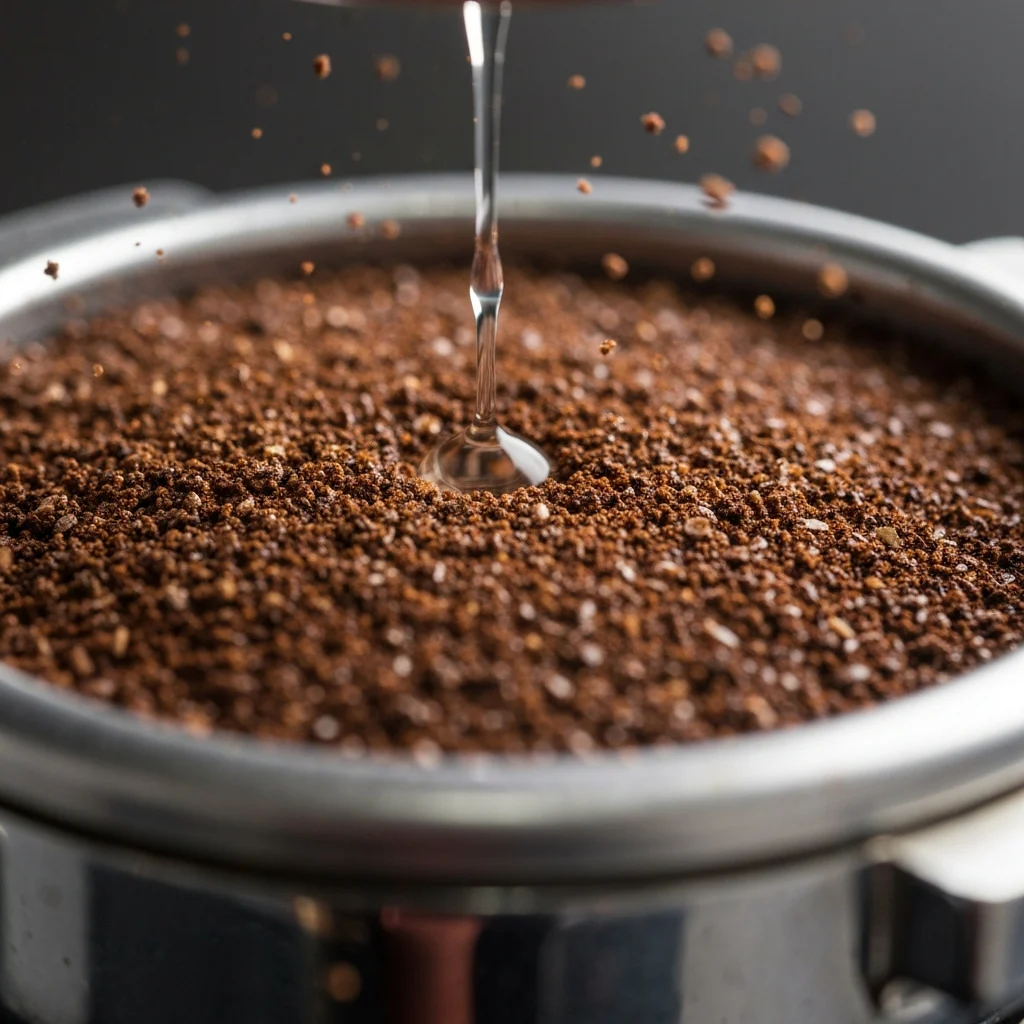
Burr grinders crush beans between two burrs set a fixed distance apart, so most particles come out a similar size. Blade grinders chop the beans with a spinning blade, so the result depends on luck and how long you hold the button. You get a mix of:
- Fines: dust-sized particles that extract very quickly and add bitterness.
- Boulders: large chunks that extract too slowly and taste sour and weak.
- Medium grounds: what you actually want, often only part of the batch.
In immersion brewing that mix averages out somewhat. In pour-over, water passes through the bed in a few minutes, so the differences show up directly in the cup.
What do fines do in a V60?
Fines have a lot of surface area for their size, so they give up their flavour fast, including the harsh compounds that come late in extraction. They also migrate down and clog the filter paper, which slows the drawdown and extends the brew time, making the bitterness worse. A slow, choking brew is often a fines problem; see why your V60 stalls.
Some home brewers sift ground coffee through a fine sieve to remove the dust before brewing. It helps, but it wastes some coffee and doesn’t fix the boulders.
What do boulders do?
Large particles have relatively little surface area, so water can’t reach far into them during a short brew. They under-extract, which shows up as sourness and a thin, weak body. For more on that taste, read why coffee tastes sour.
How can you get a more even grind from a blade grinder?
- Grind in short pulses: a few seconds at a time instead of one long run, so the blade doesn’t keep pulverising what is already fine.
- Shake between pulses: tilt or shake the grinder so larger pieces fall back into the blade’s path.
- Grind small batches: a smaller load moves more freely and grinds more evenly.
- Sift if you can: a fine sieve removes the worst of the dust.
If you don’t own any grinder, our guide to grinding coffee beans without a grinder covers the alternatives.
Can you compensate with a stronger coffee-to-water ratio?
Partly. One approach is to grind for mostly medium particles with some coarse ones (keeping fines to a minimum) and then use more coffee: move from a typical 1:15–1:16 ratio to around 1:13 or 1:12. For example, going from 20 g coffee to 325 g water up to 25 g coffee to 325 g water.
It’s an imperfect fix. The extra coffee makes up for the under-extracted boulders, but the cup is still uneven and can still turn bitter, and you use more beans per cup. For the standard ratios and how to adjust them, see our pour-over coffee to water ratio guide.
Is a burr grinder worth it?
For pour-over, yes. It is the single biggest upgrade most home brewers can make. A burr grinder lets you:
- set the grind size precisely for your beans and brewer;
- repeat a good brew because the grind no longer changes from day to day;
- adjust in small steps when a coffee tastes sour or bitter.
Hand grinder or electric burr grinder?
Hand grinders are usually cheaper for the same grind quality, portable and quiet. The trade-off is effort and time, especially for larger batches. Entry-level models from brands like Timemore are popular with pour-over brewers. If yours is hard work, see why a hand grinder is a struggle and how to fix it.
Electric burr grinders are faster and more convenient, but very cheap models can produce a grind that is barely better than a blade grinder. At a low budget, a good hand grinder is often the better buy. Our burr grinder guide covers what to look for, and our best burr grinders for pour over roundup compares specific models.
Which brewing methods forgive an uneven grind?
If you’re stuck with a blade grinder for now, immersion brewers are more forgiving because all the coffee steeps in the water for the whole brew:
- French press: use a coarse grind and a 4-minute steep. See how to make French press coffee.
- AeroPress: flexible, quick and easy to clean. See how to use an AeroPress.
Frequently asked questions
Can you use a blade grinder for pour-over?
You can, but expect less consistent results. Pulse in short bursts, shake between pulses and consider a slightly stronger ratio. If you brew pour-over often, a burr grinder makes the biggest difference.
Why is my pour-over sour and bitter at the same time?
That combination usually means uneven extraction. Fines over-extract and add bitterness while boulders under-extract and add sourness. A more even grind is the main fix.
Should you remove fines from coffee grounds?
Sifting out the dust can speed up a slow drawdown and reduce bitterness, especially with a blade grinder. It also removes some coffee, so you may need a little more coffee to keep the same strength.
Share this guide
See more Coffee Informer on Google. Add us as a preferred source and our guides show up more in your Top Stories and AI results.
1 thought on “Pour Over Coffee: Fixing Uneven Grinds”