
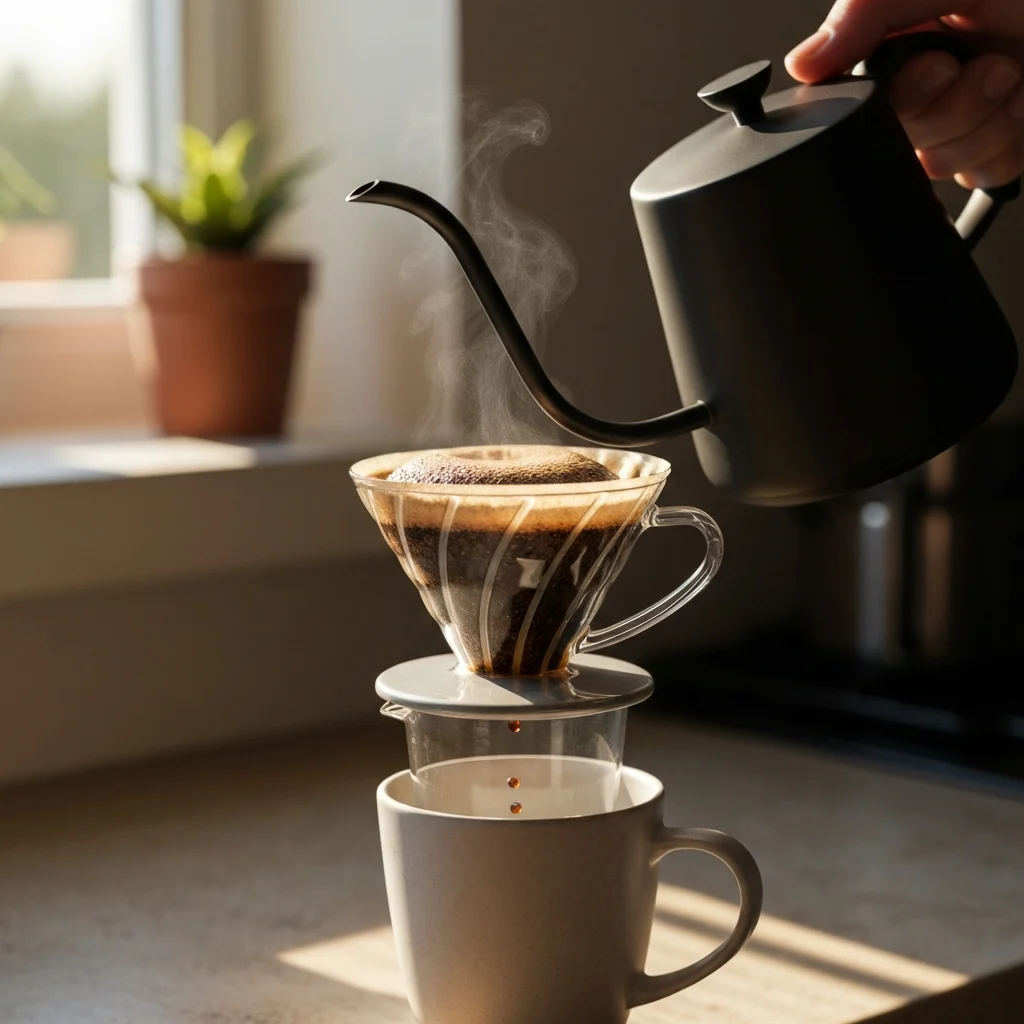
Why Your Pour Over Drains Slow & 9 Fixes for Better Coffee

Why Your Pour Over Drains So Slow (And 9 Ways to Fix It)

There is nothing quite like the ritual of making pour over coffee. The gentle bloom, the steady pour, the incredible aroma filling your kitchen. But then it happens. The steady drip-drip-drip slows to a crawl, and the last portion of your brew just sits there, taking forever to drain. This frustrating phenomenon, often called a “stalled” or “choked” brew, is a common problem for coffee lovers. If your pour over drains slow, you are not alone, and the good news is that it is almost always fixable. For more great coffee tips, check out our homepage at Coffee Informer.

A slow draining pour over is more than just an inconvenience. It directly impacts the final taste in your cup, often leading to over-extraction and bitterness. This guide will walk you through the most common reasons why your pour over coffee drains too slowly and provide actionable solutions to achieve a faster, more consistent drawdown for a perfectly balanced cup every time.

Understanding the “Stall”: What Happens When Your Pour Over Drains Too Slowly?

When your pour over brew stalls, it means the flow of water through the coffee grounds and filter has been severely restricted. The target brew time for most pour over recipes is between 2.5 and 4 minutes. If you find your brew stretching well past the 4 or 5 minute mark, something is impeding the process. This extended contact time between the water and coffee grounds is the primary cause of over-extraction.

Over-extracted coffee pulls out too many soluble compounds from the beans, including the bitter, astringent, and unpleasant ones. Instead of a sweet, balanced, and nuanced cup, you get a brew that tastes harsh, muddy, and drying. Fixing your slow drain time is the key to unlocking the delicious flavors your coffee beans have to offer and avoiding that dreaded bitterness.

The #1 Culprit: Coffee Fines and Clogging

More often than not, the root cause of a stalled pour over brew is one simple thing: coffee fines. These microscopic coffee particles are the secret villain behind most drainage issues.

What Are Coffee Fines?

When you grind coffee, you are essentially shattering the beans into smaller pieces. The ideal scenario is to create particles of a uniform size. In reality, the grinding process also creates a significant amount of very fine, dust like particles called “fines.” No matter how good your grinder is, fines are an unavoidable byproduct of the process.

During the brewing process, as water flows through the coffee bed, it carries these tiny fines downward. They accumulate at the bottom of your filter, creating a dense, silty layer that acts like a clog in a drain. This layer prevents water from passing through freely, leading to a slow, choked drawdown.

How Your Grinder Affects Fines

The quality of your grinder plays a massive role in how many fines are produced.

  • Blade Grinders: These chop beans unevenly, creating a huge range of particle sizes and an excessive amount of fines. They are a common cause of inconsistent brews and clogging.
  • Burr Grinders: These crush beans between two revolving abrasive surfaces, resulting in a much more uniform grind size with fewer fines. A quality burr grinder is one of the best investments you can make for improving your coffee quality and consistency. Even high end burr grinders produce some fines, but significantly less than blade grinders.

Light roast beans, being harder and more brittle, also tend to produce more fines than darker roasts when ground.

Troubleshooting Your Slow Pour Over: 9 Common Causes and Solutions

While fines are the usual suspect, several other factors in your technique and equipment can contribute to a slow draining brew. Let’s break them down one by one.

1. Your Grind Size is Too Fine

This is the most straightforward cause. If your coffee grounds are too fine, there is less space between the individual particles for water to flow through. This creates more resistance and slows down the entire brewing process. It’s like trying to pour water through sand versus gravel. The water will pass through the gravel much faster.

The Fix: Coarsen your grind setting. Adjust your grinder one or two clicks coarser and brew again. Keep making small adjustments until you hit your target brew time and the coffee tastes balanced. A grind size resembling coarse sand is a good starting point for most pour over methods.

2. Over-Agitation During Pouring

Agitation is the process of stirring or disturbing the coffee grounds during brewing. While some agitation is necessary for even extraction, too much can be a problem. Pouring water aggressively from a great height or stirring the coffee bed too vigorously can cause the fines to migrate to the bottom of the filter much faster, leading to a premature clog.

The Fix: Refine your pouring technique.

  • Pour slowly and gently in a controlled, circular motion.
  • Keep the spout of your kettle as close to the coffee bed as possible to minimize turbulence.
  • Avoid stirring after the initial coffee bloom unless your specific recipe calls for it.

3. The Type of Coffee Beans

As mentioned earlier, the coffee itself can be a factor. Lighter roasts are denser and harder, often shattering into more fines during grinding. Additionally, some coffee origins and processing methods can produce beans that are more prone to creating fines and slowing down drawdown.

The Fix: If you consistently have issues with a specific bag of light roast coffee, try coarsening the grind more than you normally would. You may need a different grind setting for different beans to achieve the same brew time.

4. Incompatible Dripper and Filter

Using a filter that is not designed for your specific pour over dripper can cause issues. A filter that is too large might fold or collapse, while one that is too small might not sit correctly. If the paper filter blocks the drainage hole or ridges of the dripper, it will choke the flow of coffee.

The Fix: Always use the filter size and shape recommended for your brewer. For example, use Hario V60 02 filters for a V60 02 dripper and Melitta #4 filters for a Melitta #4 dripper. Ensure the filter is seated properly before adding your coffee grounds.

5. Problems with Your Paper Filter

Sometimes the issue is the filter itself. Low quality, thin paper filters can tear or become clogged more easily. On the other hand, very thick filters, like those for a Chemex, have a naturally slower flow rate. It is also important to rinse your paper filter with hot water before brewing. This serves two purposes: it washes away any papery taste and helps the filter adhere to the walls of the dripper, ensuring it does not obstruct the flow.

The Fix: Try a different brand of filters to see if it makes a difference. Always pre-wet your filter thoroughly before adding coffee.

6. Your Water Chemistry

This is a less common but still possible culprit. The mineral content of your water can affect extraction speed. Very soft water, lacking minerals like calcium and magnesium, can sometimes interact with the coffee grounds in a way that leads to a slower drawdown. Conversely, extremely hard water can cause its own set of extraction issues.

The Fix: If you suspect your water is the problem, try brewing with a different water source, like bottled spring water, as an experiment. If this solves the issue, you might consider using a water mineralization product like Third Wave Water to create ideal brewing water.

7. Brewing Too Large a Volume

The more coffee and water you use, the taller the coffee bed becomes. A deeper coffee bed creates more resistance for the water to travel through, naturally increasing the brew time. If you are trying to brew a large batch (e.g., over 500g) in a standard sized dripper, you may find the brew stalls near the end simply due to the sheer volume.

The Fix: Try brewing a smaller batch. If you consistently have issues with a 450g brew, see if a 300g brew flows more smoothly. If you need to make large batches frequently, consider investing in a larger format pour over dripper and corresponding filters.

8. Your Pouring Technique

Beyond agitation, the structure of your pour matters. A “pulse pouring” method (adding water in stages) can sometimes cause fines to settle and clog between pulses. A single, continuous pour might keep the fines suspended for longer, allowing for a faster drain.

The Fix: Experiment with your pouring structure. If you normally pour in 100g increments, try one continuous, slow pour after the bloom. The goal is to keep the coffee bed saturated without overflowing the dripper. For more on this, check out our detailed guide on the V60 brewing method, which explores different pouring techniques.

9. Your Dripper Design

Different pour over drippers are designed for different flow rates. A Hario V60, with its large single hole and prominent ridges, is designed for a fast flow. A Kalita Wave, with its flat bottom and three small holes, offers more resistance and a slower, more controlled drain. A dripper with a very small drainage hole can be prone to clogging if your grind is too fine.

The Fix: Understand the design of your brewer. If you are using a slow-flow dripper, you will need a coarser grind size than you would for a fast-flow dripper. If you are constantly fighting clogs, you might enjoy the brewing experience more with a dripper like the V60.

Is a Slow Draining Pour Over Always a Bad Thing?

While a severely stalled brew is almost always a problem, what about the last few drops that take a while to pass through? Some coffee experts argue you should not even wait for them.

The Over-Extraction Risk

The argument is that the last 10% or so of the water that trickles through the coffee bed has had the longest contact time. This final part of the brew is likely to be over-extracted, carrying mostly bitter and undesirable flavors. Many baristas will purposefully pull the dripper off the cup once the main flow has finished, discarding the last slow drips to avoid introducing bitterness into the final cup.

An Experiment: Taste the Last Drops

Here’s a great way to find out for yourself. Brew a pour over as you normally would. Once the stream slows to a slow drip, swap your main mug for a small, separate cup to catch the final remnants. Now, taste the coffee in your main mug. Then, taste the coffee from the small cup. You will likely find the coffee in the small cup is much more bitter and astringent. This experiment can show you exactly when your brew is finished extracting the good stuff. If you do this and find your main cup tastes weak or sour, you may need to adjust your grind finer to extract more, but still cut the brew before the final bitter drips.

Advanced Techniques: To Sift or Not to Sift?

For those who want ultimate control, you can physically remove fines from your ground coffee before brewing. Using a very fine mesh kitchen sieve or a purpose built coffee sifter (like the Kruve), you can shake your grounds to separate the fines. This results in a much more uniform set of coffee grounds, which can lead to a cleaner cup and a much faster, clog free drawdown.

However, this is a debated topic. Some, like coffee champion Matt Perger, argue that fines are a crucial part of brewing, increasing the surface area and contributing to the body of the coffee. Sifting also results in wasted coffee, which can be a significant drawback. For most home brewers, focusing on a quality grinder and good technique is more practical than sifting.

Conclusion: Achieving the Perfect Flow Rate

A slow draining pour over is a common but solvable issue. By methodically working through the potential causes, you can diagnose and fix your brew. Start with the most likely culprit: your grind size. Then, examine your pouring technique and equipment. Remember that every element, from your beans and grinder to your water and dripper, plays a role in the final result.

Don’t be afraid to experiment. Coffee brewing is a journey of discovery. By paying attention to details like brew time and drawdown speed, you empower yourself to make better coffee. Say goodbye to bitter, over-extracted brews and hello to the sweet, clean, and delicious cup you deserve.

What has been your experience with a slow draining pour over? Share your tips and tricks in the comments below!

Share

Leave a Comment