

V60 Coffee Bed Like Muddy Sludge? Here’s Why & How to Fix It
There’s nothing quite like the ritual of brewing a fresh cup of coffee with a V60. The precise pour, the captivating bloom, and the anticipation of that perfect, clean cup. But what if, after all your effort, you look into your V60 and find a coffee bed that resembles a muddy sludge instead of the beautifully flat and even bed you envisioned? You’re not alone! Many home baristas, especially those new to pour-over brewing, encounter this frustrating issue. A muddy V60 coffee bed isn’t just an aesthetic problem; it often points to underlying extraction issues that can impact the taste of your brew. In this comprehensive guide, we’ll dive deep into the common causes of a muddy coffee bed, from inconsistent grinds to brewing techniques, and provide actionable solutions to help you achieve that coveted, clean finish and, more importantly, a delicious cup of coffee every time.
Let’s get to the bottom of that sludge!
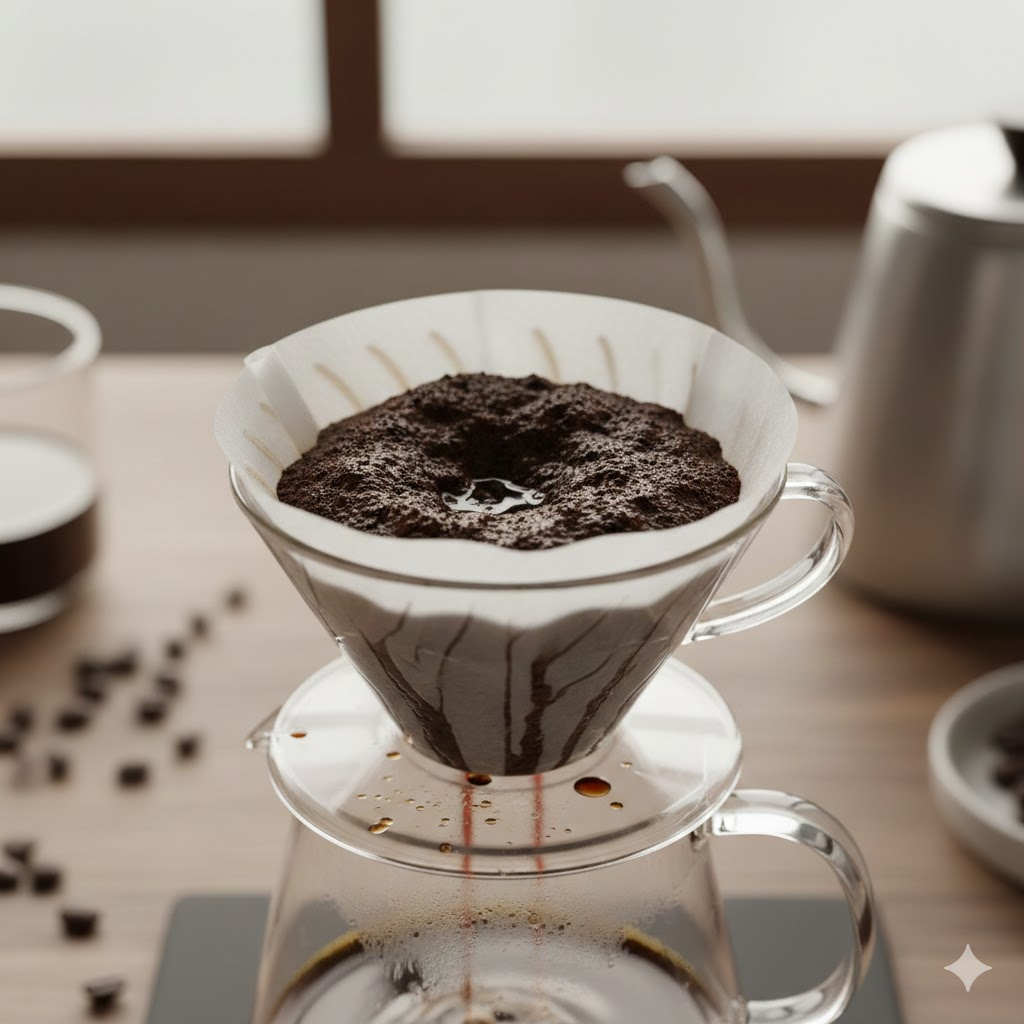
What Exactly is a Muddy V60 Coffee Bed?
When you brew coffee using a pour-over method like the Hario V60, the goal for many is to achieve a flat, even coffee bed once all the water has drained. This flat bed is often considered an indicator of even extraction, where water has flowed uniformly through all the coffee grounds, extracting soluble compounds consistently. However, a “muddy sludge” describes a coffee bed that is anything but flat. It often appears:
- Uneven: Piled up on one side or with deep craters.
- Sticky and Fine: The grounds feel dense and clumpy, almost like wet silt.
- Sludgy Residue: Fines may cling to the walls of the V60 filter higher up, not just at the bottom.
While a pristine, flat bed is often a sign of perfection, it’s important to remember that appearance isn’t everything. However, a consistently muddy bed frequently correlates with less than ideal brewing, often leading to undesirable flavors like bitterness or excessive sourness.
The Primary Culprit: Your Coffee Grinder
If your V60 coffee bed consistently looks like muddy sludge, your grinder is almost certainly the first place to look. A quality grinder is arguably the single most important piece of equipment for any coffee brewing method, especially pour-over.
Inconsistent Grinds and Fines Production
The core issue with many entry-level or blade grinders is their inability to produce a consistent grind size. Instead, they create a wide spectrum of particle sizes, ranging from boulders (large chunks) to an abundance of “fines” (micro-sized particles).
- Fines: These tiny particles have a much larger surface area relative to their volume compared to coarser grounds. They extract very quickly, often leading to over-extraction and bitterness.
- Impact on Flow: During brewing, these fines migrate downwards and clog the filter paper, drastically slowing down the drawdown time. This extended contact time can also lead to over-extraction of the coarser grounds, contributing to an unbalanced flavor.
- Sludge Formation: As fines accumulate and clog the filter, they create that dense, muddy layer at the bottom of your V60, trapping water and making it difficult for the remaining liquid to pass through cleanly.
To learn more about what makes a good grinder and why it’s crucial, check out our guide on understanding burr grinders.
The “Javapresse Knockoff” Syndrome
Many brewers, when starting out, opt for budget-friendly hand grinders, often “knockoff” versions of popular brands like Javapresse. While the intention to get “something that ‘got the job done'” is understandable, these grinders are notorious for their poor grind consistency. As experienced brewers often lament, upgrading from such a grinder to even a decent entry-level burr grinder makes a “night and day” difference. The inconsistent grind, particularly the excessive fines generated, is a direct contributor to that muddy V60 bed.
DIY Grinder Mods (Use with Caution)
In a pinch, some manual grinder users attempt modifications to improve grind consistency, such as stabilizing the outer burr with tape or adding washers to the inner burr to reduce wobble. While these can offer marginal improvements, they are often temporary fixes and can’t truly replicate the precision of a well-engineered burr grinder. If you find yourself needing to mod your grinder, it’s a strong sign that an upgrade is on the horizon.
Beyond the Grinder: Other Factors Contributing to a Muddy Bed
While the grinder is typically the primary culprit, other factors can also exacerbate or contribute to a muddy V60 coffee bed.
Coffee Bean Characteristics
The coffee beans themselves can influence the amount of fines produced and the appearance of the coffee bed:
- Light Roasts: Lighter roasted beans are denser and harder than darker roasts. This increased hardness can make them more resistant to grinding, potentially leading to more fines when using a less capable grinder. They require more effort to break down, and inconsistent grinders struggle more with them.
- Bean Origin: Some coffee origins are known to produce more fines, even with good grinders. Ethiopian and Kenyan coffees, for example, are sometimes noted for this characteristic. While this doesn’t mean they’re inherently “bad,” it’s something to be aware of and might require slight adjustments to your grind size or technique. For a deeper dive into the world of coffee, explore different types of coffee and their unique characteristics.
Grind Size: Too Fine or Just Right?
Even with a good grinder, an incorrect grind size setting can lead to a muddy bed. If your grind is too fine for your V60, you’ll encounter problems similar to those caused by excessive fines from a poor grinder:
- Over-extraction: Too fine a grind increases the surface area for water contact, leading to faster extraction. This often results in a bitter, astringent, or hollow-tasting cup. Learn how to fix sour coffee, which can sometimes be linked to grind issues.
- Slow Drawdown: The fine particles pack together more tightly, restricting water flow and causing the water to drain too slowly. This extended contact time over-extracts the coffee, and the clogged bed takes on that muddy appearance.
Conversely, a grind that’s too coarse can lead to under-extraction and a watery, weak cup, but it’s less likely to result in a muddy bed. The key is finding that sweet spot for your specific beans and V60 setup.
Brewing Technique and Pouring
Your pouring technique can also play a role in how your coffee bed settles:
- Aggressive Pouring: Pouring water too forcefully or haphazardly can create excessive agitation, stirring up fines and causing them to migrate and clog the filter.
- Swirling: The debate around swirling the V60 after your final pour is an interesting one. Some brewers advocate for it to ensure an even bed and good extraction, while others find it detrimental.
- **Pros of Swirling:** Can help settle the coffee bed evenly, ensuring all grounds are saturated and promoting uniform drawdown.
- **Cons of Swirling (especially with inconsistent grinds):** If you have a high percentage of fines, aggressive swirling can push these fines to the bottom of the filter, creating a dense layer that dramatically slows drawdown and causes over-extraction. This can make a muddy problem even worse.
- Bloom: A proper bloom is essential for degassing and preparing the grounds for even extraction. An insufficient bloom might contribute to an uneven bed. Read more about the coffee bloom and its importance.
Mastering your V60 technique is crucial. Our guide on the V60 brewing method offers more tips.
Water Quality and Temperature
While less directly related to the *muddy appearance* of the bed, water quality and temperature significantly impact extraction. Poor water quality (e.g., too hard, too soft, or chlorinated) can hinder proper extraction, and incorrect water temperature can lead to under or over-extraction, influencing the taste regardless of the bed’s appearance.
The “Taste is King” Philosophy: Is a Muddy Bed Always Bad?
This is a crucial point that often gets overlooked in the pursuit of the “perfect” looking coffee bed. Many experienced coffee enthusiasts will tell you: taste is king, the rest is just noise.
If your V60 coffee bed looks a little muddy, but your coffee tastes balanced, sweet, and delicious, then you might not have a problem at all. Some beans, especially certain origins or roasts, naturally produce more fines or result in a slightly more uneven bed without negatively impacting the flavor.
However, if your muddy bed is consistently accompanied by undesirable flavors like:
- Bitterness or Astringency: Often a sign of over-extraction, likely due to too many fines or too fine a grind slowing drawdown.
- Sourness or Under-developed Flavors: While less common with a muddy bed (which usually indicates slower flow), it can happen if fines prevent proper saturation of coarser particles. For persistent sourness, check out our guide on why your coffee tastes sour.
- Weak or Watery Taste: Could indicate uneven extraction where some parts are over-extracted and others are under-extracted, resulting in a confusing cup. If you’re consistently getting watery coffee, there are other troubleshooting steps to consider.
…then the muddy bed is a visual cue that something in your brewing process needs adjustment. Use your taste buds as the ultimate arbiter.
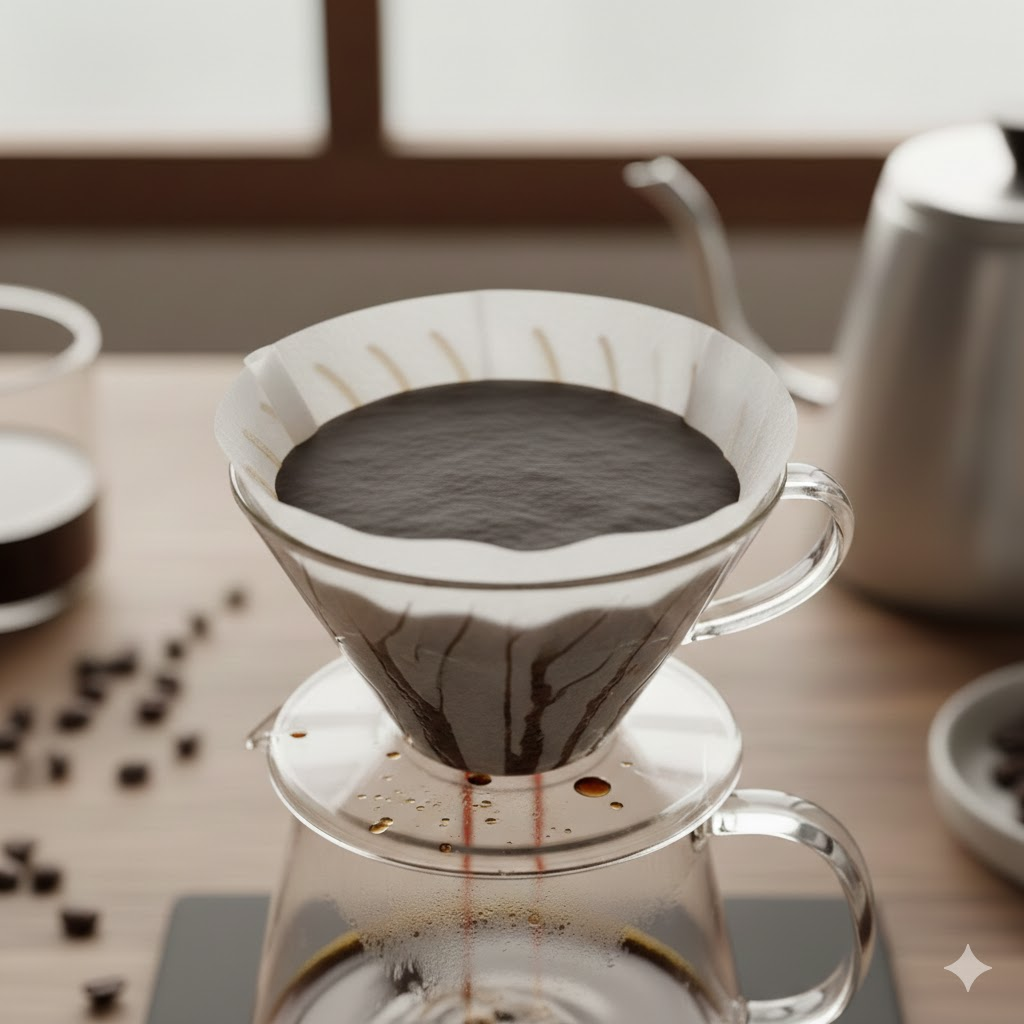
Actionable Steps to Achieve a Cleaner V60 Coffee Bed
Ready to banish that muddy sludge? Here’s a structured approach to troubleshoot and improve your V60 coffee bed:
- Evaluate (and Upgrade) Your Grinder:
- The Single Most Impactful Change: If you’re using a blade grinder or a cheap manual grinder that produces highly inconsistent grinds, investing in a quality burr grinder is paramount. This will reduce fines and improve grind consistency dramatically.
- Recommended Upgrades: For entry-level electric burr grinders, the Baratza Encore is a popular and reliable choice. For manual grinders, options like the Timemore C2/C3 or the 1Zpresso series offer excellent value and grind quality.
- Dial in Your Grind Size:
- Start Coarser: If you suspect excessive fines or slow drawdown, try grinding slightly coarser. This will allow water to flow more freely and reduce the risk of over-extraction.
- Taste Test: Make small adjustments and taste the results. Is it less bitter? Is the sweetness coming through? Adjust until you find the sweet spot for your beans.
- Refine Your Pouring Technique:
- Gentle and Controlled: Aim for a gentle, even pour, avoiding aggressive agitation. Use a gooseneck kettle for precise control.
- Minimize Disturbance: Pour in concentric circles, trying to disturb the coffee bed as little as possible, especially during the later pours.
- Experiment with Swirling (or Not):
- If Grinder is Inconsistent: If you’re stuck with a grinder that produces a lot of fines, try *not* swirling or swirl very gently and briefly. Aggressive swirling can push those fines to the bottom, creating more issues.
- If Grinder is Good: With a good grinder, a gentle swirl after the final pour can help level the bed and ensure even extraction. Pay attention to drawdown time – if it suddenly gets much longer after swirling, you might be compacting fines.
- Consider Sifting Fines (Advanced/Dedicated):
- For the truly dedicated (or those with very finicky beans), sifting out fines using specialized sieves (like a Kruve Sifter) can significantly improve clarity and reduce muddy beds. This is an extra step but can yield exceptional results, especially with less consistent grinders. For more on fixing grind issues, see our guide on fixing uneven grinds in pour-over coffee.
- Use Freshly Roasted, Quality Beans:
- Fresh beans degas properly, leading to a more uniform bloom and bed. Stale beans can lead to erratic extraction. Explore our recommendations for the best whole coffee beans.
Recommended Grinders for V60 Enthusiasts
To truly combat the muddy V60 bed, investing in a quality burr grinder is non-negotiable. Here are a few reliable options:
- Entry-Level Electric:
- Baratza Encore: Often considered the gold standard for entry-level electric burr grinders. It offers consistent grinds suitable for V60 and other filter methods. (As mentioned in the Reddit thread, many upgrade to this).
- Wilfa Svart Aroma: Another excellent option, particularly popular in Europe, known for its consistent grind and sleek design. (Also mentioned as a significant upgrade).
- Manual Grinders (Excellent Value):
- Timemore C2/C3 Series: Offers incredible grind quality for its price point. A huge step up from basic knockoff grinders.
- 1Zpresso JX / K-Max Series: Higher-end manual grinders that rival electric grinders in terms of consistency and build quality. Perfect for the dedicated home barista.
Remember, a better grinder gives you more control and more options, making it easier to troubleshoot and achieve that perfect cup.
Conclusion: Embrace the Rabbit Hole, But Let Taste Lead
Seeing a muddy sludge at the bottom of your V60 can be disheartening, especially when you’re striving for that clean, professional look. More often than not, the primary culprit is an inconsistent grinder that produces too many fines. Upgrading your equipment, specifically your burr grinder, will likely be the most significant step you can take to alleviate this issue.
However, as many seasoned brewers emphasize, the visual appeal of your coffee bed takes a backseat to the actual taste of your brew. Use the muddy bed as a diagnostic tool. If your coffee tastes bitter, sour, or unbalanced, then it’s time to troubleshoot your grind size, pouring technique, and equipment. But if your coffee is delicious despite a slightly less-than-perfect bed, then congratulations – you’re already a winner!
Coffee brewing is a journey of continuous learning and experimentation. Embrace the “rabbit hole,” try new techniques, and always let your palate be your ultimate guide. What are your experiences with muddy V60 beds? Share your tips and triumphs in the comments below!