
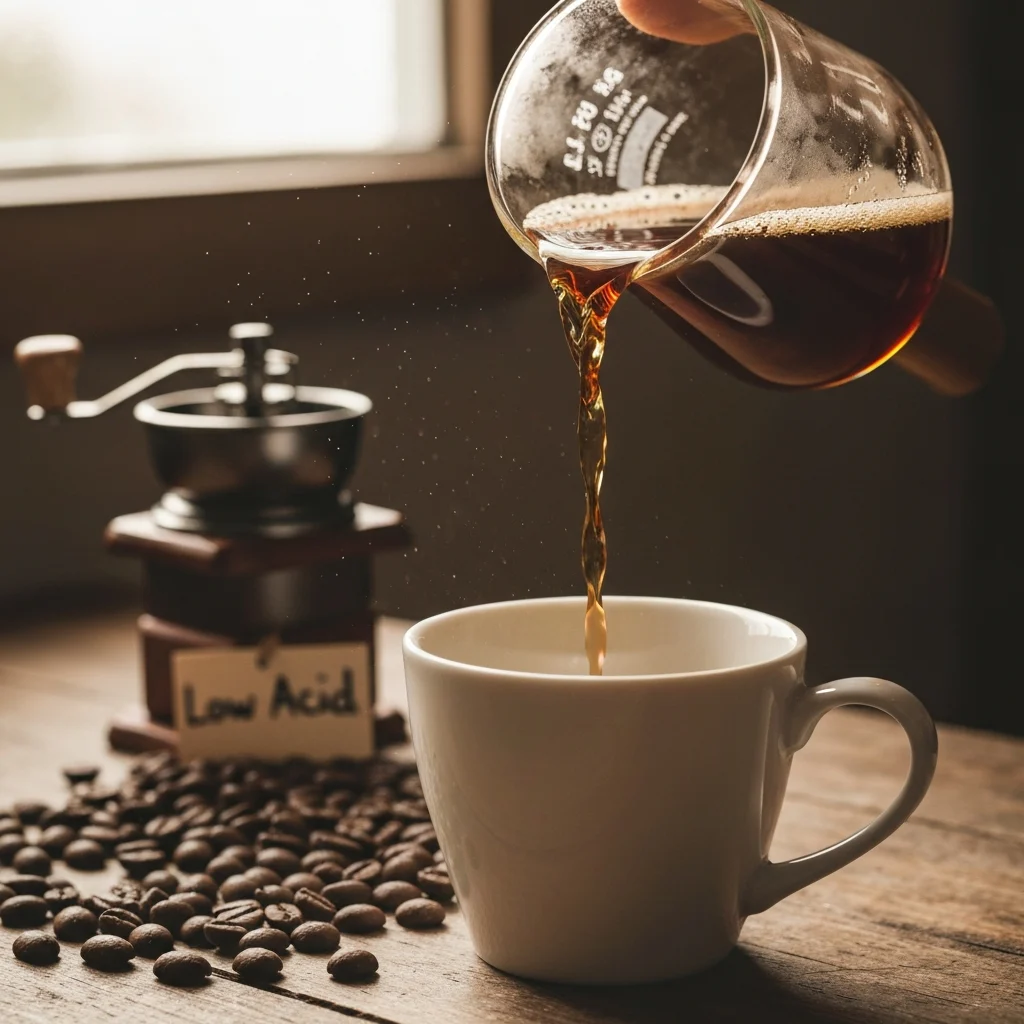
Quick answer: Low acid coffee is coffee that is gentler on sensitive stomachs, usually because it is a darker roast, comes from a low-acidity origin such as Sumatra or Brazil, or is cold brewed. Dark roasts have the best evidence: in one small study they triggered less stomach acid than a medium roast. If coffee gives you heartburn, also try smaller cups and decaf.
If coffee leaves you with heartburn or an upset stomach, you don’t necessarily have to give it up. Here is what makes coffee acidic, what actually helps, and which claims to take with a grain of salt.
In this guide 5 sections
Is coffee acidic?
Yes, mildly. Brewed coffee typically has a pH of about 4.85 to 5.10, according to a 2018 study in Scientific Reports. That is less acidic than most fruit juices (around pH 3 to 4) or lemon juice (around pH 2). Coffee contains several acids, including chlorogenic acids, and the mix depends on the bean, the roast and how you brew.
Is acidity in coffee bad for you?
Not for most people. Acidity is what gives good coffee its bright, fruity and tangy flavors, and coffee with no acidity at all tastes flat. A related flavor problem is sour coffee, which usually comes from under-extraction rather than acidic beans.
For some people, though, coffee can trigger symptoms. The NIDDK lists coffee and caffeine among foods that may make acid reflux (GERD) worse and suggests cutting back to see if symptoms improve. The evidence is mixed: a 2013 meta-analysis found no significant overall link between coffee and reflux, so how you personally react matters most. Acidic drinks can also contribute to tooth enamel erosion over time.
How do you make coffee less acidic?
1. Choose a darker roast
Darker roasts are generally gentler on the stomach. In a small 2014 study of nine volunteers, a dark roast stimulated less stomach acid than a medium roast; the researchers linked this to N-methylpyridinium, a compound that forms during longer roasting. The trade-off is flavor: you lose the bright, fruity notes of lighter roasts and get chocolatey, nutty and roasty ones instead. For bean recommendations, see our picks for the best coffee for French press.
2. Pick a low-acidity origin
Where coffee is grown shapes its acidity. Beans from higher altitudes tend to be more acidic, as a 2024 study of Ethiopian coffee found, so lower-grown coffees are often milder. Origins known for low acidity include:
- Sumatra (Indonesia): earthy and full-bodied, often with low acidity.
- Brazil: nutty and chocolatey, generally with moderate to low acidity.
- Peru, Mexico and Nicaragua: often mild and balanced.
Altitude and processing vary within each country, so treat these as starting points.
3. Try cold brew
Cold brew is often marketed as far less acidic, but the evidence is more modest. The same 2018 study found cold and hot brew had a similar pH, while hot brew had higher titratable acidity (the total amount of acid). Many people still find cold brew smoother and easier on the stomach, so it is worth trying.
4. Add milk
Some people find coffee easier on the stomach with milk or creamer. There is little research on this, so see whether it helps you.
5. Cut back on caffeine or switch to decaf
If you have tried everything else, drink smaller cups or switch to decaf, as NIDDK suggests cutting back on caffeine to test whether it is a trigger. If you have persistent heartburn or other digestive symptoms, see a healthcare professional.
What is the best low acid coffee?
Start with a dark roast Sumatra or Brazil, or cold brew. If you want a coffee sold specifically as low acid, these brands market themselves that way:
- Puroast Low Acid House Blend: the brand says it is verified at pH 5.7 to 5.9 and claims about five times less acid than regular coffee. Check price on Amazon
- Lifeboost: organic single-origin coffee marketed as low acid. Check price on Amazon
These are the brands’ own claims. When Coffee Review pH-tested advertised low-acid coffees, they were less acidic, but most tasted worse than good regular coffee. For other gentler options, see our guide to the healthiest coffee.
Frequently asked questions
Is dark roast less acidic than light roast?
Generally, yes. Longer roasting breaks down some acids and forms N-methylpyridinium, which a small study linked to less stomach acid. Light roasts taste brighter and more acidic.
Is cold brew less acidic?
Only slightly. Research found cold brew has a similar pH to hot coffee but lower titratable acidity. Many people still find it gentler.
Does coffee cause acid reflux?
It can trigger symptoms in some people, but studies have not found a consistent link for everyone. Cutting back for a while is the simplest way to find out whether coffee affects you.
This article is for general information and isn’t medical advice.
Share this guide
See more Coffee Informer on Google. Add us as a preferred source and our guides show up more in your Top Stories and AI results.
Add as a preferred source on Google