
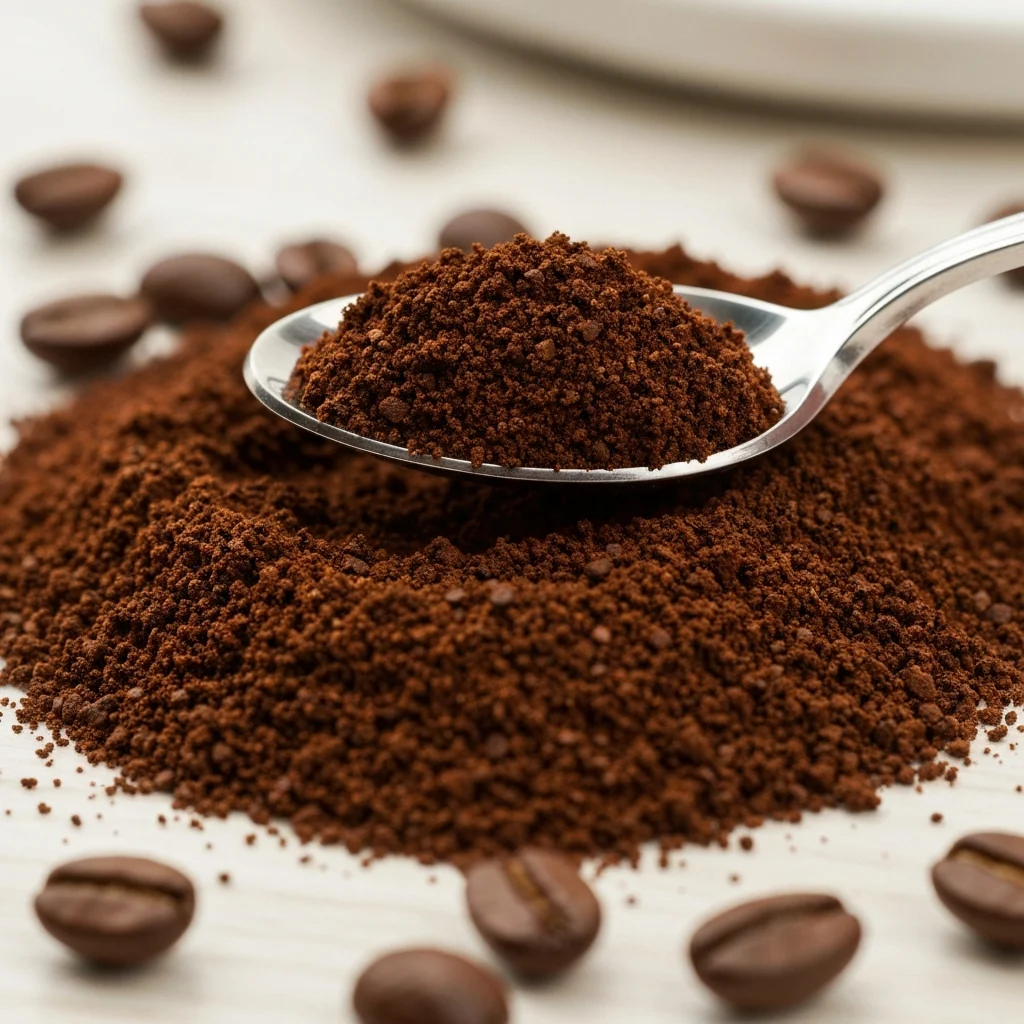
Quick answer: Yes, you can eat coffee grounds in small amounts. They are not poisonous, and they contain caffeine, fiber and antioxidants. But they also deliver more caffeine than you might expect, and they contain cafestol and kahweol, oils that can raise cholesterol. Use them as an ingredient in rubs or baking rather than eating them by the spoonful.
If you love the smell of coffee, you have probably wondered whether the grounds are edible, whether they will make you sick and how much caffeine they carry. Here is what the evidence says.
In this guide 6 sections
Is it safe to eat coffee grounds?
For most healthy adults, small amounts are fine. People ate coffee beans long before brewed coffee was common; historical accounts describe coffee beans being eaten in Ethiopia. Grounds add fiber and the same antioxidants found in coffee. For the wider evidence on drinking coffee, see our article on drinking coffee every day.
Two things are worth knowing before you make a habit of it: the caffeine and the effect on cholesterol.
Caffeine
When you brew coffee, only part of what is in the grounds ends up in your cup. Eating unbrewed grounds gives you everything in them, so caffeine adds up quickly. Some caffeine may also be absorbed through the lining of your mouth as you chew, as research on caffeine gum suggests, so the effect can feel faster. The FDA cites 400 mg a day, about two to three 12-ounce cups of coffee, as an amount not generally associated with negative effects for most adults; count any grounds you eat toward that. Too much can cause jitters, anxiety, a racing heart and trouble sleeping. Learn more in our guide to how much caffeine is in coffee.
Cholesterol
If you have high cholesterol, it is best to avoid eating coffee grounds. Coffee contains the diterpenes cafestol and kahweol. A paper filter traps most of them, but grounds and unfiltered coffee do not. In a study in the American Journal of Clinical Nutrition, volunteers who ate 8 grams of fine coffee grounds a day for three weeks saw their cholesterol rise by 0.65 mmol/L (about 25 mg/dL) compared with a control group, and a liver enzyme (ALT) also rose.
How can you eat coffee grounds?
Coffee grounds work best as an ingredient: in dry rubs for meat, in cookies and brownies for flavor, or in baking for texture. Our guide to cooking with coffee has ideas.
Whenever I see chocolate-covered espresso beans I pounce. The rich chocolate balances the bitterness of the bean, and they are addictive. If you want to try them, Nuts.com sells a 2-pound bag of dark chocolate-covered espresso beans.
Can you drink coffee grounds?
Turkish coffee comes closest. Very finely ground coffee is simmered with water and served unfiltered, and the grounds settle at the bottom of the cup. Like other unfiltered brews such as French press, it lets more cafestol and kahweol through than filtered coffee; the same AJCN study found Turkish and Scandinavian boiled coffee contained 2–5 grams of fine particles per liter.
What if you crave coffee grounds?
Strong cravings to eat things that aren’t normally food are called pica. Pica has been linked with iron deficiency, so if you find yourself compulsively eating coffee grounds, talk to a doctor.
What else can you do with used coffee grounds?
If you would rather not eat them, used grounds are useful for composting, as a gritty scrub for pots or skin (see our coffee scrub guide), for absorbing odors and for dyeing paper or Easter eggs. Here is our full list of uses for coffee grounds.
Frequently asked questions
Will eating coffee grounds make you sick?
Small amounts are unlikely to make a healthy adult sick. Large amounts can give you too much caffeine, and regular use can raise cholesterol.
Do coffee grounds have caffeine?
Yes. Fresh, unbrewed grounds contain all of the bean’s caffeine. Count them toward your daily caffeine intake.
Are coffee grounds safe for people with high cholesterol?
It is best to avoid them. Coffee grounds contain cafestol and kahweol, which raised cholesterol in a controlled study of people who ate them daily.
This article is for general information and isn’t medical advice.
Share this guide
See more Coffee Informer on Google. Add us as a preferred source and our guides show up more in your Top Stories and AI results.
Add as a preferred source on Google
I’m eating raw coffee now! Death Wish!
What was it like?
They didn’t reply… did they survive?
He’s not responding. You can kind of guess what happened…..LOL