
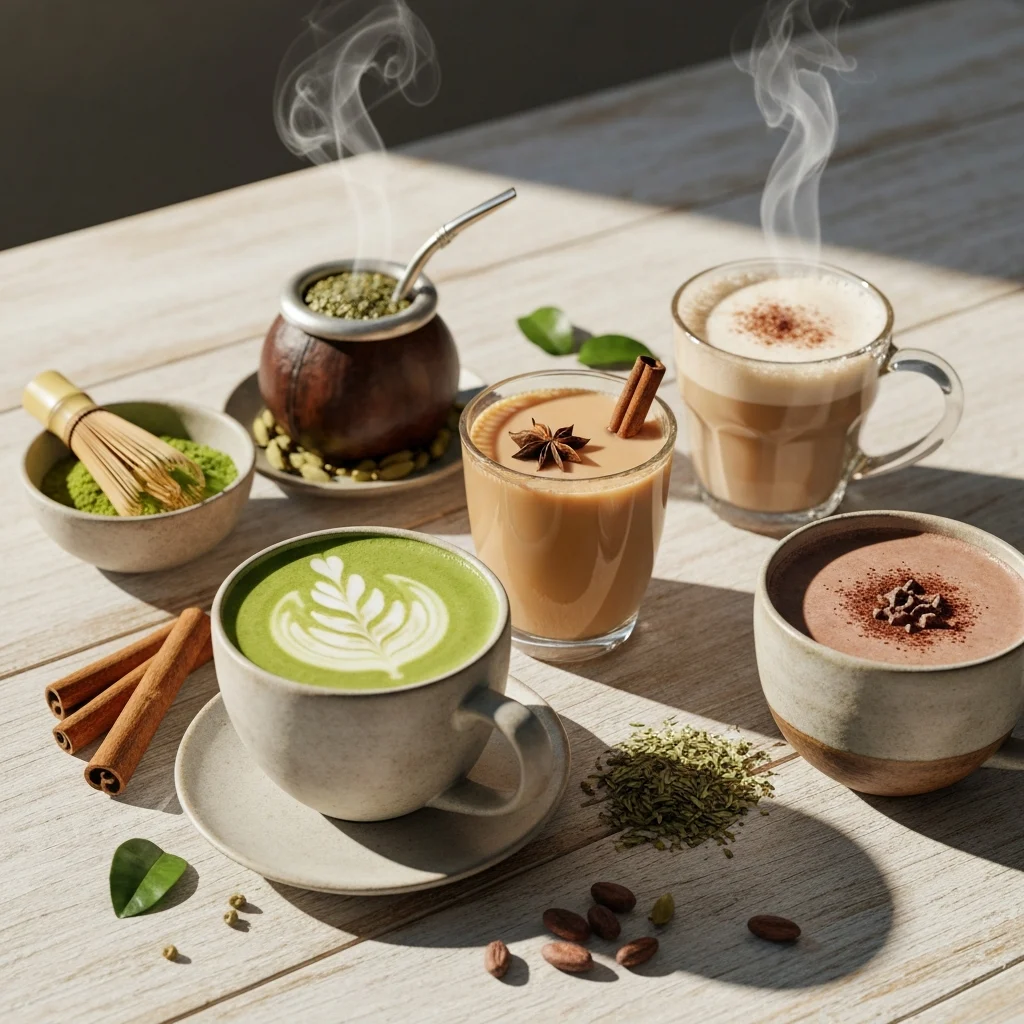
Quick answer: The best coffee alternatives with caffeine are black tea (about 47 mg per 8 oz cup), matcha and green tea (about 28 mg per cup for brewed green tea), yerba mate, chai and kombucha. For comparison, an 8 oz cup of brewed coffee has about 96 mg. Caffeine pills, gum, mints and caffeinated water give caffeine without the drink, but are easier to overdo.
People cut back on coffee for many reasons: it makes them jittery, it upsets their stomach, or they simply want a change. If you still want some caffeine, there are plenty of alternatives. Here are 15, starting with drinks and ending with some less conventional options.
In this guide 4 sections
How much caffeine do coffee alternatives have?
Caffeine content varies with the product and how it is brewed, but these figures from the Mayo Clinic are a useful guide (see also our guide to caffeine in coffee):
| Drink (8 oz / 237 ml) | Approximate caffeine |
|---|---|
| Brewed coffee | 96 mg |
| Brewed black tea | 47 mg |
| Brewed green tea | 28 mg |
Which drinks are the best coffee alternatives with caffeine?
1. Matcha tea
Matcha is a powder made by steaming, drying and grinding the leaves of the Camellia sinensis tea plant. Because you drink the whole leaf, it usually has more caffeine than regular green tea. It also contains L-theanine, an amino acid often associated with a calmer kind of alertness, and the antioxidant EGCG.
2. Green tea
Green tea is made from the leaves, stems and buds of the same plant. A brewed 8 oz cup has about 28 mg of caffeine, roughly a quarter to a third of a cup of coffee, though it varies by type. It is a good choice if you want a much gentler lift.
3. Yerba mate
Yerba mate is a naturally caffeinated South American drink made from the leaves and twigs of the yerba mate plant. It has an earthy, slightly bitter taste that many coffee drinkers enjoy, and it also contains theobromine, the same stimulant found in chocolate. How much caffeine you get depends on how much you use and how long you steep it, so drink it in moderation.
4. Kombucha
Kombucha is black or green tea fermented with a culture of bacteria and yeast and some sugar. It has less caffeine per cup than coffee, so it suits people who want only a gentle boost. Expect a tangy, vinegar-like taste. Because it is fermented, it also contains live cultures.
5. Chai tea
Chai is black tea brewed with spices such as ginger, cardamom, cinnamon, fennel, black pepper and cloves. It is traditionally made with both water and milk and sweetened to taste; in US coffee shops it is usually served as a chai latte. Its caffeine comes from the black tea, so it has less than coffee.
6. Black tea
Black tea isn’t as strong as black coffee, but it still has a fair amount of caffeine: about 47 mg in an 8 oz cup. It is the easiest swap if you want a hot, familiar morning drink with some kick.
7. Hot cocoa
Cocoa beans naturally contain a small amount of caffeine along with theobromine, a milder stimulant. A cup of hot cocoa has far less caffeine than coffee, so it is better as a comforting, low-caffeine option than as a real replacement.
8. Smoothies
A smoothie can replace both breakfast and your morning coffee. Add matcha or cocoa for some caffeine, and protein, fruit and oats to make it filling.
9. Cascara
Cascara is a fruity tea made from the dried skin of the coffee cherry. It comes from the coffee plant but tastes nothing like coffee, and it has much less caffeine.
What are other ways to get caffeine without coffee?
These products give you caffeine without brewing anything. They are convenient but make it easy to take in a lot of caffeine quickly. The FDA says 400 mg a day is generally not associated with negative effects in healthy adults, and warns that concentrated and pure caffeine products can be dangerous. Always check the label.
10. Caffeine pills
Caffeine pills contain either natural or synthetic caffeine. They give a measured dose with no calories from milk or sugar and none of coffee’s acidity, but it is much easier to take too much caffeine from pills than from cups of coffee. Take them only as directed.
11. Caffeinated water
Caffeinated water is plain or flavored water with added caffeine, usually without sugar or calories. Products vary in caffeine content and ingredients, so read the label. Hiball‘s grapefruit sparkling water, for example, lists 160 mg of organic caffeine per can, more than an 8 oz cup of coffee.
12. Caffeinated toothpaste
Some toothpastes now contain caffeine, so you can freshen your breath and get a small boost at the same time. Supersmile’s Awake whitening toothpaste lists caffeine, matcha and vitamin B12 among its ingredients.
13. Energy mints
If you worry about coffee breath, caffeinated mints such as those from Viter come in flavors like peppermint, spearmint, cinnamon and chocolate mint. Check the caffeine per mint on the label and count it toward your daily total.
14. Caffeinated soap
Caffeinated soaps are marketed as a wake-up for your morning shower. Raw Sugar’s Santal + Caffeine Eco Body Bar is a 5 oz bar with caffeine in its scent line, an easy one to keep in a gym bag.
15. Caffeinated gum
Caffeinated chewing gum keeps your mouth fresh while giving you caffeine, and you can chew it during work or exercise without stopping for a drink.
Frequently asked questions
What is the healthiest coffee alternative with caffeine?
Unsweetened green tea, matcha and black tea are simple choices: they have less caffeine than coffee and no added sugar unless you add it. Watch out for sweetened chai lattes and bottled drinks, which can contain a lot of sugar.
What has the most caffeine besides coffee?
Of the drinks in this list, black tea, matcha and yerba mate tend to have the most. Caffeine pills and some caffeinated gums, mints and waters can contain as much as a cup of coffee or more per serving, so check the label.
Can I quit coffee without getting headaches?
Cutting back gradually, or switching to a lower-caffeine drink like green or black tea first, can make the change easier than stopping all at once. See our guide to the caffeine crash for more.
Not ready to quit coffee? Our guide to the different types of coffee has lighter options, from a macchiato to Hong Kong’s coffee-and-tea yuen yeung.
This article is for general information and isn’t medical advice.
Share this guide
See more Coffee Informer on Google. Add us as a preferred source and our guides show up more in your Top Stories and AI results.
Add as a preferred source on Google
really amazing content I enjoyed reading through and getting new insight.