
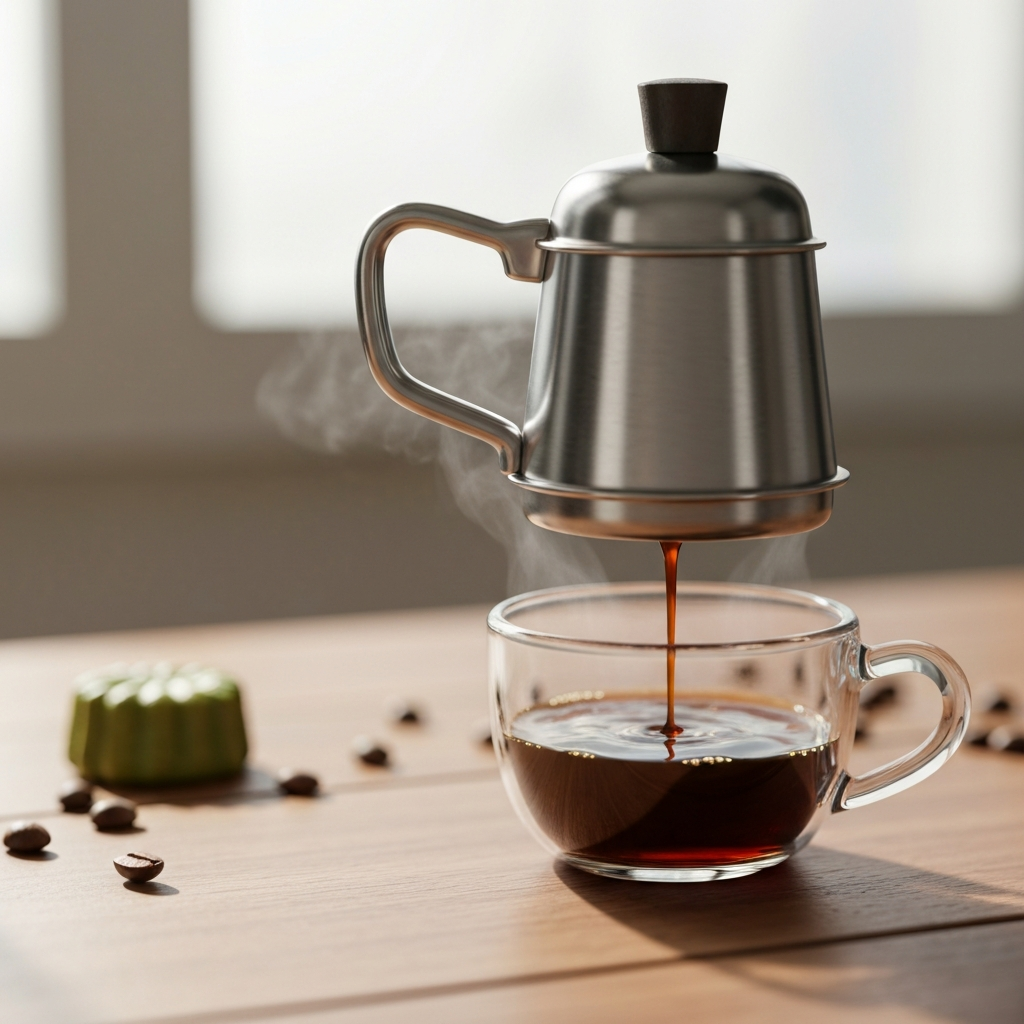
Quick answer: Vietnamese coffee is strong, dark coffee brewed slowly through a phin, a small metal drip filter that sits on top of the cup, and stirred into sweetened condensed milk. Served hot it is cà phê sữa nóng; poured over ice it is cà phê sữa đá. Traditionally it is made with robusta beans, whose bitterness balances the sweet milk.

I still remember the first time I had Vietnamese Coffee. It was a beautiful day after my piano class in Flushing, New York. We went to eat with family at a local Pho shop. I was tired at the time so I asked my mom if I could try a Vietnamese coffee. This is how I was introduced to the heavenly drink called Vietnamese Coffee or (cà phê sữa nóng).
The coffee was flavorful, sweet and thick, like nectar from the gods. It is made with condensed milk topped with dark drip coffee. You can make it with iced or just the condensed milk. Just stir up the mixture and you’re ready to enjoy this delicious drink. To make the iced version just pour the mixed coffee into a glass filled with ice.
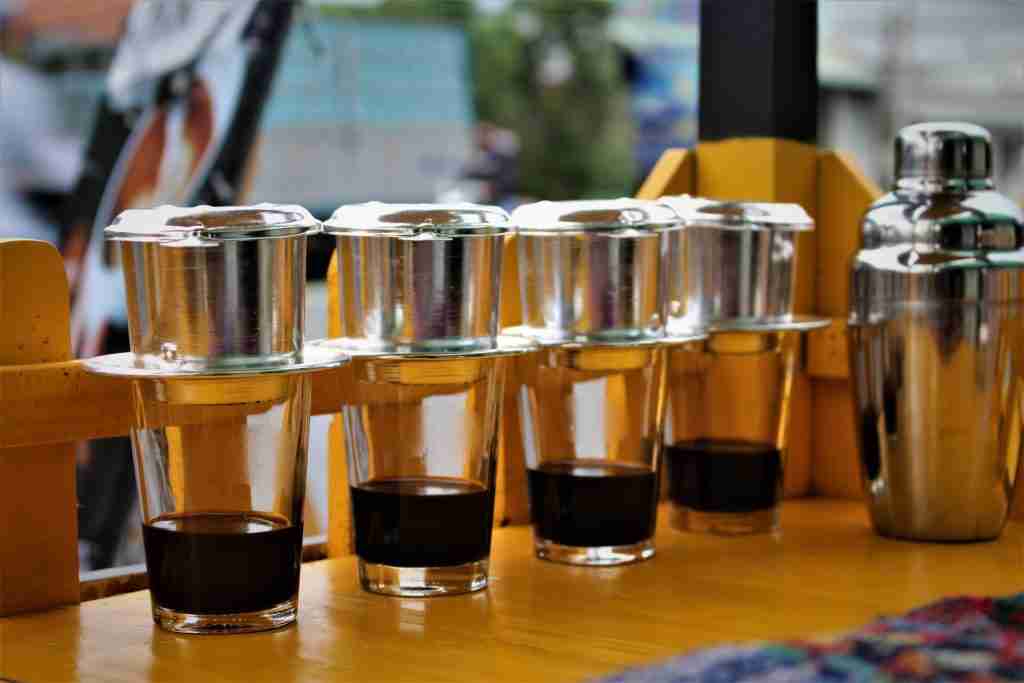
A Vietnamese Coffee Phin is a metal coffee dripper that sits on top of a cup to brew coffee. It is like a combination of a french press and a drip coffee brewer. Phins are a traditional Vietnamese brewing method and make an amazing cup of coffee without any complex steps.
Here is how to make it at home with a phin filter and a few simple ingredients.
In this guide 3 sections
What is a Vietnamese coffee phin?
Phins are traditionally a metal coffee dripper with a filter that sits on top of a cup.
This method was used in Vietnam to make a deep, and complex coffee. This coffee is usually served with condensed milk to offset the deep coffee flavors.
Traditional Vietnamese coffee uses robusta beans, which are darker and more bitter than arabica beans, so they pair well with sweet condensed milk. Vietnam is one of the world’s largest robusta growers; see our guide to coffee beans from around the world for how origins compare.
What makes up a Phin
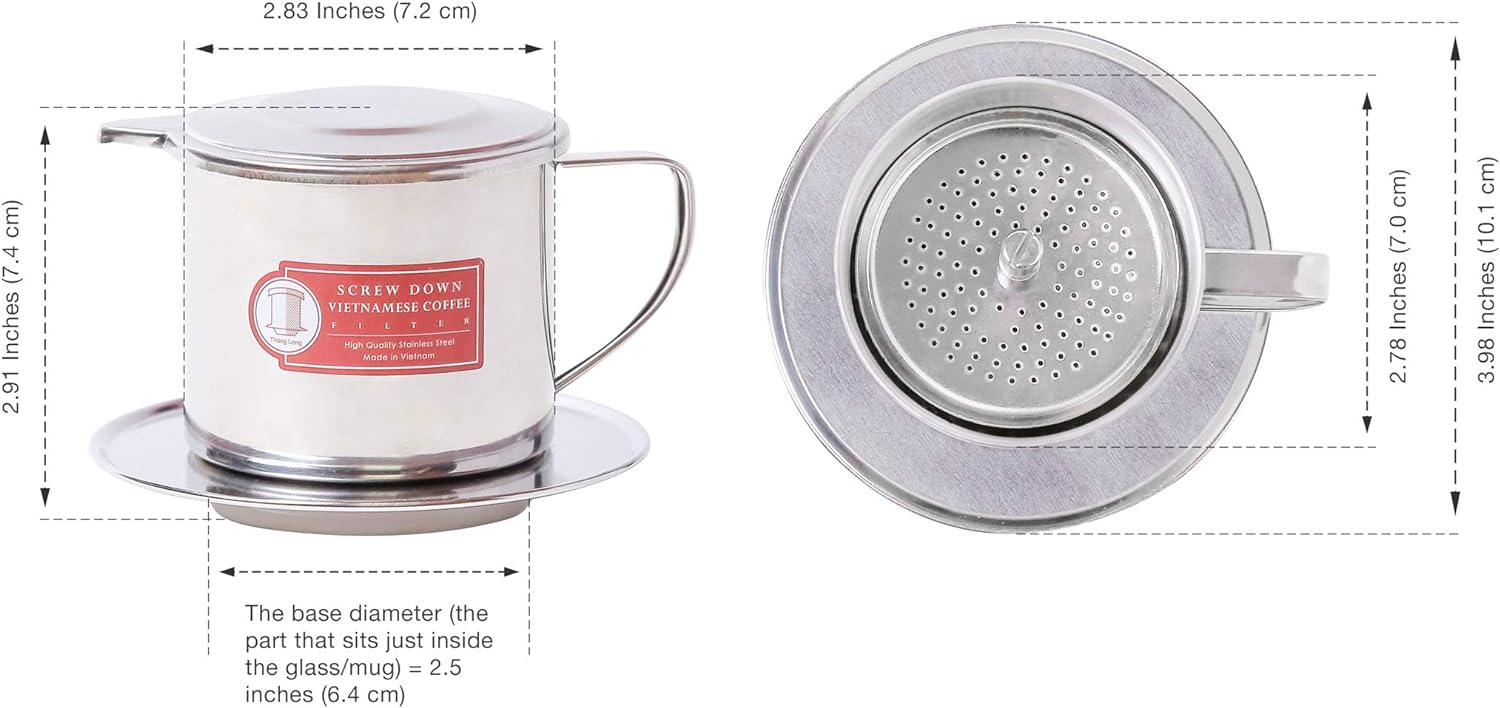
Phins are a combination of french press and drip coffee. It has a round perforated plate of metal that is used to hold the dripper on top of a cup.
Then there is the brewing chamber which is a small cup with perforations on the bottom. This holds the coffee grounds and is similar to the brewing chamber of a drip coffee machine.
Next, there is the metal insert which traps the coffee grounds and is also perforated. You pour water on this and it prevents the grounds from floating up and lets the water flow down into the beans and drip out into your cup.
Last, there is the cap which conserves the head of the water while it drips through the Vietnamese phin.

The process for brewing Vietnamese coffee can take several minutes to make a single cup. You should use a cup with good thermal insulation to keep your coffee from getting too cold. A double-walled mug or cup is highly recommended. This also prevents you from burning yourself on the cup because the phin can get hot to the touch while brewing.
How do you make Vietnamese coffee with a phin?
You have to start with the right grind for the coffee. Try to grind your coffee beans to a medium-coarse ground coffee. Something you would use for a French Press coffee.
If it is too fine the grinds would fall through the stainless steel filter and get into your coffee. A burr grinder gives the most even medium-coarse grind.
As for the type of coffee beans any robusta coffee works and it would be best to avoid the arabica beans. This is because what we are looking for is the deep bitterness and nuttiness that will work well with the condensed milk. However, please enjoy your coffee however you like. You may actually prefer it with Arabica beans, and you won’t know until you try!
What you Need to Make Vietnamese Coffee
To make this delicious recipe at home you just need to get a few things.
- Stainless steel coffee filter (Phin filter)
- Condensed milk (Longevity brand is our favorite)
- Any type of ground Vietnamese coffee
- Gooseneck kettle preferred (any kettle will do)
For the coffee, you can use any coffee beans, but there is a staple we recommend. Many Vietnamese-American families brew with Café du Monde coffee and chicory from New Orleans, a habit that started with Vietnamese refugees who settled on the Gulf Coast (Atlas Obscura has the story). It makes a smooth, rich and bold cup.
Vietnamese coffee drippers are not expensive. If you are near an Asian supermarket you will be able to find these drippers in the appliance aisles and they are inexpensive.
Step 1 – Start with the Condensed Milk
Add 2 tablespoons of the sweetened condensed milk into a cup or glass.
You can change this to suit your tastes and preferences. We suggest adding no more than 3 tablespoons.
Step 2 – Boil some water in a kettle
If you make a lot of V60 coffee you may have a gooseneck kettle. This may make the pouring easier, but any kettle will do. Electric kettles also work.
Step 3 – Preheat the Vietnamese phin and the cup
You can preheat the cup and the phin by pouring some warm water through the phin and into the cup. This helps with extraction and will help give you the flavors you want out of your coffee beans.
Step 4 – Fill the brewing chamber with coffee
I usually use 1 tablespoon of ground coffee when I make my Vietnamese coffee. You can experiment with the grounds, but this is what I found works best when I brew. That is 3 teaspoons if you don’t have a tablespoon measure.
Step 5 – Place the metal insert on top of the coffee grounds
If you have the phin with a twist-on insert gently twist the metal insert until it gets a little tight. Otherwise, just place the insert on top of the coffee.
Step 6 – Set the brewing chamber and metal plate on a cup
Rest the filter plate on the rim of the cup or glass that holds the condensed milk, then sit the brewing chamber on top of it so the coffee drips straight onto the milk.
Step 7 – Bloom the coffee by pouring a small amount of hot water over the grounds
If you don’t know what blooming is you can read this article I wrote about coffee bloom. A quick summary is there is CO2 trapped inside fresh coffee grounds and some hot water releases it and allows for better extraction of the coffee flavor.
Step 8 – Fill up the brewing chamber
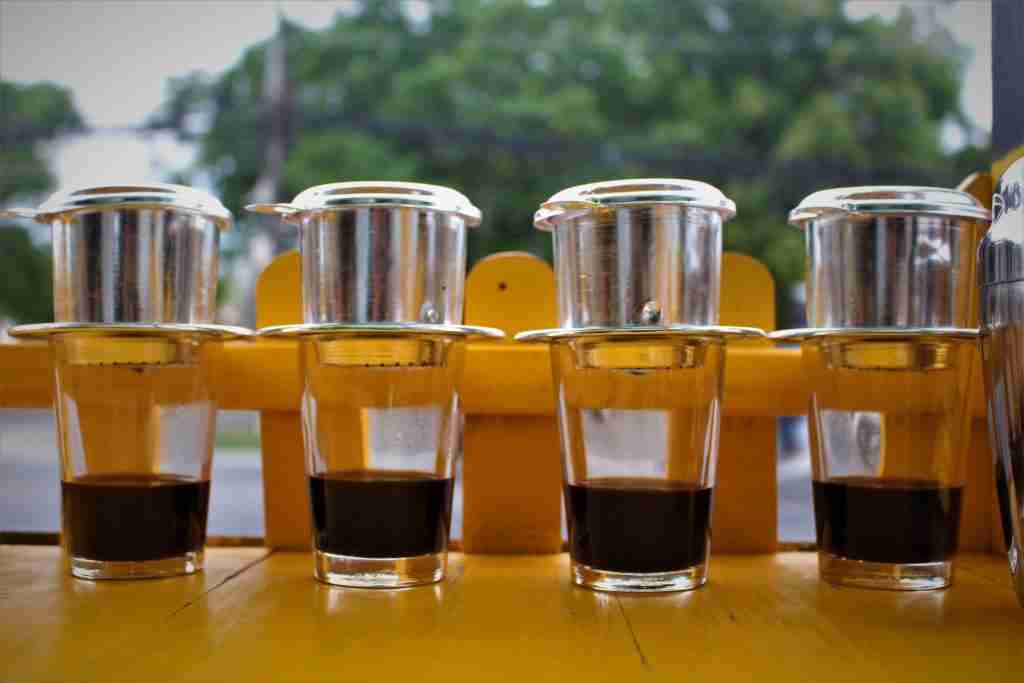
This is the last step for brewing your Vietnamese coffee. Fill up the phin with hot water and it should start dripping. It should drip for 3 – 5 minutes and if it ever runs low on water and you need to brew more coffee add more water. You can adjust the strength of the coffee by how tight your metal insert is so if it looks like it’s brewing light you can tighten your coffee grounds. If it’s not dripping through you may have to loosen them up.
Step 9 – Mix with your condensed milk and enjoy
You’ve earned it! Vietnamese coffee is a unique and tasty way to enjoy a cup of coffee. Savor this taste because Vietnamese coffee is awesome!
Frequently asked questions
What is the difference between Vietnamese coffee and regular coffee?
Vietnamese coffee is usually brewed from dark-roasted robusta beans through a phin, so it is stronger and more bitter than typical drip coffee. It is then mixed with sweetened condensed milk, which makes it thick and sweet.
What grind should you use in a phin?
Use a medium-coarse grind, similar to French press coffee. If it is too fine, the grounds fall through the filter into your cup and the water may not drip through.
How long should a phin take to drip?
About 3 to 5 minutes. If it drips through faster, tighten the metal insert; if it barely drips, loosen it.
How do you make Vietnamese iced coffee (cà phê sữa đá)?
Brew the coffee through the phin onto the condensed milk exactly as above, then stir well. Pour it into a tall glass filled with ice and stir again. The ice dilutes the strong coffee, so it is worth brewing it a little stronger than you would drink it hot.
Can you use arabica beans for Vietnamese coffee?
Yes. Robusta is traditional because its bitterness stands up to condensed milk, but arabica makes a smoother, less bitter cup if you prefer that.
Vietnamese coffee is just one way to enjoy coffee. For more, read our guide to the different types of coffee or try Hong Kong’s coffee and milk tea, yuen yeung.
Share this guide
See more Coffee Informer on Google. Add us as a preferred source and our guides show up more in your Top Stories and AI results.
Add as a preferred source on Google