
Quick answer: Starbucks uses 100% arabica coffee beans, bought from farms across the coffee-growing world and mostly sourced through its C.A.F.E. Practices program. It roasts them on a Blonde, Medium and Dark scale, and its signature style leans dark. That darker roast, not cheap robusta beans, is why many people find Starbucks coffee bitter or “burnt”.
At around $5 a drink, you might expect Starbucks to use the best beans money can buy, and many people assume its bitter taste means it cuts corners with low-grade robusta. It does not. Here is what Starbucks actually uses, and why it still tastes the way it does.
In this guide 6 sections
What coffee beans does Starbucks use?
Starbucks says all of its coffees are made with 100% arabica beans. It buys them from more than 30 countries across Latin America, Africa and Asia-Pacific, and since 2015 it reports that 99% of its coffee has been ethically sourced under C.A.F.E. Practices, a standard it developed with Conservation International. Starbucks also owns one farm, Hacienda Alsacia in Costa Rica, which it uses for agronomy research.
Each bag is roasted to one of three levels on the Starbucks Roast Spectrum: Blonde (for example Veranda), Medium (Pike Place) and Dark (Italian Roast).
Arabica vs robusta: what is the difference?
Two species dominate the coffee you drink, both grown in the warm “coffee belt” around the equator.
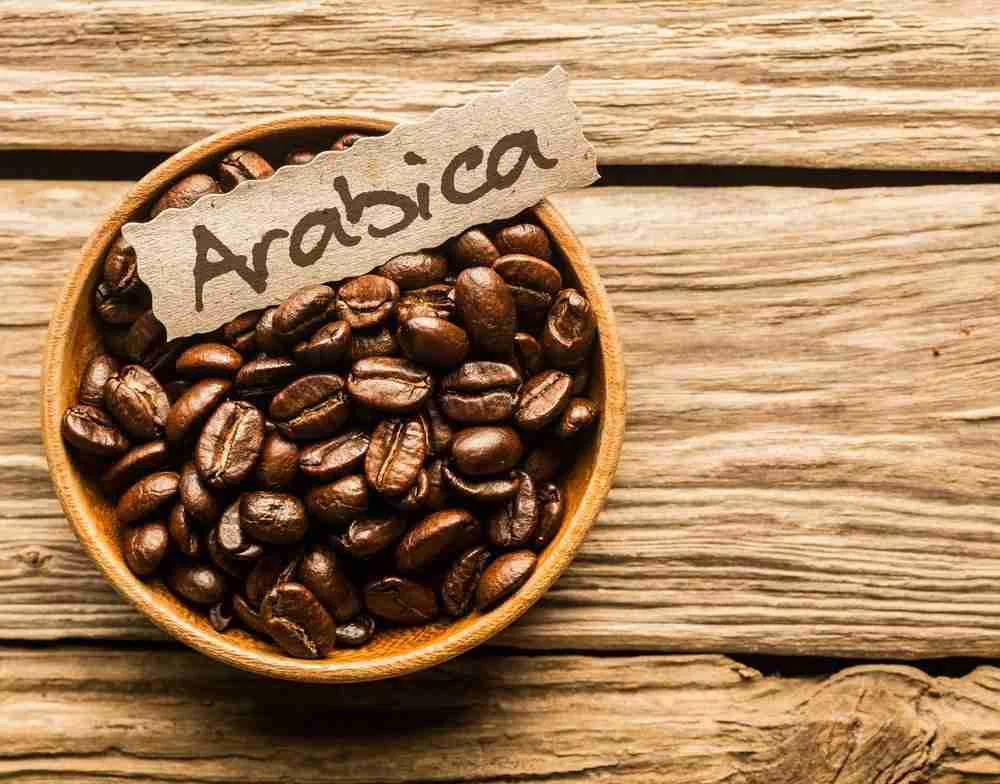
Arabica beans
Arabica is the most widely consumed species and is considered the higher-quality bean. It has more acidity, which gives coffee complexity and sometimes fruity notes, and its flavor depends strongly on where it is grown. Read more in our guides to single-origin coffee and Colombian coffee.
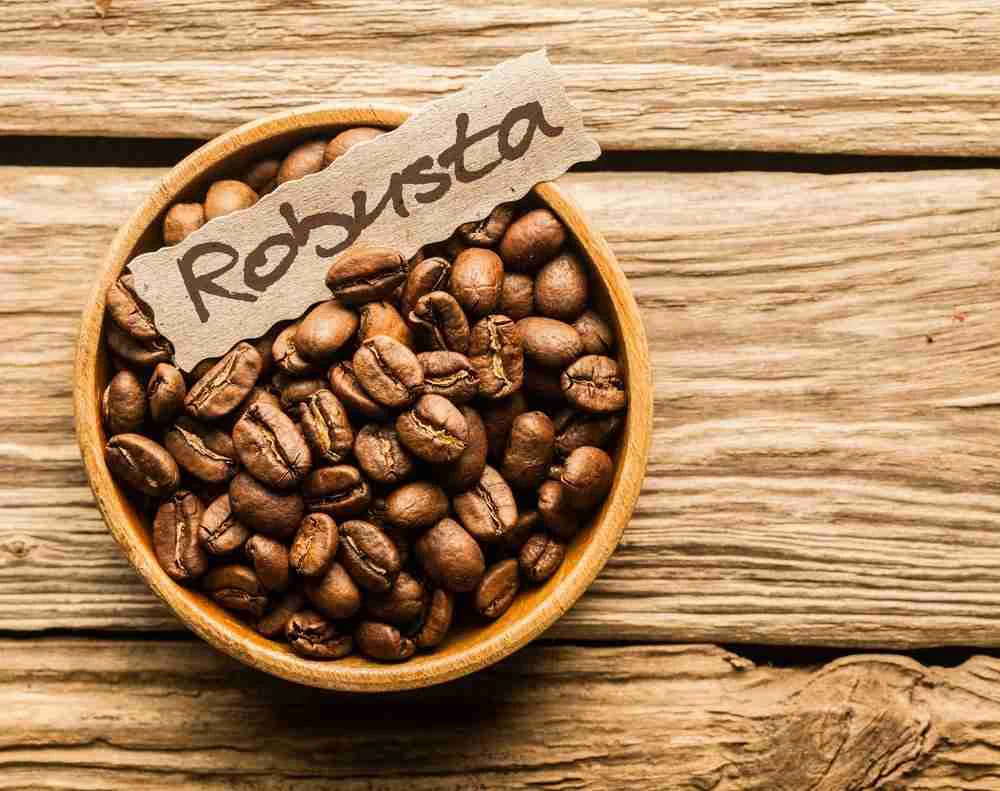
Robusta beans
Robusta is the second most popular species. It is easier to grow, cheaper, and contains roughly twice the caffeine of arabica, about 1.2–2.4% versus 0.9–1.5% by dry weight according to a 2021 review. It tends to taste more bitter and less complex, which is why it shows up mainly in espresso blends, instant coffee and high-caffeine brands, usually with milk and sugar.
Why does Starbucks coffee taste burnt?
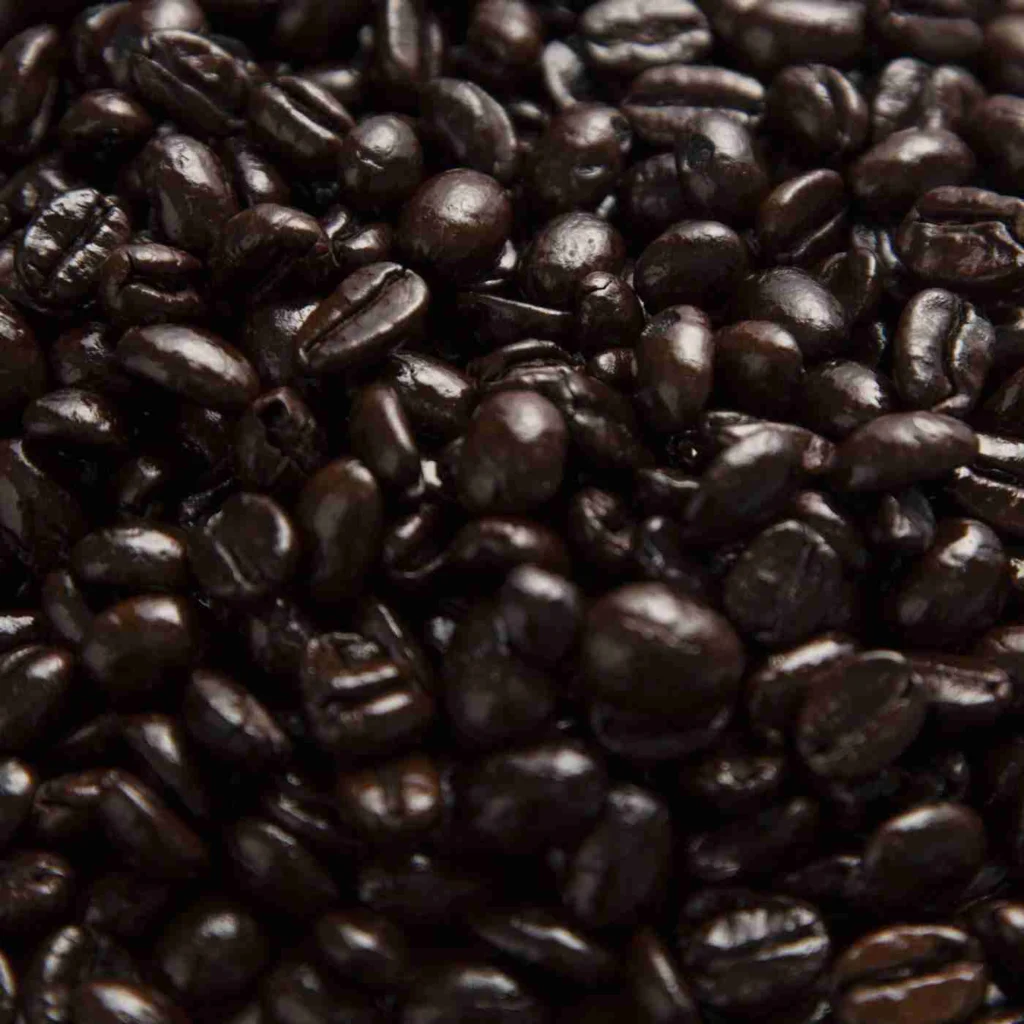
Because of the roast, not the bean. Starbucks built its style on roasting darker than most specialty roasters, and a chain that serves thousands of stores needs every cup to taste the same. Dark roasting does that well: it smooths out differences between origins and harvests, but it also replaces the bean’s own flavors with roasty, bitter, smoky ones.
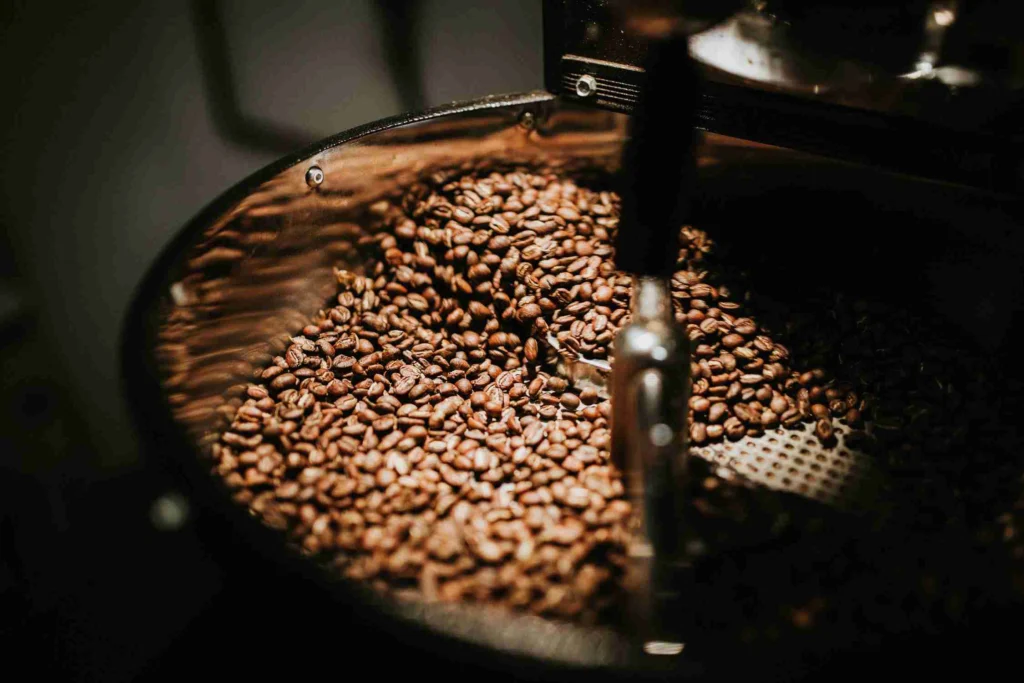
Roast level changes flavor in a predictable way:
- In a light roast, the coffee is fruity and acidic, and you can taste where the bean came from.
- In a medium roast, the coffee tastes balanced and semi-sweet as sugars caramelize without burning.
- In a dark roast, roast flavors dominate and bitterness takes over as the bean’s own character is roasted away.
Blind tasters have noticed. In its March 2007 issue, Consumer Reports tested black coffee from McDonald’s, Starbucks, Dunkin’ and Burger King and rated McDonald’s best:
Its tasters found McDonald’s coffee to be “decent and moderately strong” with “no flaws.” The Starbucks brew “was strong, but burnt and bitter enough to make your eyes water instead of open.”
Consumer Reports, March 2007
If you like that cheaper, milder style, see our look at what coffee McDonald’s uses.
Does Starbucks coffee have more caffeine?
Often, yes, but not because of robusta. A grande (16 oz) Pike Place brewed coffee has about 310 mg of caffeine, while a medium (14 oz) Dunkin’ hot coffee has about 210 mg. Starbucks simply brews stronger, with more coffee per cup. Dark roast does not add caffeine; it only tastes stronger. See how much caffeine is in coffee for more.
How to get better coffee than Starbucks
We are not Starbucks haters, and we drink it as regularly as anyone. We understand that a global chain needs a uniform product. Starbucks does offer Blonde roasts, but we find them less interesting than lighter roasts from many smaller roasters.
To taste what high-quality arabica can do, try a light roast. Our pick for a first light roast is the breakfast blend from Real Good Coffee Co.
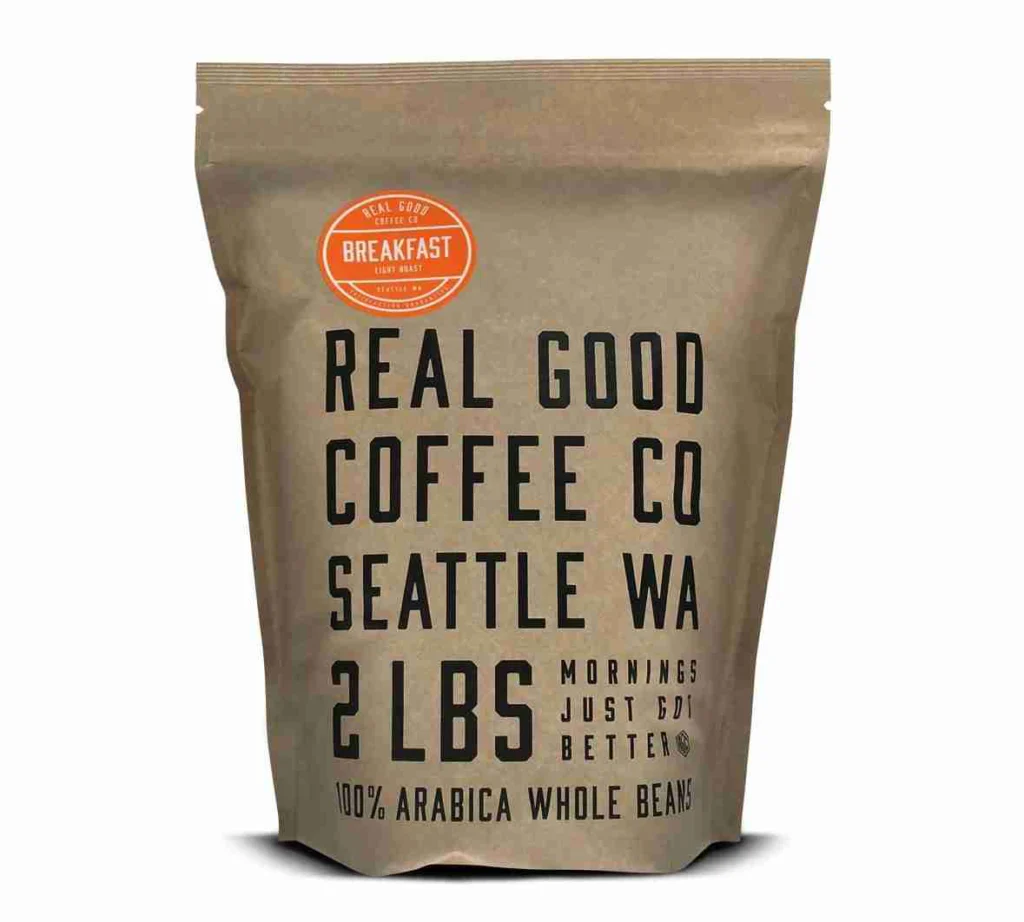
It is a good coffee to start tasting the notes in light roasts. As a breakfast blend it is not harsh at all: expect a smooth cup with some brisk citrus and aromatic milk chocolate notes. For more options, see our picks for the best whole coffee beans, or roast your coffee beans at home. If you prefer pods, some K-Cup flavors can rival a Starbucks cup.
Frequently asked questions
Does Starbucks use robusta beans?
No. Starbucks states that its coffees are made with 100% arabica beans. Its bitter taste comes from its darker roast style.
What roast is Starbucks Pike Place?
Pike Place is a medium roast on the Starbucks Roast Spectrum. Veranda is a Blonde roast and Italian Roast is a Dark roast.
Where does Starbucks get its coffee beans?
From farms across Latin America, Africa and Asia-Pacific. Starbucks reports that 99% of its coffee is ethically sourced under its C.A.F.E. Practices program, and it owns one research farm, Hacienda Alsacia in Costa Rica.
K cups stale (their tech makes them transparent to o2) nespresso less the tech than the reality is that NOBODY throws out roasted coffee for any reason, it’s like tossing money. A company like ‘bucks and most every other chain buy, cup and roast a blend to offer to you the customer the most generic product that sells well. Is it the best, far from it because only you can define for you what the best is FOR YOU. The coffee you get for the most part is just a assumption by them on what will sell well to the most people, and because you have never had great coffee, you think “oh good”. Ask a gourmand from France what they think of Kraft American cheese, what you get is a fair analog to coffee world. You just don’t know, not even black and white but a world of gray.
Starbucks states on their Espresso bag that they are 100% Arabica beans. I would think they would have been sued for false advertising by now if they weren’t using Arabica.
Don’t be foled by vacuum-packed bags of coffee beans. They’ve been sitting for months or years &6 are not properly defined as “fresh.” That bag of whole beans at Safeway or Walmart was roasted long before (the minute you roast cofee beans, they begin goig stale) then the roaster packed them into giant sacks which other brands purchase to put into their smaller bags (or for bulk); I’ve evewr found hard data on how long this might take; then that other manuifacturer puts them into smaller (300g, 10oz) bags & they sit in the warehouse until ordered by the store brands’ own waerhouses, who put it on their warehgouse shelves until the stores request them. That’s a long time just sitting, g oing stale before you grind those already-stale beans into a cup or pot of “fresh-ground” coffee.
I miss a hguy used to be here — he flew to S.America weekly, & kept the unroasted beans vacuum packed until each morning, he’d rtoadt jusdt enough for the day. That was quality fres coffee! Find one of those type of guys &8 you’ll love your coffee.
My wife loves McDonalds; I don’t like how badly they don’t take care of their machinery(cleaning cycles are sporadic & incomplete); my favorite is Blenz, when they have some actual Robusta on tap. (I’ll go 75% Robusta with 25% Arabica in a pinch)
Blenz has better/fresher coffee & better prices for identical products as Staryucks. When Staryucks charged $24.99 for 30 minutes of WIFI internet, Blenz was open 24/7 with free WIFI.
Your location may vary for available brands.
I also like 7-11 coffee & A&W’s. &, of coursem being Canadioan, I got to have my Timmy’s (Tim Horton’s, our national brand sorta like USA’s Dunkin Donuts)
they do not go stale after roasting. it can take anywhere from 3-7 days before the beans de-gas and the flavor compounds develop.