

Quick answer: Caffeine’s half-life in healthy adults is usually 3 to 7 hours, according to a 2025 review by Food Standards Australia New Zealand (FSANZ). So half the caffeine from a coffee is still in your system 3–7 hours later, and small amounts linger for a day or more. Pregnancy, oral contraceptives and liver disease slow clearance; smoking speeds it up.
You notice coffee within the first hour, but caffeine stays in your body much longer than the buzz. This guide explains caffeine’s half-life, what changes it, and why a mid-afternoon coffee can still affect your sleep. If you want the numbers for a specific amount, see our worked example for how long 2 cups of coffee stay in your system.
In this guide 6 sections
How long does coffee stay in your system?
Caffeine is absorbed quickly and almost completely. FSANZ reports that absorption from drinks is practically complete within about 45 minutes, and MedlinePlus says caffeine reaches its peak level in your blood within one hour and that you may feel its effects for four to six hours.
After that, your liver clears it gradually. The half-life is the time it takes for the amount in your body to fall by half. With a typical half-life of 3 to 7 hours, a cup with about 95 mg of caffeine leaves roughly 48 mg in your body after one half-life, about 24 mg after two, and about 12 mg after three. After around five half-lives, less than 5% is left, which for most adults means caffeine from a morning coffee is practically gone by the next day.
What affects caffeine’s half-life?
The FSANZ caffeine safety assessment lists several factors:
- Genetics: caffeine is broken down mainly by the liver enzyme CYP1A2, and inherited differences in this enzyme are a major reason some people clear caffeine faster than others.
- Pregnancy: the half-life rises to about 10 hours by 17 weeks and up to 18 hours by the end of pregnancy.
- Oral contraceptives: one study found the half-life rose from about 6 to about 11 hours in women taking them.
- Smoking: almost doubles the rate at which caffeine is metabolised.
- Newborns: the half-life can be up to 100 hours, falling to adult levels by 5 to 6 months of age.
- Body size and liver function: the half-life tends to be longer in people with obesity, and liver disease slows caffeine clearance.
Regular coffee drinkers build tolerance, so they may feel less of the effect, but the caffeine is still in their blood for the same length of time.
What happens to caffeine in your body?
Your liver converts most caffeine into three related compounds: paraxanthine, theobromine and theophylline. These and the small amount of unchanged caffeine leave your body mainly in urine. In the brain, caffeine blocks adenosine, a chemical that builds up while you are awake and makes you feel sleepy, which is why it keeps you alert. This TED-Ed video explains the brain side well:
Coffee and urination
Caffeine has a mild diuretic effect, but a 2014 study of habitual coffee drinkers found moderate coffee intake hydrated about as well as water. Read more in why coffee makes you poop (and pee).
Breastfeeding
Caffeine passes into breast milk, and newborns clear it very slowly. FSANZ notes that the European Food Safety Authority found caffeine intakes of up to 200 mg a day by breastfeeding mothers don’t raise safety concerns for the infant. Ask your doctor or midwife if your baby seems unsettled.
Where else does caffeine come from?
Coffee isn’t the only source. If you are trying to cut back before bed, check these as well:
- Coffee and espresso drinks (lattes, cappuccinos)
- Decaf coffee (a small amount)
- Tea, including matcha and kombucha
- Cola and other soft drinks
- Energy drinks and energy shots
- Chocolate and cocoa products
- Coffee- or chocolate-flavoured desserts, such as ice cream
- Pre-workout products and some weight-loss supplements
- Some pain relievers and cold medicines
- “Energy” gums and snacks
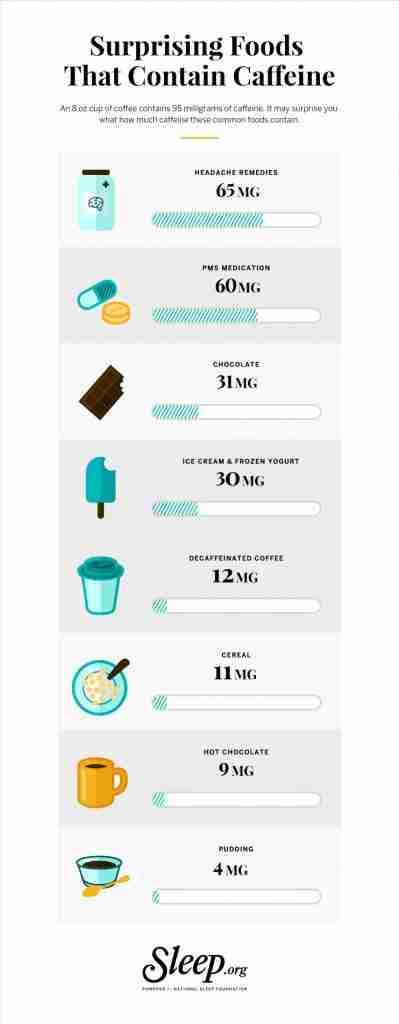
For the amounts in different coffees, see how much caffeine is in coffee.
Can you get caffeine out of your system faster?
Not really. Caffeine is cleared by your liver at its own pace, so drinking extra water, exercising or eating something won’t flush it out meaningfully. A walk may ease restlessness, and water helps you feel better, but the caffeine level falls at the same rate. Mixing caffeine with alcohol or sedatives to “cancel it out” is a bad idea: FSANZ notes that caffeine can make drinkers feel less drunk than they are, which may lead them to drink more.
The practical fix is timing. A study in the Journal of Clinical Sleep Medicine found 400 mg of caffeine taken even 6 hours before bed disrupted sleep, and the authors support avoiding substantial caffeine for at least 6 hours before bedtime. Sensitive people may need a longer gap, or a switch to decaf after lunch.

Frequently asked questions
What is the half-life of caffeine?
In healthy adults it is usually 3 to 7 hours, according to FSANZ. It is longer in pregnancy, with oral contraceptives and in liver disease, and shorter in smokers.
How long does it take for caffeine to wear off?
Most people feel the effects for four to six hours (MedlinePlus). The caffeine itself takes longer to clear: roughly five half-lives, which is about 15 to 35 hours for most adults.
How long before bed should I stop drinking coffee?
Sleep research supports stopping substantial caffeine at least 6 hours before bedtime. If you are sensitive or a slow metaboliser, make it earlier. See coffee after dinner for evening options.
For more on coffee and health, see is coffee good for you?
This article is for general information and isn’t medical advice.
Share this guide
See more Coffee Informer on Google. Add us as a preferred source and our guides show up more in your Top Stories and AI results.
Add as a preferred source on Google